
Last updated November 18, 2026








Free written scope consultation - allowances, timeline, and change-order rules on paper before a single trade is scheduled
General Contractor Troubleshooting: Common Problems and How to Fix Them
The grout crack you notice six months after your remodel isn’t bad luck. It’s almost always traceable to a decision made on demo day that nobody told you about – a skipped moisture barrier, a substrate screwed down over a wet slab, a tub set on a floor that was still moving. Here’s the hard part: most remodeling problems don’t show up during construction. They surface 60 to 180 days after the crew leaves, which is exactly when most contractors have stopped returning calls. This guide teaches you to read the early warning signs, sort cosmetic from structural, and know precisely what recourse you have when something fails inside your Frisco home.
Quick Answer
Most post-remodel problems fall into five categories – cracking grout or tile, water intrusion around fixtures and windows, door and cabinet misalignment from settlement, drywall nail pops and seam cracks, and drainage issues at exterior thresholds. The first thing to do is document the problem in writing and on camera, then check your contract and warranty to see whether the fix is covered. If the sign is structural – a crack that widens, a floor that bounces, water where there should be none – stop using the area and get a professional assessment before you touch it.
Styles & brands we work with
- Kitchen remodeling
- Bathroom remodeling
- Home additions & ADU
- Roofing
- Windows & doors
- Driveway & pavers
- Fence
Table of Contents
- How do you tell a cosmetic crack from a structural one?
- What paperwork do you need before work starts to enforce a fix?
- Why moisture problems are so common in Texas remodels
- Settlement, sagging and misalignment: reading the signs
- What to do if your contractor ghosts you in Texas
- How a written guarantee changes your leverage
- A five-step troubleshooting sequence to run first
How Do You Tell a Cosmetic Crack From a Structural One?
A cosmetic crack is one that’s stable – it doesn’t change width, it doesn’t migrate, and it’s confined to finish materials like grout, caulk or paint. A structural crack is one that grows, follows a pattern, or shows up with movement you can feel. The distinction matters because it decides who pays and how fast you need to act. In our experience across Frisco remodels, roughly seven out of ten post-project cracks are cosmetic and traceable to normal material curing or seasonal movement. The other three are worth a closer look.
Run this check the moment you spot a crack:
- Measure it, don’t eyeball it. Mark both ends of the crack with a pencil and a date, then measure the width again in 30 days. A crack that holds its length and width is usually cosmetic.
- Test with a coin edge. If a coin slides behind a baseboard or trim piece that used to sit flush, something has moved.
- Look at the pattern. Cracks that spider out from a corner, run diagonally across tile joints, or follow a repeating line are more likely structural than random hairline crazing.
- Feel for movement. Press firmly on the floor or wall near the crack. A floor that gives, bounces or sounds hollow is a substrate issue, not a finish issue.
- Check for water. Any crack with staining, softness or efflorescence nearby is a moisture problem wearing a crack costume.
The cosmetic-versus-structural question is the single most useful thing to know before you call anyone, because it tells you whether your guarantee should cover the fix and whether you’re dealing with a maintenance item or a defect. For a deeper look at the standards we hold on structural work like a bathroom remodel in Frisco, the substrate and waterproofing details are where it gets decided.
What Paperwork Do You Need Before Work Starts to Enforce a Fix?
The homeowners who get a fast fix are almost never the loudest ones. They’re the ones who kept paper. If you want to enforce a repair rather than beg for one, you need four documents in a folder before the first cabinet is pulled: a written scope of work, a written price, the payment schedule, and a written guarantee. Verbal promises evaporate the moment a problem shows up. Paper doesn’t.
Here’s the paper trail that actually matters:
- A written scope of work that names the materials and the specification – not “new tile” but “porcelain floor tile over cement board substrate.”
- A written price you can hold the contractor to, with a line-item breakdown so you can see exactly what the substrate and waterproofing steps cost. Not an estimate range, not a verbal ballpark.
- The payment schedule showing how much is due at which milestone, so you know what’s still on the table if something fails.
- A written guarantee stating what’s covered, how long it lasts, and exactly what happens if the work fails.
- Photographs of the work at every stage – especially the layers that get buried: framing, plumbing rough-in, waterproofing, substrate. Those photos are your evidence if a wall has to come open.
- The name and direct contact of the person responsible for making it right, written into the guarantee.
If your contractor won’t put the price and the guarantee in writing before work starts, that’s the answering signal you need. Our standard as a general contractor in Frisco is a written number you can hold us to, an arrival window, and a guarantee that outlasts the invoice. The paper trail is the whole reason that works.
Why Are Moisture Problems So Common in Texas Remodels?
North Texas swings between humid summers and dry winters, and that shift moves the ground and the slab under your home. Frisco sits on expansive clay soils that swell when wet and shrink when dry, which puts constant stress on foundations and the materials that sit on them. Add a bathroom that gets showered in daily and a kitchen with a sink and dishwasher, and you have a house where the moisture details decide whether your remodel lasts ten years or ten months.
These are the substrate preparation steps that get skipped to save a day of labor – and the ones your written scope should name:
- Waterproofing membrane behind tile in a shower, especially at the pan and the corners where movement concentrates.
- Cement board substrate (the moisture-resistant layer behind your tile) set with the correct screw pattern and not just tacked down.
- Slab moisture testing before a floor goes down. Laying flooring over a slab that’s still releasing moisture traps it underneath, and it comes up through the seams.
- Clearance at exterior thresholds where water can wick in under a door or window.
- Vapor management around exterior walls – especially relevant for a whole-home remodel where new siding meets existing framing.
Those are also the steps where the products matter. We install Kohler and Moen fixtures with their own manufacturer warranties, and we set moisture-sensitive details the way the material maker specifies because that’s the only way their warranty and ours both hold. Local conditions make the difference here: a Frisco shower prep and a San Antonio one aren’t the same job. For kitchen and bath work specifically, the Frisco kitchen remodeling and bathroom pages go deeper on the moisture details we build in.
Settlement, Sagging and Misalignment: Reading the Signs
Settlement shows up as things that used to line up and don’t anymore. A cabinet door that won’t close flush, a door that drags at the top in winter, grout lines that open and close with the seasons – these are the fingerprints of movement, and in Frisco they’re usually tied to the clay soils beneath the foundation. Some movement is normal and expected. Some is the first sign of a problem that will get worse.
Run this sequence when you notice misalignment:
- Note when it happens. Misalignment that comes and goes with the season is usually thermal or moisture movement; misalignment that’s permanent and progressing is not.
- Check the door and window frames. If doors stick and windows won’t latch in the same room, that’s a sign of movement at the opening, not just a sticking hinge.
- Look at the floor line. A floor that’s flat at one corner and dips at another, or a floor that sounds hollow when you walk across it, is a substrate or framing issue.
- Check the perimeter. Cracks in the slab at the perimeter, along with gaps at exterior trim, are worth flagging.
Here’s the important split: settlement in the cabinetry, trim or plaster is often a finish-adjustment job. Settlement that affects framing, floors or openings needs a professional assessment – and that’s not a job for a homeowner with a pry bar. If you’re seeing multiple signs together, get someone qualified to look before you decide anything. Our technicians have up to 22 years of experience reading exactly these signs, and we’d rather tell you a crack is cosmetic and stable than find out later we guessed.
What Do You Do If Your Contractor Ghosts You in Texas?
If your contractor stops returning calls, your first move is to document the problem in writing and give one clear repair demand with a deadline. That written record is what you’ll need for anything that follows. Texas gives homeowners real paths forward, but each one has requirements, and the order you use matters. If the problem is still live – water coming in, an opening that’s unsafe – stop using the affected area and get a separate professional assessment first. Safety before process.
Your escalation path, in order:
- Written demand. Send a dated letter or email describing the defect, referencing the contract and guarantee, and requesting the repair by a specific date. Keep a copy. A warranty that says “in writing on every project” is enforceable precisely because it gives you something to point at.
- Texas Residential Construction Liability Act (RCLA) notice. Before you sue a builder over a residential construction defect, Texas law requires you to send a written notice describing the problem and a reasonable amount of money to resolve it, and to give the contractor a chance to inspect and make an offer. This is a formal step with a defined timeline, so follow it carefully or get help doing so.
- Texas Real Estate Commission (TRCC) complaint. If the contractor is a registered builder and your home is covered under the state’s residential construction warranty program, you may have a TRCC dispute path. Check the coverage and the deadlines before counting on it.
- Texas Department of Licensing and Regulation (TDLR) complaint. For trades within its jurisdiction – electricians, plumbers, HVAC – TDLR accepts complaints about licensed work and unlicensed activity. It doesn’t resolve your dispute for you, but a record with TDLR puts pressure where nothing else will.
- Small claims court. Texas justice courts hear claims up to $20,000. It’s designed for people without lawyers, and a written contract, photos and a clear record of the defect are usually what a judge wants to see.
The strongest leverage you have is a written guarantee with a named contact at the company and a clear promise of what happens if the work fails. Our 365-Day Done Right Promise does exactly that: it’s in writing on every project, and if the work fails inside the period, we come back and fix it at no charge. No service call, no re-inspection fee. We’d much rather make it right than have you spend a year on a complaint you’d rather not file.
How Does a Written Guarantee Change Your Leverage?
A verbal promise turns you into a supplicant. A written guarantee turns you into a party with a case. If a fix fails and the only thing you have is “the guy said he’d stand behind it,” your path is the demand letter, the TRCC process and small claims court. If you have a written guarantee, your first move is a phone call that references the document – and the company already has the details and the deadline in its own records.
What a good guarantee spells out:
- The term. How long the guarantee runs, in plain days and months, not “for the life of the work.”
- What’s covered. Material and labor, and the conditions that void it – for example, damage from a separate event like flooding from a burst pipe.
- What happens when you call. A named contact and the promise of a return visit if the repair fails.
- The products behind it. We install Caesarstone quartz and Blanco sinks that carry their own manufacturer warranties alongside ours; the layers of protection are worth understanding because in a dispute, the product warranty is a second set of eyes on the fix.
We operate to Penhallow Remodeling Frisco under the Kingswell standard: say the price before the work, show up in the window we gave, leave the place cleaner than we found it. The guarantee is in writing because a promise you can hold is worth more than a promise you remember. A live person answers our phone 24/7, and every job uses background-checked technicians in uniform – so the person who shows up to fix a problem is the same standard as the one who built it.
A Five-Step Troubleshooting Sequence to Run First
When something looks wrong after your crew leaves, run this sequence before you panic or pay anyone.
- Document everything. Photos, video, a written description of what you see and when you first noticed it. Date it. This is the record every path forward will depend on.
- Classify the problem. Is it cosmetic, structural, or moisture-related? Use the checks above. The classification tells you whether you’re calling for a repair or a professional assessment.
- Find the paperwork. Locate the scope, the written price, the payment schedule and the guarantee. Read the guarantee’s term and exclusions before you call.
- Call with the document in hand. Reference the guarantee by name, describe the defect, and ask for a specific inspection date. A written guarantee makes this a normal request, not a favor.
- If the fix fails again, escalate. A repeat failure is a pattern, not bad luck. That’s when the RCLA notice, a TDLR complaint or small claims court comes into play – but most problems never need them if the guarantee works as it should.
Common Mistakes to Avoid
- Paying the final balance before the walkthrough. The last payment is your leverage. A final walkthrough with a punch list in hand, before the final check clears, is the single best protection you have.
- Accepting a verbal guarantee. A promise that isn’t written down is a promise you can’t enforce. If the contractor won’t write it, that tells you something before work starts.
- Skipping photos of the buried stages. The framing, waterproofing and substrate are covered for good within a week. Photograph them before they disappear.
- Sealing over a crack or water stain without finding the cause. Cosmetic fixes that hide moisture are how a small leak becomes a rotten subfloor.
- Assuming seasonal movement is a defect. North Texas clay soils move. A hairline crack that’s stable for 30 days is not the same problem as one that widens, and calling a contractor out for a non-issue wastes everyone’s time.
- Waiting out the guarantee term. If you spot a problem at month eight, call at month eight. A guarantee you let expire by inaction is a guarantee you don’t get to use.
- Choosing a bid by price alone. The cheapest bid is often the one that skipped the moisture barrier. Ask every bidder to write the substrate and waterproofing steps into the scope in plain language, then compare.
See the difference
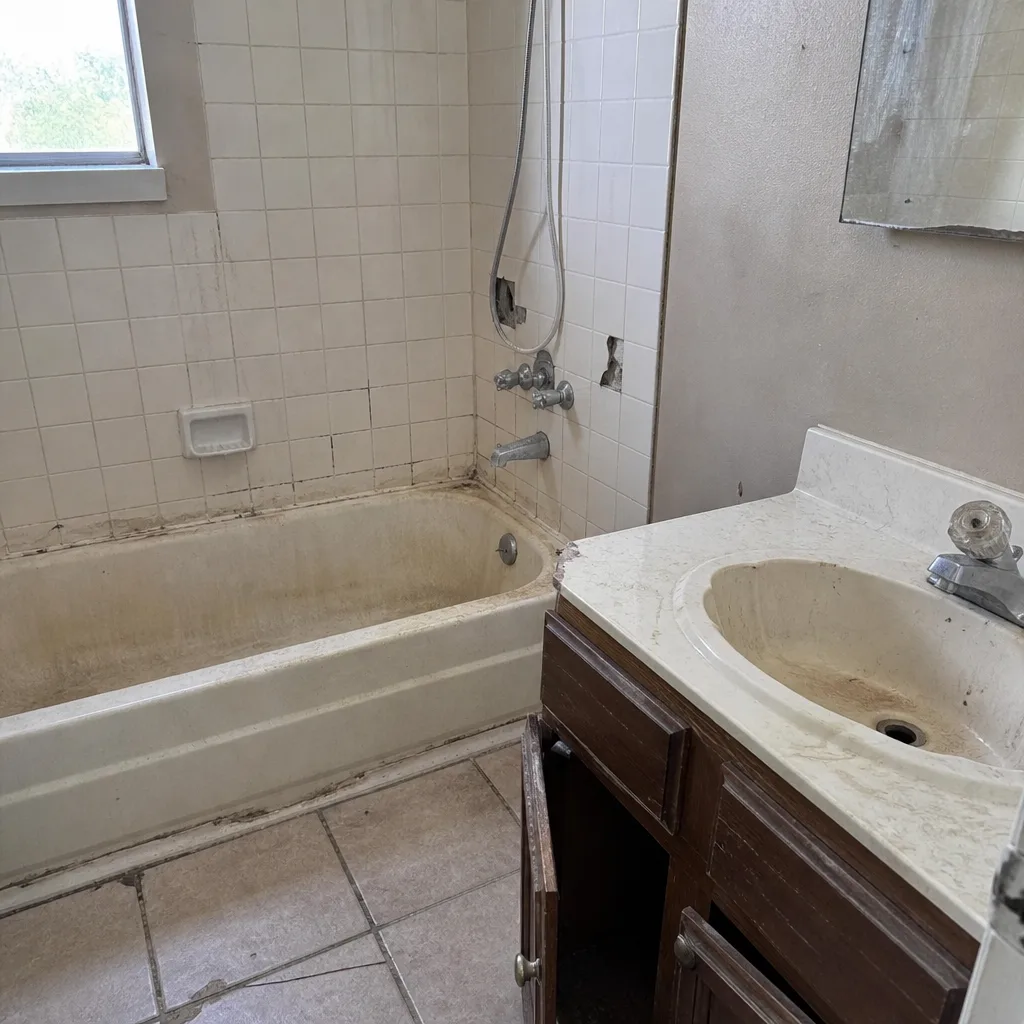 Before
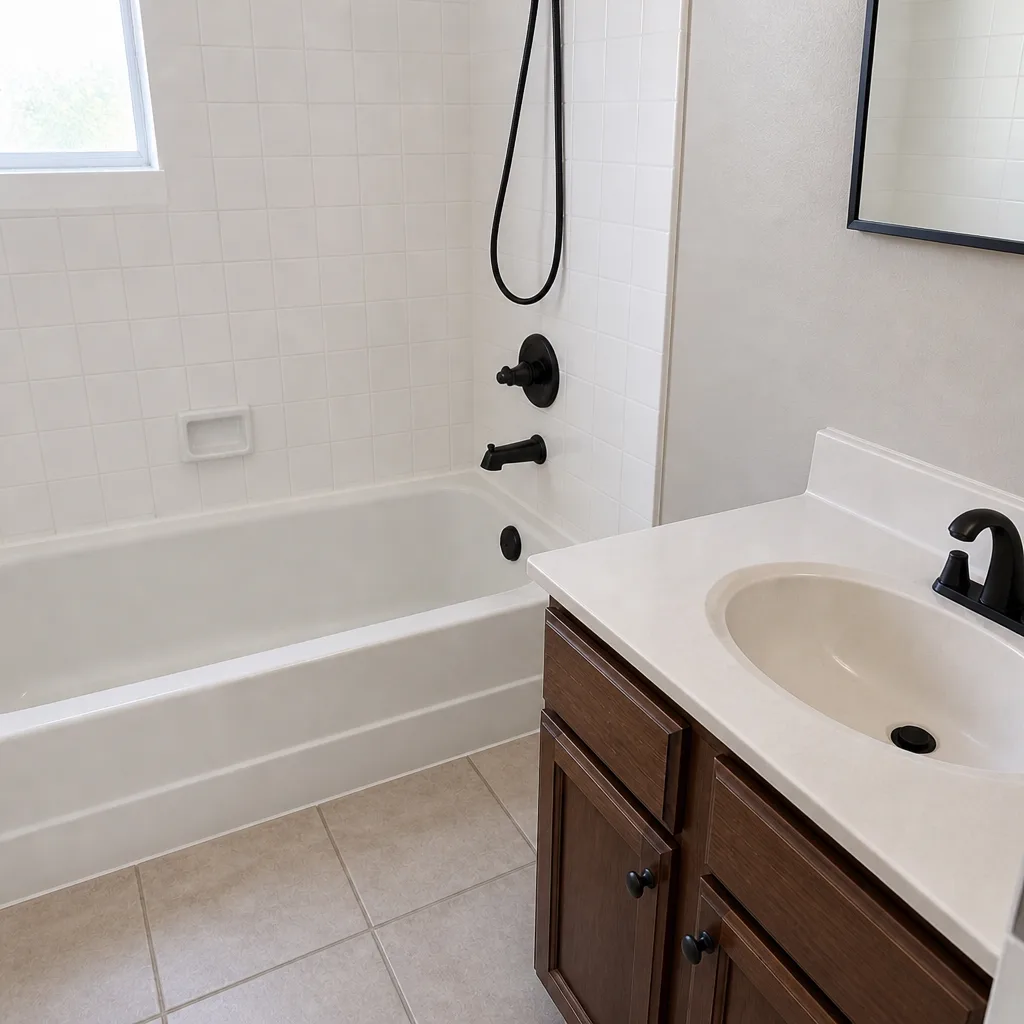 After
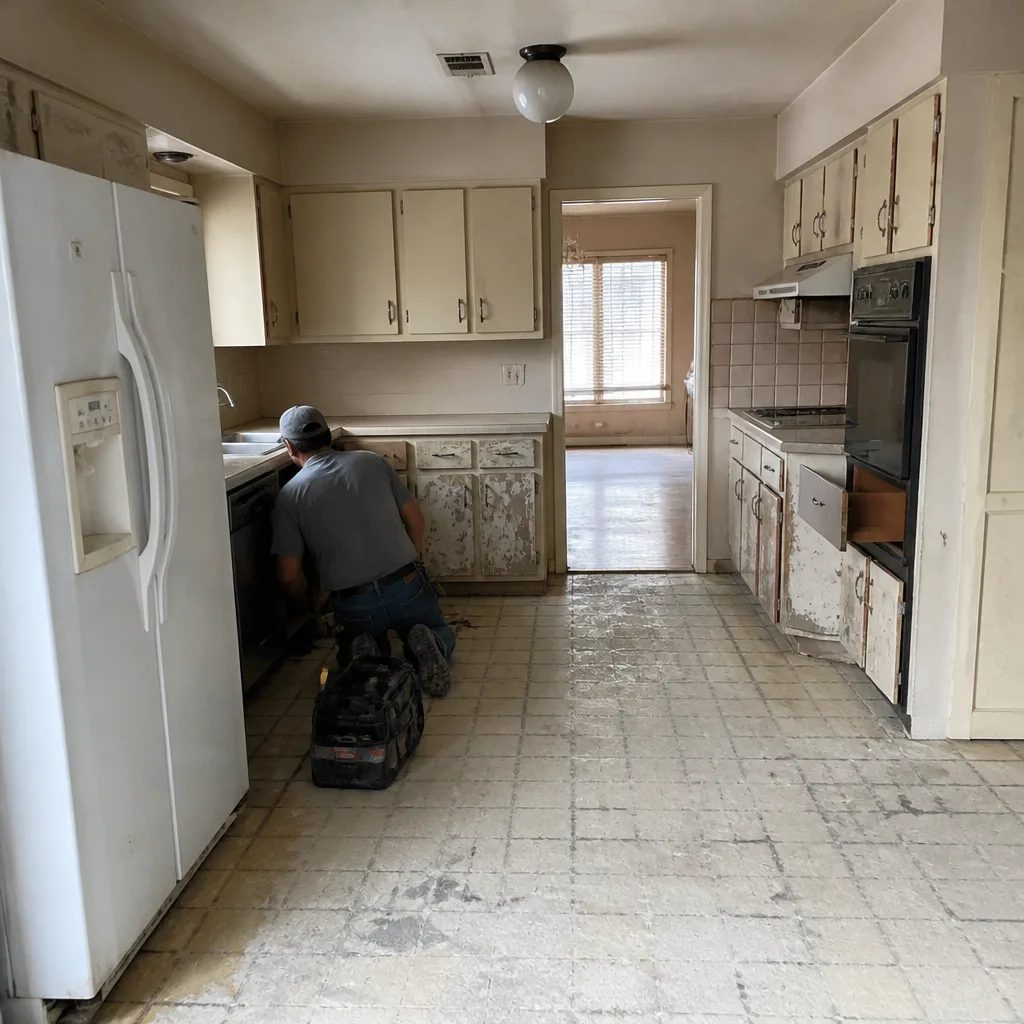 Before
 After
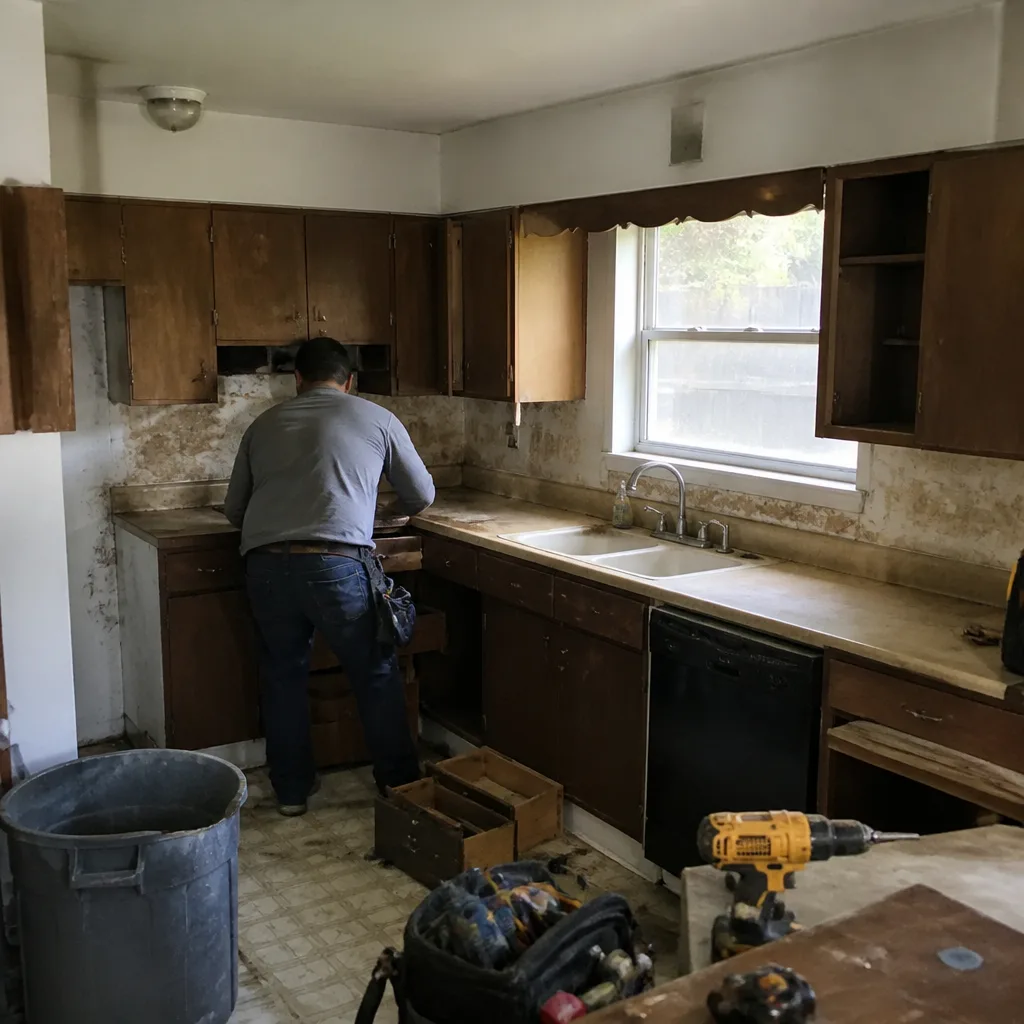 Before
 After
When to Call a Professional
Call us when the sign is structural, when water is where it shouldn’t be, or when you can’t tell which it is. Specifically: a crack that widens over 30 days, a floor that bounces or sounds hollow, a door or window that won’t close flush with its opening, water staining or softness anywhere near a shower, sink or exterior threshold, and any defect inside your guarantee term that the original crew won’t stand behind. For a live problem – water coming in, an opening that’s unsafe – stop using the area first and get someone qualified on site. Penhallow Remodeling Frisco offers free estimates in Frisco: call (833) 954-5757, and a live person answers any hour.
Frequently Asked Questions

A stable hairline crack in grout is usually normal curing and seasonal movement, while a tile crack that widens or travels across joints is more likely a substrate or movement issue. Mark the crack, measure it, and re-check in 30 days. If it holds its size, it’s a finish fix; if it grows, call for an assessment. Call (833) 954-5757 for a free estimate if you want a professional read.
Start with a dated written demand describing the defect and requesting a repair by a specific date, then use the Texas RCLA notice process, a TDLR complaint for licensed trades, or small claims court up to $20,000. The paperwork you kept before work started is what makes each of those paths work. Call (833) 954-5757 and we’ll help you think through what’s covered.
Only if the contract or written guarantee says so – which is why a written guarantee matters more than a verbal promise. Our 365-Day Done Right Promise covers the work for a full year, in writing, on every project, with a free return visit if a repair fails. Call (833) 954-5757 to schedule your free estimate.
Because North Texas swings between humid summers and dry winters while Frisco’s expansive clay soils swell and shrink under the slab, and the substrate and waterproofing details are where that shows up. Skipped steps like a missing shower membrane or un-tested slab moisture are the usual causes. Call (833) 954-5757 for an honest look at your situation.
Not when the price is written down before work starts. Our written price is the number on day one and the number on the invoice; if a hidden condition turns up once the wall opens, we stop and talk to you before doing anything that changes the number. Call (833) 954-5757 to schedule your free estimate.
Classify it: cosmetic if it’s stable and confined to finishes, structural if it grows or involves movement you can feel, moisture-related if there’s staining or softness. When two or more signs appear together, get a professional assessment before you touch it. Call (833) 954-5757 for a free estimate and a straight answer.
The Bottom Line
Most remodeling problems after the crew leaves are traceable to a decision made on day one or a promise nobody wrote down. Document what you see, classify it as cosmetic, structural or moisture-related, and check the paperwork before you call. A written price and a written guarantee turn a frustrating repair into a normal request, and a named contact turns a complaint into a phone call. If you’re facing a problem in a Frisco home that nobody will stand behind, call (833) 954-5757 for a free estimate and a written guarantee before any work starts.
Written by the team at Penhallow Remodeling Frisco.