
Last updated November 18, 2026








Free written scope consultation - allowances, timeline, and change-order rules on paper before a single trade is scheduled
Home Remodeling Maintenance Schedule: What to Do and When
Most maintenance guides were written for the Pacific Northwest. Frisco sits on expansive clay that swells every summer and shrinks every winter, and that movement quietly cracks grout, shifts door frames, and stresses caulk joints on a cycle no generic checklist accounts for. A maintenance schedule isn’t about preventing remodels. It’s about timing them so you’re never forced into one at the worst possible moment. This guide lays out a month-by-month plan built around North Texas heat and clay soil, tells you which post-remodel elements have a fixed service life versus which last indefinitely with care, and shows you how to document a remodel so future checks compare against a known baseline – not a guess.
Quick Answer
In Frisco, the highest-value maintenance schedule follows the clay: inspect tile, caulk, and door frames twice a year (late spring as the soil swells, late fall as it contracts), service grout sealer and caulk joints every 2-3 years, and budget for major system replacements on a 10-20 year cycle. Document your remodel at completion with photos and a written baseline – that record is what turns guesswork into planned decisions.
Styles & brands we work with
- Kitchen remodeling
- Bathroom remodeling
- Home additions & ADU
- Roofing
- Windows & doors
- Driveway & pavers
- Fence
Table of Contents
- Why Frisco Needs Its Own Maintenance Calendar
- The Twice-Yearly Inspection Window
- What Has a Fixed Service Life and What Doesn’t
- Documenting Your Remodel at Completion
- Maintenance That Extends a Guarantee vs. Maintenance That Voids It
- The Month-by-Month Frisco Schedule
- A Realistic Budget Calendar: Year 3 vs. Year 10
- Common Mistakes to Avoid
Why Frisco Needs Its Own Maintenance Calendar
Frisco’s soil is expansive clay, and it moves more than most homeowners realize. In the summer, the clay dries and contracts; in the wetter months, it swells again. That cycle puts slow, cyclical strain on everything rigid that’s attached to your home – grout lines, door frames, window casings, caulk joints around tubs and sinks. A homeowner in a stable-soil region might check these once a year and never see a problem. In Frisco, the same joints get worked twice a year, every year.
Accordion to local inspection experience, the areas that show it first are:
- Grout lines in bathrooms and kitchens – hairline cracks that widen after a dry summer and don’t close back up.
- Door and window frames – sticking doors in July, drafty gaps in January, both signs the frame is shifting with the slab or pier system.
- Caulk joints at tub surrounds and backsplashes – separation that shows up at the corners first, then along the seam.
- Exterior brick and stucco at corners – step cracks that follow the clay movement rather than a structural problem.
None of this means the house is failing. It means the maintenance schedule has to match the soil, and in Frisco that means two inspection windows a year instead of a single annual pass. If you’re planning a bathroom remodel in Frisco, it’s worth understanding this cycle before you pick tile and grout – some materials handle the movement better than others.
The Twice-Yearly Inspection Window
The two inspection windows in Frisco fall in late spring (May-June, as the clay swells with spring rain) and late fall (October-November, as it contracts going into winter). These aren’t the times when damage happens – they’re the times when existing movement is easiest to see and easiest to fix before it spreads.
Here’s what to check in each window, in order:
- Walk every room and look at the grout at eye level, then get down at tile-floor level. Record any hairline cracks you didn’t see last time.
- Open and close every door and window and note any that stick, drag, or fail to latch. This tells you how the frame is moving.
- Press on the caulk at tub surrounds, sinks, and backsplashes. If it moves or separates from the surface, it’s time to recaulk.
- Check exterior corners and around windows for new step cracks or gaps. Photograph anything new.
- Test every GFCI outlet and every smoke and carbon monoxide detector with the test buttons.
- Look under sinks and around the water heater for any moisture, staining, or mineral buildup.
Each inspection should take 45-60 minutes if you do it methodically. Keep a photo log with dates – comparing this year’s photo to last year’s is how you tell normal seasonal movement from a problem that needs attention. We’ve seen homeowners catch a failing grout line six months earlier than they would have on a once-a-year schedule, which saves the cost of retiling a shower pan.
What Has a Fixed Service Life and What Doesn’t
Not everything in a remodel ages the same way. Some elements fail on a predictable schedule no matter how careful you are, and some last indefinitely if maintained. Knowing which is which is what lets you budget by year instead of getting surprised.
Fixed service life (budget for these replacements)
- Caulk at tub surrounds and counters – 3-5 years before it needs to be cut out and redone. Silicone lasts longer than latex.
- Grout sealer – 2-3 years in a shower, 3-5 years on a kitchen floor. Reapply before the grout starts absorbing water.
- Shower door sweeps and seals – 3-5 years before they harden and stop doing their job.
- Cabinet hardware and drawer glides – 8-12 years of regular use before replacement is expected.
- Paint on interior walls – 7-10 years in high-traffic areas, longer in bedrooms.
Indefinite with proper care
- Quartz countertops like Cambria, Silestone, and Caesarstone – no resealing needed, and with normal care they outlast the cabinets beneath them.
- Solid wood or plywood cabinet boxes – decades, if humidity stays moderate and you don’t let water sit on them.
- Porcelain and ceramic tile – effectively permanent, provided the substrate (the cement board layer behind the tile) was installed correctly.
- Cast iron and vitreous china fixtures – 30+ years.
That’s the difference between a year-3 budget item (recalk the tub, reseal the shower) and a year-10 item (new glides, repaint the hallway, maybe new hardware). If your remodel included these brands, the material side of the equation is largely handled – the maintenance side is on you.
Documenting Your Remodel at Completion
Here’s the part most homeowners skip, and it’s the part that makes every future maintenance decision easier. Before the crew leaves, before the final walkthrough ends, you should have a written and photographic record of what was installed and where. That record is your baseline.
What to capture at completion:
- Photograph every wall before fixtures go in – this shows where the studs are, where the plumbing runs, and where the wiring was routed. Without it, every future repair is guesswork.
- Photograph the finished work from the same angles – the “after” shot against the “during” shot is your reference point.
- Write down the brand and model of everything installed – fixtures, cabinet line, countertop material, tile product, waterproofing system.
- File every warranty document and note the start date. Cambria quartz, for example, carries its own lifetime warranty alongside our guarantee, and that’s easy to lose track of.
- Note the date and what was used to seal grout – so the next reseal matches.
- Take a dated photo of every caulk joint in good condition – that’s the reference you compare against in two years.
Keep this in a folder – physical or cloud – that you’ll actually look at twice a year. When a caulk joint starts to pull away in year three, you’ll be comparing it against a known original rather than wondering whether it always looked like that. Our team builds this documentation into every project’s final walkthrough so homeowners aren’t left starting from scratch.
Maintenance That Extends a Guarantee vs. Maintenance That Voids It
Guarantees are not unconditional, and that’s not a gotcha – it’s normal. The question is which maintenance actions protect the guarantee and which ones put it at risk. Here’s how we frame it for our Frisco homeowners.
Maintenance that extends and protects a guarantee
- Resealing grout on schedule and re-caulking joints when they fail. These are considered normal homeowner care, and doing them protects the waterproofing system the tile sits on.
- Promptly reporting issues instead of waiting. A small caulk failure reported early is easy to fix; a slow leak that damages the substrate behind the tile isn’t, and waiting makes it harder to attribute to the original work.
- Keeping other trades out of the work. If a handyman removes and reinstalls a fixture, the guarantee on that fixture is generally voided. Warranty terms vary, but the pattern is universal.
- Using the products specified when you do your own touch-ups. Wrong sealers or incompatible caulks can cause failures that wouldn’t have happened otherwise.
Maintenance that voids a guarantee
- Any alteration to the installation – cutting into a cabinet box, drilling new holes in a countertop, re-tiling a section of a guaranteed shower without involving the original installer.
- Improper DIY repairs – using the wrong adhesive, wrong caulk, or a sealant that isn’t rated for wet areas.
- Neglecting an obvious failure that then causes secondary damage.
- Failing to report a defect within the guarantee window.
Our 365-Day Done Right Promise is written on every project, and it’s simple: if something we did fails inside the guarantee period, we come back and fix it at no charge. What we need from you is the ordinary side of that contract – report issues when you see them, don’t hand our work to another trade, and don’t ignore a slow leak. That partnership is the whole point. Our general contractor services in Frisco are built around this – a written price before work starts, a defined arrival window, a clean job site, and a written guarantee at the end. Every job follows The Kingswell Way: say the price, show up in the window, leave the place cleaner than we found it.
The Month-by-Month Frisco Schedule
Here’s the single-page calendar, structured around Frisco’s seasons and clay cycle rather than a generic quarterly format. Print it, save it, or keep it pinned to the fridge.
January – February
Post-winter settling check. Open and close every door; noting seasonal sticking is normal but a door that stays stuck is not. Inspect caulk at sink and tub surrounds. Test all smoke and CO detectors.
March – April
Pre-spring exterior inspection. Walk the perimeter and look at corners, window frames, and any new step cracks. Clean gutters and check downspout flow away from the foundation. Photograph exterior – this is the reference for the summer-to-winter comparison.
May – June (Spring Inspection Window)
Full interior inspection. Grout, caulk, doors, windows, sinks, shower pan. This is the best window to catch early movement while the clay is swelling and joints are moving. Schedule any resealing now, not later.
July – August
Heat check. Watch for interior door sticking (clay contracting), caulk failure at exterior windows, and A/C condensation lines. This is also the best time to audit your kitchen and bathroom ventilation – a bath fan that’s not moving air fast enough shows up as fogged mirrors and mildew in the corners by late August.
September (Pre-Fall Prep)
Before the cooler swing – re-check every caulk joint one more time. Repairing now avoids a winter leak. Clean and inspect the roof if it’s accessible; otherwise arrange a visual inspection from the ground with binoculars.
October – November (Fall Inspection Window)
The second full interior pass. Compare photos against the spring set. Any grout cracks that widened, doors that started sticking, or caulk that pulled away are priority items before winter.
December
Year-end review. Total up what you spent on maintenance, note what’s coming due next year (grout reseal? repaint? cabinet hardware?), and add it to next year’s budget now.
If you’re considering a kitchen remodel in Frisco, this is the calendar to check before you pull the trigger – the best time to schedule a remodel is right after the fall inspection, not in the middle of one after a leak shows up.
A Realistic Budget Calendar: Year 3 vs. Year 10
Maintenance isn’t a price tag – it’s a schedule of small to medium line items you can plan for. Here’s roughly how it plays out after a major remodel, at Frisco prices.
- Year 1 – Nothing beyond routine checks. Keep every warranty and photo. Budget $0-200 for a possible early grout touch-up.
- Year 2-3 – Reseal shower grout first ($150-350 for a good tile pro, more if the shower is large). Recault tub surrounds and sinks ($100-250). Check cabinet glides – nothing yet on most.
- Year 4-5 – First round of caulk replacement on the original install, especially around the tub. Cabinet hardware starts to show wear. Budget $300-600 for the year.
- Year 6-8 – Interior repaint of high-traffic areas ($1,500-4,000 depending on square footage and trim work). Recheck exterior caulk around windows. Grout in the shower gets the second resealing.
- Year 10 – The year the calendar starts to stack. New cabinet glides, new hardware, possibly a repaint of kitchen cabinetry, plus the ordinary recaulk and reseal. Budget $2,000-5,000 depending on cabinet line and finish selections.
None of this includes surprise repairs – those come from the checklist items you catch early, not the ones that sit. The point of the schedule is to keep the surprises small.
Common Mistakes to Avoid
- Treating Frisco like a stable-soil market. A once-a-year check finds the grout cracks a full season after they started. Two windows a year is the Frisco minimum, not an upsell.
- Recaulking with the wrong product. Latex caulk in a wet area fails faster than silicone and can void the waterproofing side of your guarantee. Match the product to the joint.
- Skipping the photo baseline at completion. Without a dated “known good” photo, every future inspection is a guess. We photograph every project’s finished state for a reason.
- Waiting for visible damage before calling. A slow leak under a sink or a fogged shower enclosure looks small for months, then becomes a substrate repair. Report it the week you see it.
- DIY-ing a guaranteed installation. If we installed it and we guaranteed it, don’t fix it yourself – even a small re-tile can void the guarantee on that section.
- Ignoring interior humidity. North Texas summers are hard on cabinet finishes and painted surfaces. Run the bath fan and kitchen vent every time, not only when you remember.
- Not tracking what’s real movement versus settling. New cracks that look like the 2007 map of North Texas aren’t automatically structural – most step cracks around windows are cosmetic and follow clay movement. Photograph, date it, and have a pro assess before assuming the worst.
See the difference
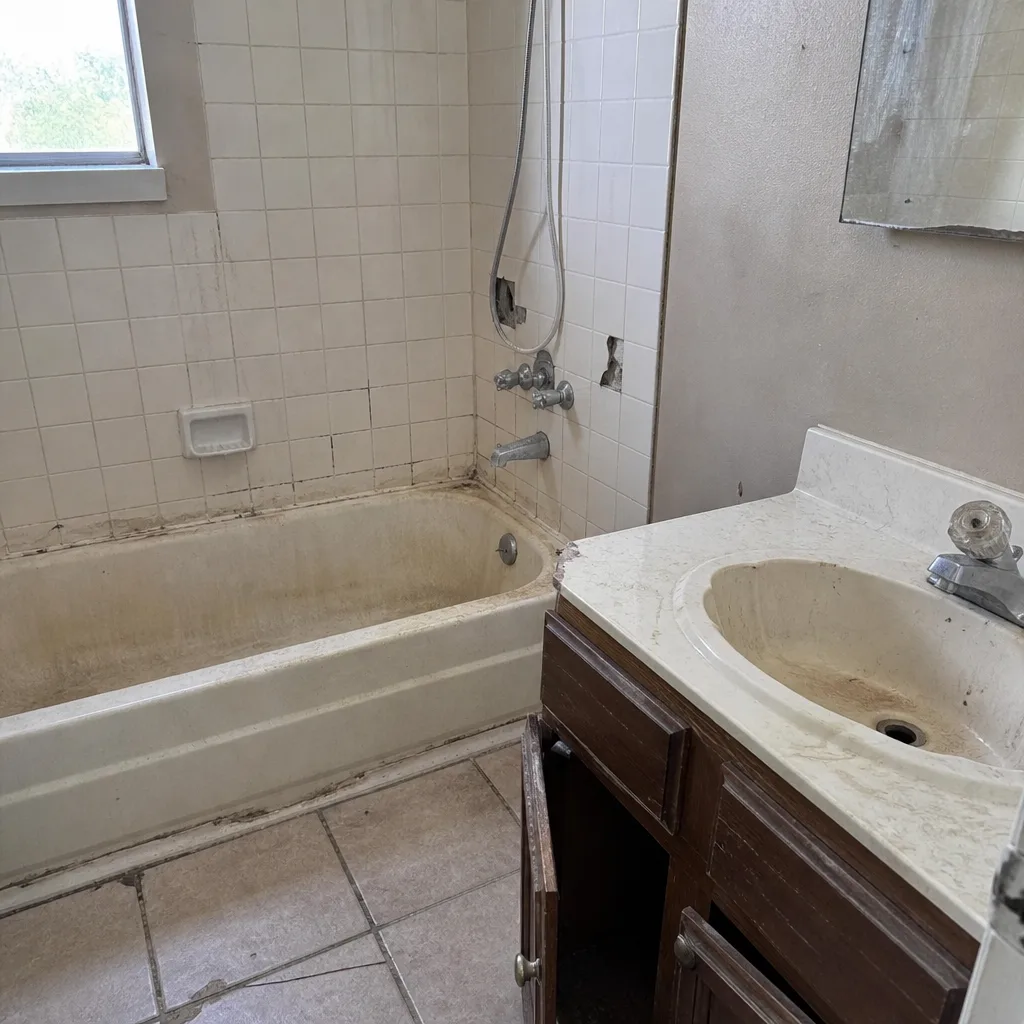 Before
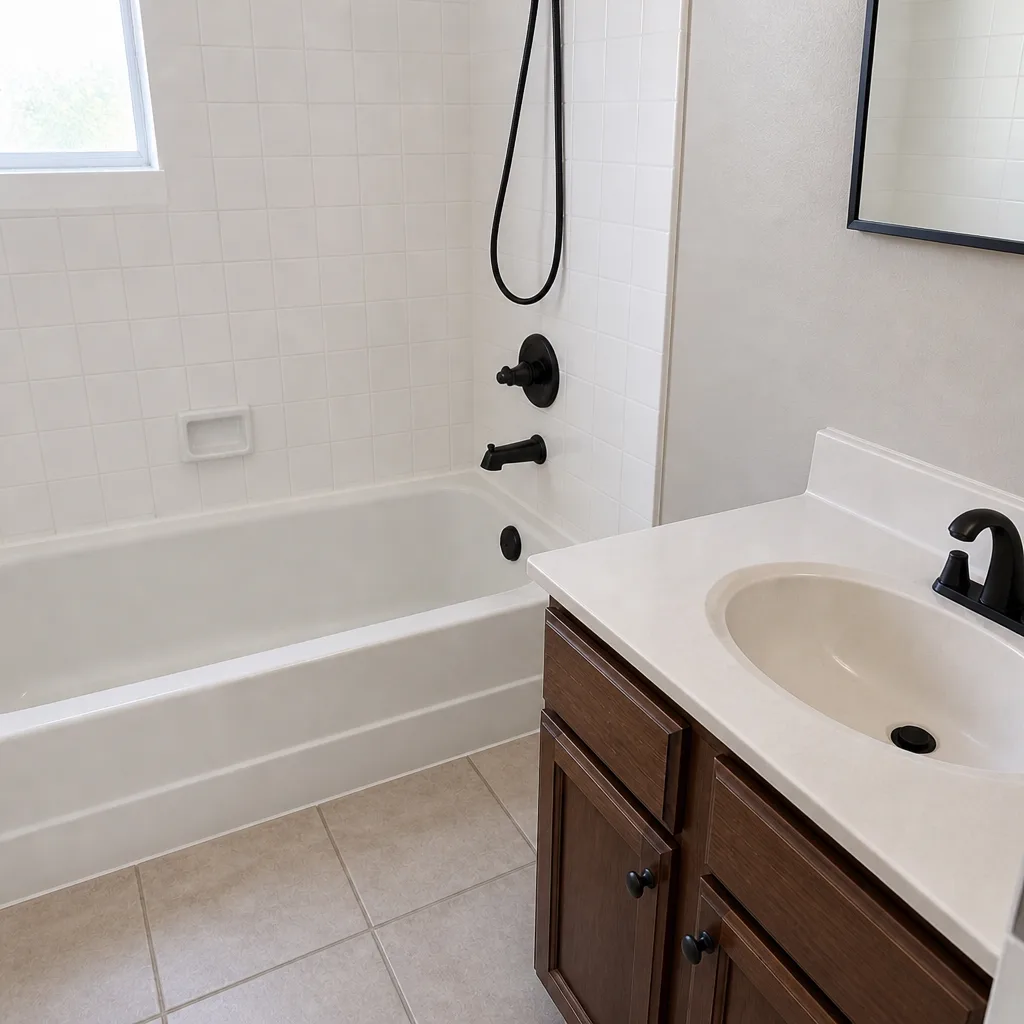 After
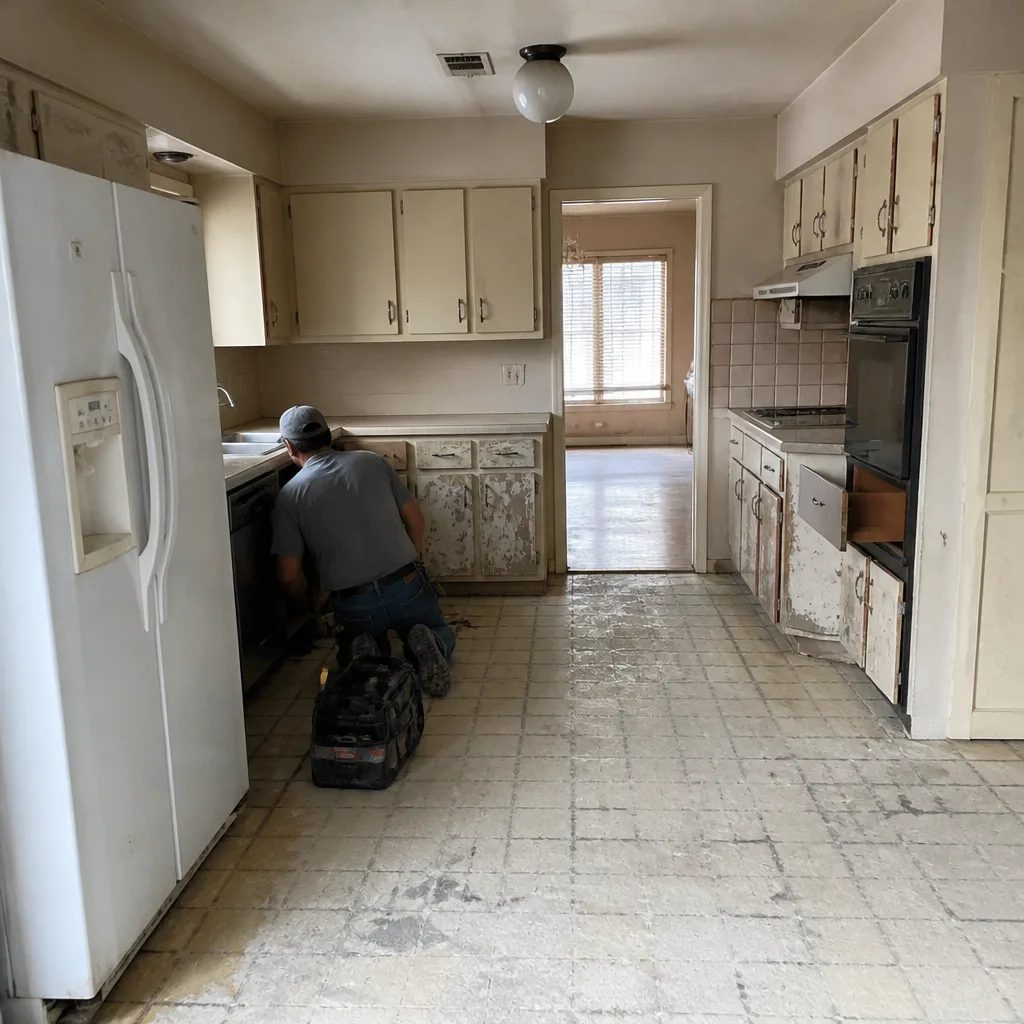 Before
 After
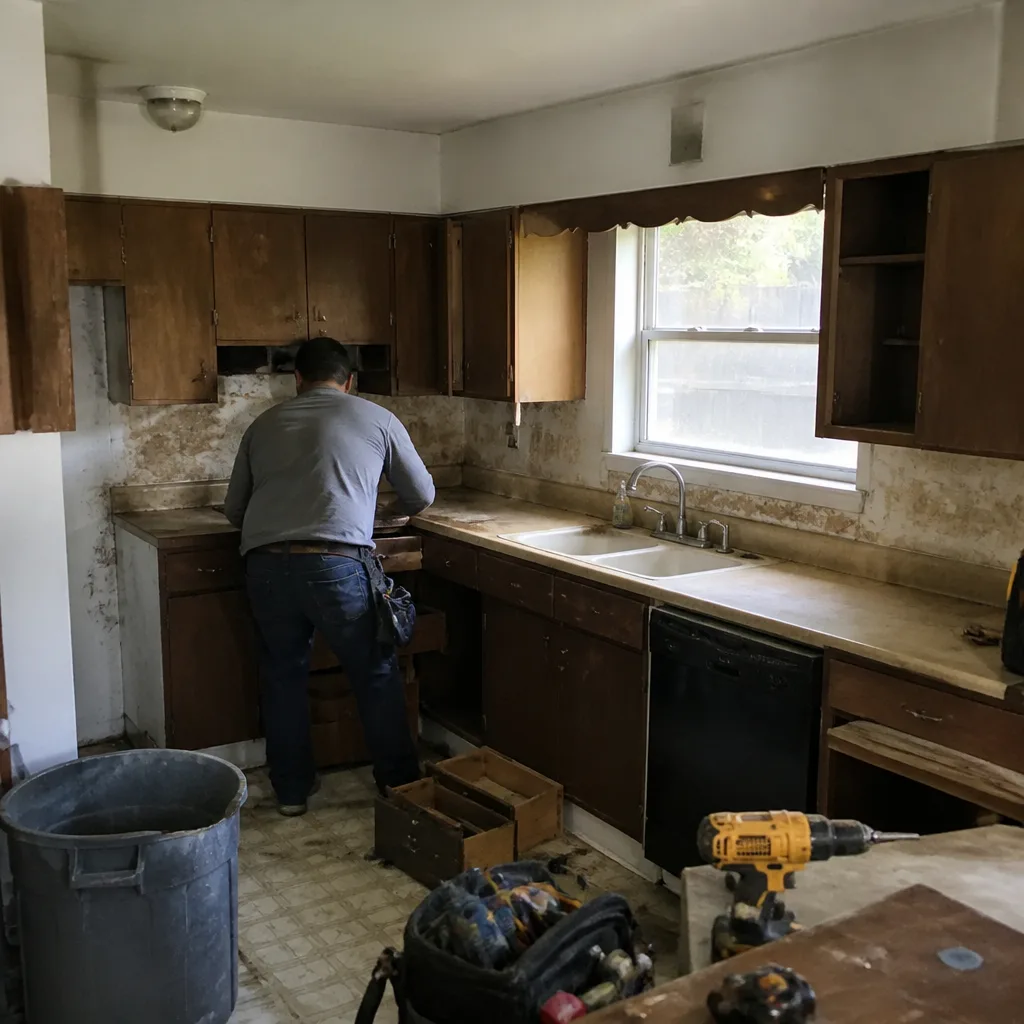 Before
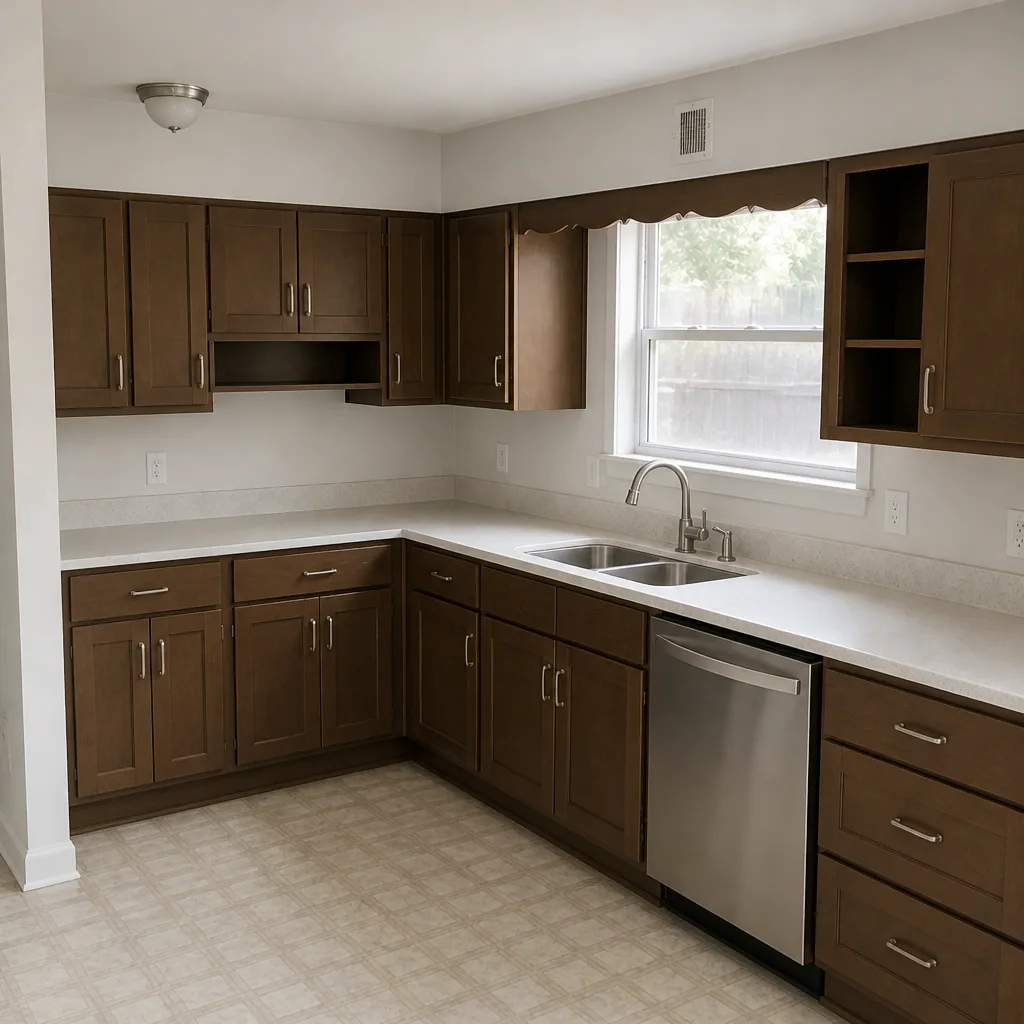 After
When to Call a Professional
Most of the schedule above is DIY-friendly, and that’s fine. But some items shouldn’t be handled solo. Call a professional if a door sticks permanently after two seasonal cycles (it’s not settling – something’s shifting), if a grout crack in a shower keeps widening after reseal, if you see water staining under a sink or around a tub surround, if a window frame has a visible gap wider than a credit card, or if the cabinet box itself has begun to separate from the countertop. Those are the situations where the fix is bigger than a tube of caulk. For a home remodel in Frisco, the right first step is a professional assessment, not a patch. Penhallow Remodeling Frisco offers free estimates in Frisco – call (833) 954-5757 to schedule a walkthrough. Our technicians have up to 22 years of experience, arrive in uniform, and are background-checked.
Frequently Asked Questions
Every 2-3 years in a shower and 3-5 years on a kitchen floor. Frisco’s clay movement widens grout joints faster than in stable-soil climates, so the lower end of that range is safer. Call (833) 954-5757 for a free estimate if you’re unsure whether your grout needs resealing or full re-grouting.
Yes, and it’s especially important in the first two years. New caulk and grout are most vulnerable in their first clay cycle, and catching a failure early is exactly what keeps the guarantee in play. Call us for a free estimate if you’d like a professional baseline check.
Anything that alters the original installation, using the wrong caulk or sealer in a wet area, having another trade rework guaranteed work, or failing to report a defect within the guarantee period. Our 365-Day Done Right Promise stays in force when normal maintenance is done properly.
Do the fall inspection first, then remodel in the cooler months if the inspection shows a condition that needs opening the wall or floor. Remodeling in the same year as a major repair means you’re paying for the repair twice.
Hairline cracks that stay hairline are cosmetic – normal clay movement in Frisco. A crack that widens more than an eighth of an inch, or a crack that’s coupled with a sticking door and a visible caulk separation, is worth having a professional look at.
Yes. Fresco homeowners with previous work done by another contractor can still use this schedule and call us for a free estimate if they want a professional inspection baseline. Call (833) 954-5757.
The Bottom Line

A maintenance schedule in Frisco isn’t about preventing remodels – it’s about removing the surprise from them. The clay under your home moves twice a year, so plan twice a year: spring and fall inspections, reseal and recaulk on schedule, report issues early, and keep a dated photo baseline from the day the project finished. Budget the small items at year 3 (recalk, reseal) and the medium items at year 10 (repaint, hardware, glides). That cadence keeps the maintenance bill predictable and keeps you out of the position where a slow leak forces a remodel on somebody else’s timing. Our team at Penhallow Remodeling Frisco builds every project around a written price, a defined arrival window, and a guarantee we actually honor – the same schedule that protects your home protects the work we leave behind.
When something on the schedule turns into a real project, or when you’re ready to plan one, call (833) 954-5757 for a free estimate. A live person answers 24/7 – no voicemail maze, no callback window. We’ll walk the home with you, give you a written price before anything starts, and leave you with the documentation to keep this schedule running on your own.
Written by the team at Penhallow Remodeling Frisco.