
Last updated November 18, 2026








Free written scope consultation - allowances, timeline, and change-order rules on paper before a single trade is scheduled
Home Remodeling Troubleshooting: Common Problems and How to Fix Them
Most remodeling problems that drag on for months aren’t complicated to fix. They’re complicated to own. The gap between what a contractor said at the kitchen table and what actually made it into the contract is where disputes live, and it’s why the same cracked grout line gets resolved in a week with one company and festers for a year with another. In Frisco, where we’ve watched plenty of projects close out and plenty come back for follow-up, the pattern holds: homeowners with a written guarantee and a named resolution process get answers fast. Homeowners with a text message saying “we’ll take care of it” get a lot of silence. This guide breaks down what actually goes wrong after a remodel, how to sort a real defect from normal settling, and exactly how to raise a claim so it gets handled.
Quick Answer
Most post-remodel problems fall into four categories – materials failure, installation error, normal settling, and homeowner maintenance gaps – and identifying which one you’re dealing with determines who pays for the fix. Before you call anyone, check your written contract and guarantee for the resolution process, document the issue with dated photos, and make your request in writing. A written warranty with a named response window turns most problems into a one-week conversation.
Styles & brands we work with
- Kitchen remodeling
- Bathroom remodeling
- Home additions & ADU
- Roofing
- Windows & doors
- Driveway & pavers
- Fence
Table of Contents
- Sorting the problem by root cause
- How to raise a warranty claim that gets answered
- The gray areas: paint, caulk, and what “level” means
- Getting a second opinion without torching the relationship
- When the contractor goes quiet: the escalation path
- What to put in writing before the next project starts
- Common mistakes to avoid
- Frequently asked questions
Sorting the Problem by Root Cause
Before you pick up the phone, figure out which of four buckets your issue belongs to. It changes who’s responsible and how the conversation should go.
Materials failure means the product itself failed – a cabinet door that delaminated, a faucet cartridge that started dripping inside the first year, a piece of siding that cracked. This is usually covered twice over: once by the manufacturer’s warranty and once by the installing contractor’s guarantee. A Cambria quartz countertop, for example, carries its own lifetime warranty alongside whatever the installer promises. When the failure is clearly the product, you have the strongest claim of the four categories.
Installation error means the material was fine but it was put in wrong – tile set without the right cement board substrate behind it, a shower pan that wasn’t sloped to drain, a door hung out of square. These tend to show up in the first six to twelve months because they fail fast once moisture or weight does its work.
Normal settling is the one homeowners most often misread as a defect. Frisco sits on expansive clay soils that swell after heavy spring rain and shrink through our hot, dry summers. That seasonal movement is real and it flexes door frames, hairline-cracks drywall corners, and opens gaps at trim. A hairline crack that appears and stabilizes is usually settling. A crack that keeps growing month over month is worth investigating.
Homeowner maintenance gap covers everything that was never the contractor’s job – caulk joints in a wet area that dry out and need refreshing, grout that needs resealing, filters, and seasonal checks. Many calls that start as “the contractor did something wrong” end here, and a fair contractor will tell you so without charging for the visit.
If you’re unsure which bucket applies, our general contractor in Frisco team can walk you through it before anyone picks up a tool – a phone diagnosis saves a lot of guesswork.
How to Raise a Warranty Claim That Gets Answered
Here’s the difference-maker. A warranty is only as good as the process behind it, and the process is what you should have in writing from day one. If your guarantee names a resolution path, follow it exactly. If it doesn’t, this is the sequence that gets results.
- Document before you call. Take dated photos and a short video showing the problem in context – wide shot first, then close-up. Note when it first appeared. Don’t clean, patch, or touch the problem area before it’s documented.
- Put it in writing. Email or text, not a phone call. State the issue plainly, attach the photos, reference your contract or warranty by date, and ask for a specific next step. “Can someone come look at this?” is vague. “The grout at the shower floor is cracking and receding – can we schedule an inspection within ten business days?” gives them something to answer.
- Name a reasonable timeline. Ten business days for a site visit is fair and standard. Two days for a full repair is not – small repairs need materials and scheduling. Ask for the inspection first, then a repair date.
- Keep a written record of every response. If they reply by phone, send a follow-up email summarizing what was agreed. This creates a paper trail without being hostile.
- Be specific about the fix you’re asking for. “Make it right” invites interpretation. “Regrout the shower floor and reseal” is a definable outcome.
What’s a reasonable promise? In our case it’s the 365-Day Done Right Promise: if the work fails inside that year, we come back and fix it at no charge, and there’s a free return visit if the repair itself doesn’t hold – no service call fee, no re-inspection charge. That standard exists because the alternative – a verbal “we’ll take care of it” – is exactly what leaves homeowners stuck. Our kitchen remodeling in Frisco page spells out how that works on a full project.
The Gray Areas: Paint, Caulk, and What “Level” Means
Most disputes don’t start with a broken faucet. They start in the fuzzy zones where reasonable people can disagree about what was promised. Three come up again and again.
Paint touch-up versus full repaint. A touch-up means the contractor repaints the isolated spot that was damaged during construction – a scuff from a cabinet install, a patch behind a removed outlet. A full repaint means the whole wall or room gets a fresh coat. If the original paint is more than a couple of years old, a touched-up patch often won’t match the weathered wall around it. Get the scope in writing: “touch-up at damaged areas” and “repaint all kitchen walls” are different line items, and both are legitimate – the problem is when nobody specified which one was agreed to.
Caulk as maintenance versus installation defect. Caulk at a tub edge or counter backsplash is a wear item. It cures, it flexes, and in Frisco’s humidity swings it cracks and shrinks and needs replacing every few years. A caulk joint that fails in year three is maintenance. A caulk joint that pulls away from the wall within the first month, or was never applied where water lands, is an installation defect. Timing and location are the tells.
What “level” means for tile versus drywall. Tile “lippage” – one tile sitting slightly proud of its neighbor – is measured against a tolerance, and the standard allows a little. A floor that’s perceptibly uneven underfoot isn’t acceptable; a joint you can feel with a fingernail but not see from standing height usually is. Drywall has its own levels of finish, from basic taped-and-sanded up to a flawless Level 5 finish where every seam disappears under raking light. If your contract didn’t name the level of finish, a wall that looks textured under a lamp is not a defect – it’s an unstated scope. For bathroom tile specifically, the standard matters most, and our bathroom remodeling in Frisco team documents it before setting a single tile.
Getting a Second Opinion Without Torching the Relationship
Sometimes you need another set of eyes before you decide whether to push. The trick is getting the opinion without the original contractor feeling ambushed, which usually makes the original contractor defensive and slow.
Bring someone in when:
- The problem is structural or water-related – framing, a shower that leaks into the room below, a window that’s letting water in behind the trim.
- The contractor’s diagnosis and your observation don’t line up, and they’re asking you to accept it on faith.
- The dollar amount is significant – north of a couple thousand dollars – and you want to know whether a full repair or a patch is the right call.
Frame it honestly. Tell the original contractor you’re getting a second look for a structural or water issue because you want to be sure the fix is right, not because you’re shopping for a new company. Most professionals respect that – a confident one will welcome it. The one who gets defensive about a second opinion on a leak is telling you something.
What you’re paying for is a diagnosis, not a sales pitch. A good second opinion tells you the likely cause, what a correct repair involves, and roughly what it should cost – without climbing into a bid for the whole project. In Frisco, water intrusion through a window or door frame is common enough that a second look is cheap insurance. The window and door product lines we work with, from Therma-Tru to ECO Window Systems, all carry manufacturer warranties that a proper diagnosis can help you claim.
When the Contractor Goes Quiet: The Escalation Path
This is the part nobody wants to need, but knowing it exists changes how a stalled contractor behaves when they realize you know it exists.
- Send a written demand letter. Email is fine, certified mail is stronger. State the problem, the original contract or warranty language, what you’ve asked for and when, and a firm deadline – ten to fifteen business days is reasonable. Keep it factual and unemotional. Say what happens if you don’t hear back by the deadline.
- File a complaint with the state. In Texas, residential contractors are licensed and regulated through the Texas Department of Licensing and Regulation (TDLR). A formal complaint creates a record and can prompt a response even when emails don’t. The same agency handles claims related to specific trades.
- Check the bond. Many Texas contractors carry a surety bond as a condition of their license. A bond claim is a formal route to recovery when a contractor won’t perform, and it’s worth checking whether yours carries one before you escalate.
- Small claims court. For a dispute in the low thousands, small claims is often the fastest and cheapest path – filing fees are modest, you don’t need a lawyer, and the process moves in weeks, not years. Texas’s small claims limit is high enough to cover most repair-dispute amounts. The written record you built in the steps above is your evidence.
- Only then, a formal legal claim. Attorney letters and civil suits make sense when the damage is well above the small claims threshold. Before you go there, weigh the cost against the amount in dispute.
None of this is fun. But the homeowner who has a written guarantee with a named resolution process – and who documents as they go – usually never reaches step three. That’s the entire point of getting it in writing before work starts.
What to Put in Writing Before the Next Project Starts
The best troubleshooting guide is the contract you signed before demolition. Before your next project in Frisco – or anywhere – insist on these in writing:
- The written price before work starts. A written number, not an estimate range, not a verbal ballpark. You should be able to hold them to it.
- The scope, itemized. What’s included, what’s excluded, and what triggers a change order.
- A named guarantee with a resolution process. What it covers, how long, who to contact, and the response window.
- An arrival window and a clean-site expectation. Vague scheduling is the number one source of friction.
- The product lines being installed, with their warranties. Brand names protect you; if a Kohler fixture or a James Hardie panel fails, you have two warranties to lean on, not one.
The Kingswell Way puts it simply: say the price before the work, show up in the window we gave you, and leave the place cleaner than we found it. That’s the standard we operate under, and it’s why a written guarantee comes with every job at our Penhallow Remodeling Frisco home. When you’re planning, ask for the written price and the written guarantee up front – any contractor who won’t provide both is telling you exactly how a dispute with them would go.
Common Mistakes to Avoid
These are the ones we see most in Frisco, and each of them turns a fixable problem into a fight.
- Relying on a verbal promise. “We’ll take care of it” is worth exactly what it’s written on. Get it in the contract or the warranty, in writing, with a timeline.
- Calling instead of emailing. A phone call leaves no record. Start every claim in writing so there’s a trail if the conversation stalls.
- Touching the problem before it’s documented. Patching, cleaning, or “just seeing if I can fix it” destroys the evidence you’ll need. Photograph first, always.
- Assuming every crack is a defect. Frisco’s clay soils move with the seasons, and hairline cracks at drywall corners are often normal settling. A crack that keeps growing is different from one that appears and stops.
- Letting a small leak wait. Water problems get worse fast. A window or shower leak that’s still small is a repair; three months later it’s a remediation.
- Choosing on price alone. The lowest bid often wins by leaving out things you’ll pay for later. Compare written scopes, not just totals.
- Skipping the warranty contents. Read what your guarantee actually covers – paint versus substrate, caulk versus installation – before you sign, not after something fails.
See the difference
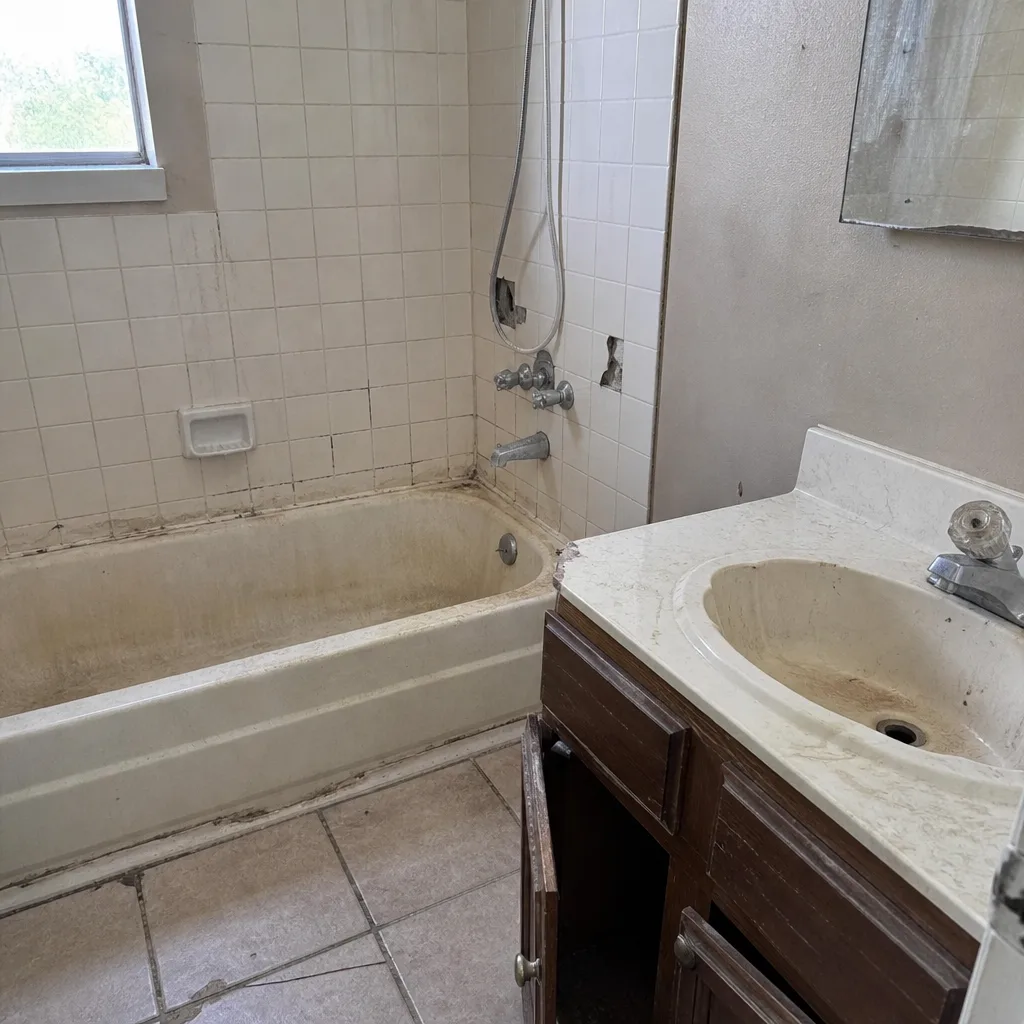 Before
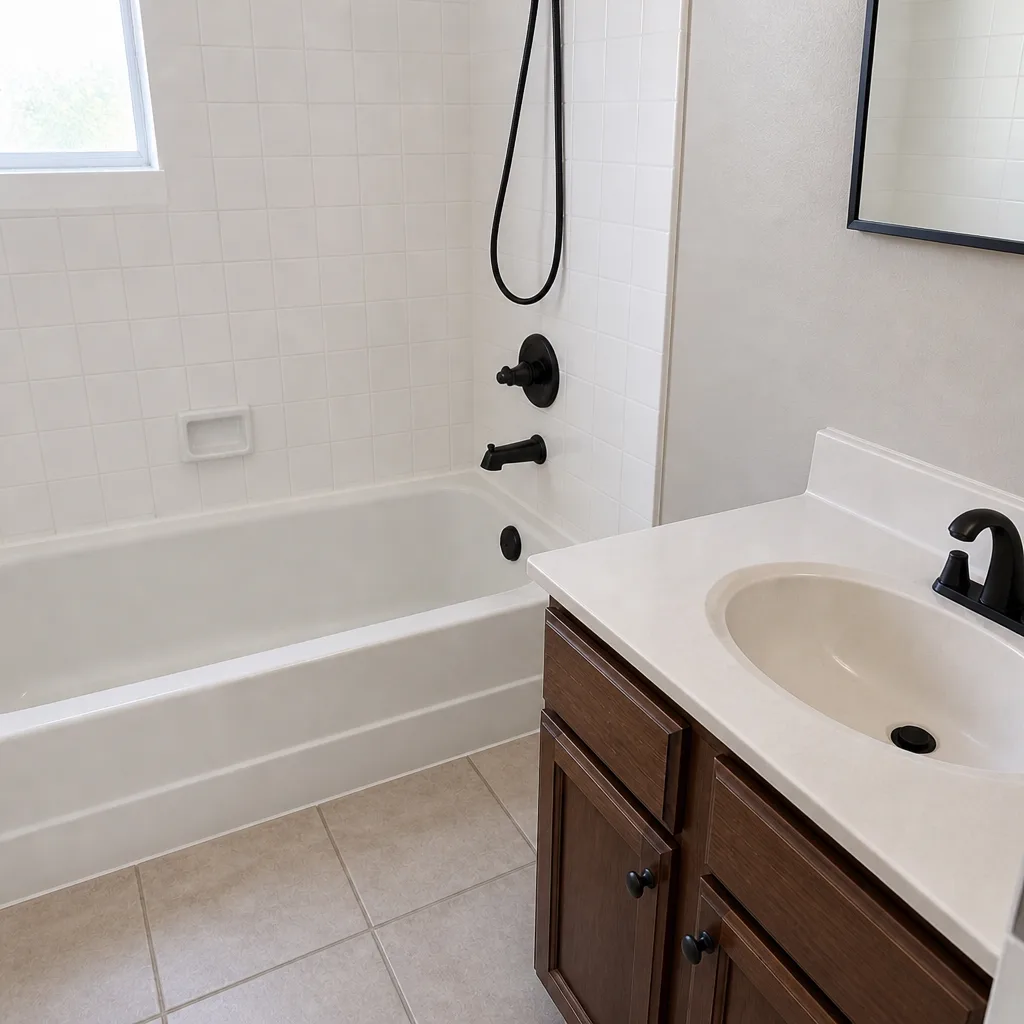 After
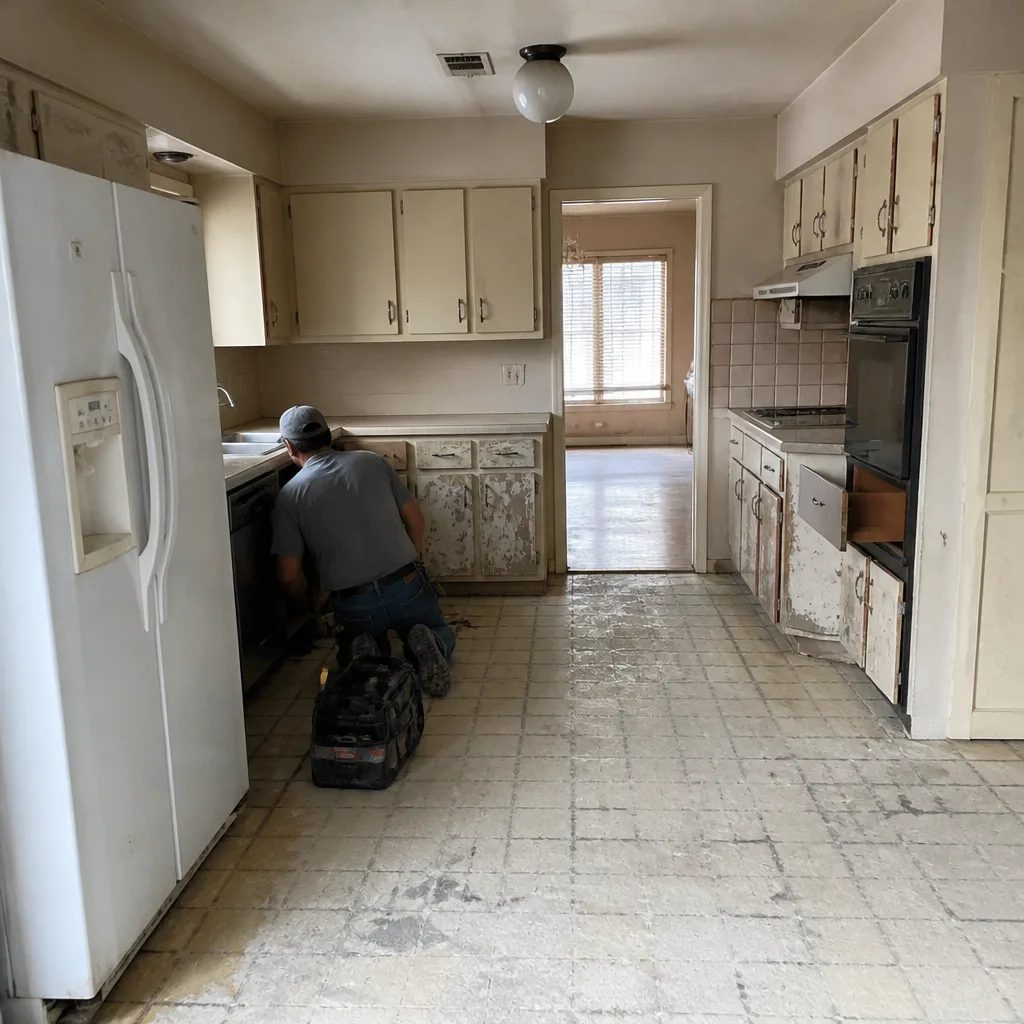 Before
 After
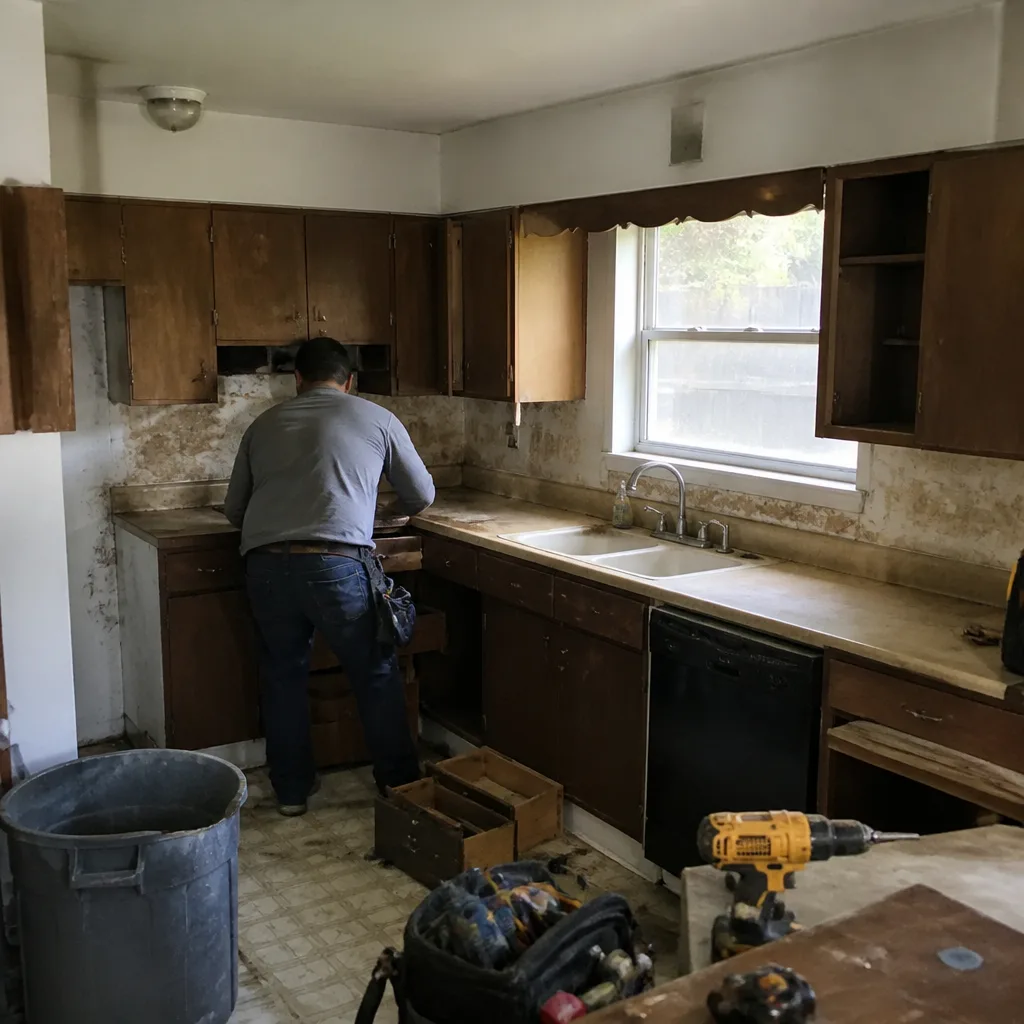 Before
 After
When to Call a Professional

Some post-remodel problems are safe to watch for a few weeks; others need a trained eye quickly. Call a professional when water is involved anywhere you can’t see it – behind a wall, under a floor, around a window frame – because moisture travels and the cost multiplies with every week you wait. Call when a structural element moves: a door frame that’s out of square, a floor that sags, a crack that widens rather than stabilizes. Call when a repair you attempted didn’t hold, which usually means the root cause was never fixed. And call when you’re not sure whether it’s maintenance or a defect, because a diagnosis is cheaper than a wrong repair. Penhallow Remodeling Frisco offers free estimates in Frisco – call (833) 954-5757 to schedule one. You’ll get a written price and a written guarantee before any work starts, and a live person answers the phone around the clock, not an answering service.
Frequently Asked Questions
Check your written guarantee for the exact window. With the 365-Day Done Right Promise, it’s a full year from project completion – report within that period and it’s covered. Many manufacturer warranties, like those on Cambria quartz or Therma-Tru doors, run longer or for life, and they sit alongside the installer’s guarantee. Report problems as soon as you notice them; waiting until the deadline is how small issues become big ones. Call (833) 954-5757 if you’re not sure which warranty applies.
A single hairline crack at a corner or seam that appears once and stops growing is usually normal settling, especially in Frisco where clay soils expand and contract with the seasons. A crack that keeps widening, runs diagonally across a wall, or appears alongside a door that no longer closes is worth a professional look. When in doubt, photograph it with a date and measure the width – if it grows, that’s your answer.
Yes, and a professional contractor should welcome it on water or structural issues. Frame it plainly: you’re getting a second look to be sure the fix is right, not shopping for a new company. Ask for a diagnosis – cause, correct repair, rough cost – not a competing bid for the whole job. The contractor who reacts badly to that is telling you something about how they’d handle a dispute.
Send a written demand letter with a firm deadline, file a complaint with the Texas Department of Licensing and Regulation, and check whether the contractor carries a surety bond you can claim against. For disputes in the low thousands, small claims court is often the fastest route – modest filing fees, no lawyer required. The written record you build along the way is your evidence, so document everything from the start.
Call someone, especially if the leak is behind a wall, under a floor, or around a window frame. Water you can’t see travels further than water you can, and a small leak that’s still small is a repair while a leak that’s been running for weeks is remediation. A professional diagnosis tells you whether it’s a failed caulk joint or a deeper installation issue – and that difference decides who pays.
It depends on the written scope. Paint touch-up at construction-damaged spots is typically covered; a full repaint of a weathered wall usually isn’t unless the contract said so. Caulk in a wet area is generally treated as a wear item – it cures and cracks on its own schedule. The key is what your contract named. Before your next project, ask for paint and caulk scope to be written into the contract, not left to interpretation.
The Bottom Line
The remodeling problems that are hard to resolve are rarely hard to fix. They’re stuck in the gap between what was said and what was written. Sort your issue by root cause – materials, installation, settling, or maintenance – then follow your guarantee’s process, document everything, and put every request in writing. If the contractor goes quiet, escalate in order: demand letter, TDLR complaint, bond claim, small claims court. The homeowner who insists on a written price and a written guarantee before work starts almost never has to use any of this. That’s the whole point of getting it in writing – and it’s the standard behind every job we take on.
Get a Written Price and a Written Guarantee
If your remodeling problem needs a professional diagnosis, or you’re planning a kitchen, bathroom, or whole-home project and want the price and guarantee in writing before anyone picks up a tool, call Penhallow Remodeling Frisco at (833) 954-5757 for a free estimate. A live person answers around the clock. Our technicians are background-checked and arrive in uniform, and every job comes with the 365-Day Done Right Promise backed in writing.
Written by the team at Penhallow Remodeling Frisco.