Last updated November 18, 2026





Free written scope consultation - allowances, timeline, and change-order rules on paper before a single trade is scheduled
General Contractor Warning Signs Every Homeowner Should Know
Here’s a pattern we’ve watched play out across Frisco hundreds of times: the contractor with the lowest bid is almost always the one pushing hardest to start Monday. “Lock in this pricing today,” he says, before you’ve seen a single page in writing. That pressure to sign before you’ve read anything is the red flag most homeowners explain away, and it’s the one that costs the most. This guide covers the procedural gaps that seem normal until something fails and you have no paper to stand on. We’ll show you what has to be in writing before demo day, how to check a Texas contractor’s license and insurance in five minutes, and the exact contract language that hides a price-change trap. Every warning sign here surfaces before work starts, back when walking away is still free.
Quick Answer
The biggest general contractor warning signs are not rude behavior or a messy truck. They’re procedural: no written contract before demo, no verifiable license or insurance certificate, vague language about “allowances” and “unforeseen conditions,” no committed arrival window, and pressure to pay a large deposit in cash. If a contractor can’t put the price, the schedule, and the guarantee in writing before work starts, you’re not hiring a builder. You’re hoping.
Styles & brands we work with
- Kitchen remodeling
- Bathroom remodeling
- Home additions & ADU
- Roofing
- Windows & doors
- Driveway & pavers
- Fence
Table of Contents
- Why a Verbal Estimate Is the Same as No Contract
- How to Check a Texas Contractor’s License and Insurance in Five Minutes
- The Contract Language That Hides a Price-Change Trap
- What a Missing Arrival Window Tells You
- What “We’ll Figure It Out as We Go” Actually Costs
- The Pre-Hire Red Flag Checklist
- Common Mistakes to Avoid
- Frequently Asked Questions
Why a Verbal Estimate Is the Same as No Contract
A verbal estimate that “converts to a contract later” is structurally identical to having no contract at all. Texas contract law requires certain terms in writing to be enforceable, and once your cabinets are in a dumpster, the number you remember hearing has no evidentiary weight. The handshake was never the problem. The problem is that a number in the air can drift.
Before any demo starts, these items must be on paper and signed by both parties:
- A fixed scope of work listing exactly what is being removed, installed, and finished, room by room, down to the trim.
- A written price that identifies what is included and, just as important, what is not.
- A payment schedule tied to completed milestones, not to a calendar date and never to a large upfront cash deposit.
- A start date and a defined arrival window for the first crew on site.
- A written guarantee naming what it covers and how long it lasts.
- Proof of insurance attached to the agreement.
We give every homeowner a written price before a single cabinet is pulled or tile is set, because a number you can hold us to is the entire point. In Frisco’s fast-moving remodel market, where new builds turn over quickly and schedules fill weeks out, the absence of a signed scope is the most common reason a job goes sideways. A general contractor worth hiring will hand you that document before you ask.
How to Check a Texas Contractor’s License and Insurance in Five Minutes
The state of Texas does not issue a single general contractor license the way many states do, which is exactly why homeowners assume there’s nothing to check. That assumption is costly. Texas regulates specific trades (electrical, plumbing, HVAC) through the Texas Department of Licensing and Regulation (TDLR), and a reputable general contractor will happily point you to the licenses their subs hold. Here’s how to verify in under five minutes:
- Check the specialty trade licenses. Go to the TDLR license search at https://www.tdlr.texas.gov/LicenseSearch/ and look up the electrician and plumber your contractor names. Their license status is public record.
- Confirm insurance directly with the carrier. Ask for a certificate of insurance naming general liability and workers’ compensation. Then call the number on the certificate, not the number your contractor gives you, and confirm the policy is active and the coverage amount.
- Ask for a W-9 or business registration. A real company has a business name and an address. Verify it through the Texas Secretary of State business search at https://www.sos.state.tx.us/corp/sosda/index.shtml.
- Check for complaints. Search the contractor’s business name against the Better Business Bureau and your local consumer protection office.
For a Frisco remodel pulling electrical and plumbing permits through the city, those permits also get inspected, which is another layer of protection. A contractor who dodges the insurance question or can’t name their subs’ license numbers is telling you something. Believe it.
The Contract Language That Hides a Price-Change Trap
You don’t need to read a 40-page contract like a lawyer, but you do need to spot three phrases that reliably show up right before a price balloons. These are the clauses that let a contractor who quoted low convert your fixed price into an open tab.
- “Markup” or “cost-plus” clauses. If the contract says materials will be billed at cost plus a percentage, your final number depends on how much the contractor wants to spend. A fixed price protects you. A cost-plus percentage protects them.
- Allowance structures. An allowance is a placeholder budget for items you haven’t picked yet, like tile or fixtures. A reasonable allowance reflects real market pricing. An artificially low allowance (say, $1,500 for tile in a full bathroom) exists so the number on the contract looks small; every dollar you spend above it gets added to your invoice. Ask what each allowance buys, in actual square footage and material.
- “Unforeseen conditions” carve-outs. Every remodel hits something unexpected. That’s why the clause matters. A fair contract defines what counts as unforeseen and how the price changes if it happens. A vague clause that says “additional costs may apply as conditions require” is a blank check. If we find rot under a Frisco bathroom floor, you’ll get a written change order with a price before anyone touches it. That’s the standard to demand.
The trap is rarely one phrase. It’s the combination: a low bid, a low allowance, and a loophole. That’s why the whole package has to be in writing before work starts.
What a Missing Arrival Window Tells You
A contractor who won’t commit to an arrival window is telling you exactly how they run their schedule, and you should listen. “Sometime that week” or “we’ll call you when we’re on our way” is not a scheduling philosophy, it’s a lack of one. It means your job sits at the bottom of a list that reschedules constantly, and you’ll be the one on the phone, waiting.
Why this matters beyond one frustrating morning:
- Schedule chaos costs you money. A delayed crew delays the subs behind it. Every day the electrician waits to rough in a wall is a day your family lives in a half-finished kitchen.
- It predicts how they handle problems. A contractor who can’t manage an arrival window is a contractor who won’t manage a surprise.
- It’s a paper trail issue. If the start date and arrival window aren’t in writing, neither is the deadline. When the job drags, you have nothing to point to.
We commit to a defined arrival window before work ever starts, because showing up in the window we gave is one of the first things the guarantee has to cover. In Frisco, where many households have two working parents and a school run, a missed window isn’t a minor annoyance. It’s a rearranged day. Ask for the window in writing before you sign.
What “We’ll Figure It Out as We Go” Actually Costs
“We’ll figure out the details as we go” is one of the most expensive sentences in remodeling. It signals that the contractor is treating scope decisions as a conversation to be had after demo, when you’re already committed and the old kitchen is gone. Every decision made in that state gets made under pressure and gets billed without a reference price.
Here’s how “figuring it out” translates to real money in Texas contractor disputes:
- Change orders without a baseline. With no written scope to compare against, the contractor can claim almost any work was outside the original agreement and bill it separately.
- Material substitutions. A vague spec lets the contractor swap a Cambria quartz countertop for an unnamed “quartz of equal quality.” If it isn’t specified, it isn’t guaranteed.
- Stop-work leverage. Trades halt while the “details” get settled. You pay for the lost days, sometimes in a warehouse fee or a mark-up on rented equipment.
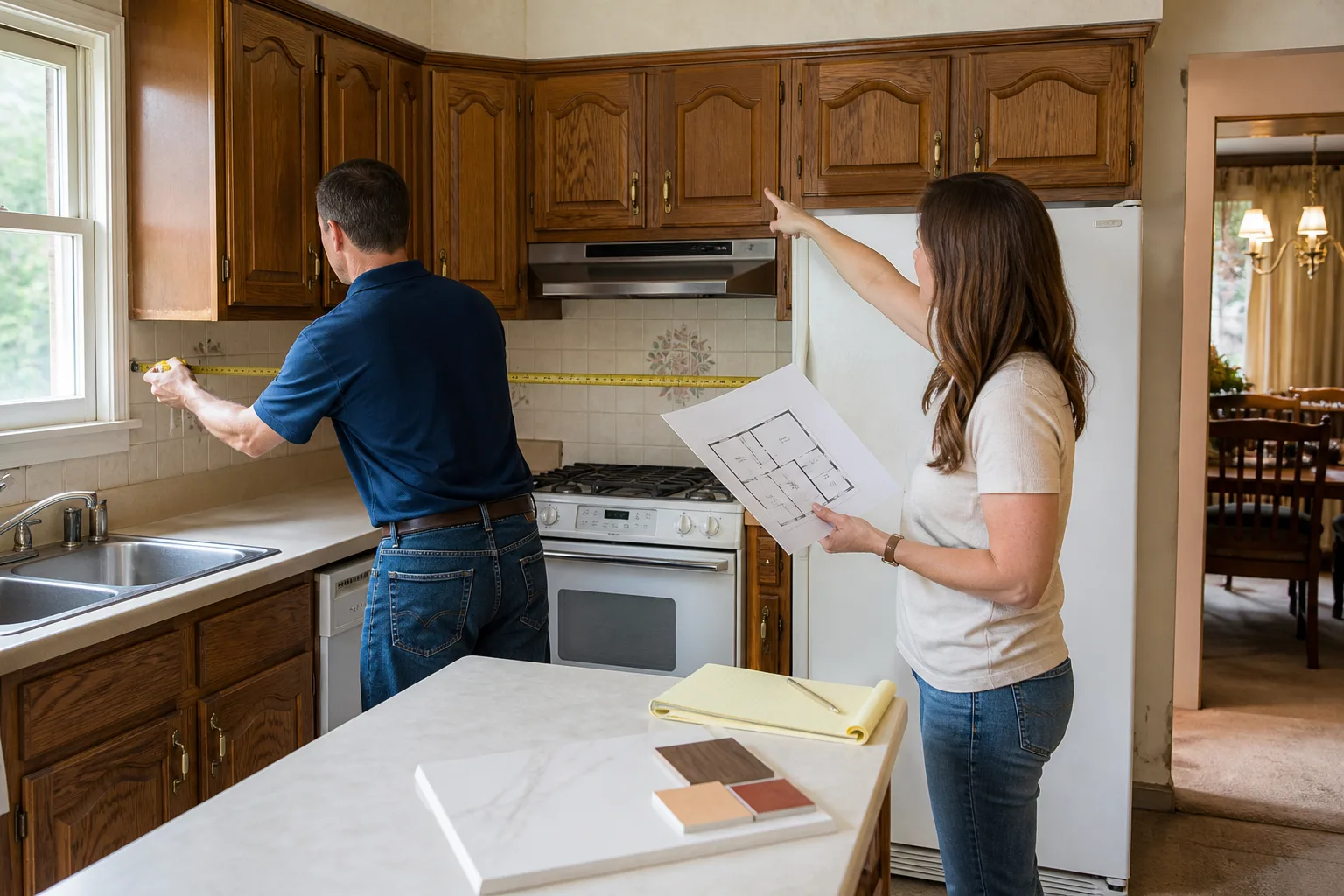
The fix is unglamorous: define the scope before demo. Spec the countertop. Name the cabinet line. Decide where the electrical outlets go. A good remodel plan means the surprises happen on paper, not in your kitchen. If you’re planning a kitchen remodeling in Frisco, that specificity is the difference between a fixed price and a painful surprise.
The Pre-Hire Red Flag Checklist
Run this checklist before you hand over a deposit. A “yes” to any of these means slow down:
- They push you to sign before you’ve seen a written contract. Pressure to lock in pricing today is artificial urgency.
- They ask for a large cash deposit upfront. A deposit tied to a schedule is normal; a large cash ask before materials arrive is a warning.
- They can’t produce a certificate of insurance. General liability and workers’ comp protect you, not them.
- The bid says “allowance” with no real numbers behind it. The final cost will be your problem.
- They won’t commit to a start date or arrival window in writing. Your schedule isn’t their concern.
- The guarantee is verbal. If it isn’t written, it doesn’t exist.
- You can’t reach a live person. When the job has a question, who answers?
We answer the phone, day or night, with a real person on the other end, and we think that’s what a Frisco homeowner should expect from any contractor they hire. If a company can’t clear this list, keep looking. There are plenty of licensed, insured, written-quote contractors in Frisco who will.
Common Mistakes to Avoid
- Choosing on price alone. The lowest bid often wins by leaving the most out. Compare scopes line by line, not just the bottom number.
- Paying in cash with no receipt. A record of every payment matters if a dispute ever comes up. Use a traceable method and get a receipt, especially for a Frisco remodel pulling city permits.
- Skipping the insurance call. Reading a certificate isn’t verifying it. Call the carrier and confirm the policy is active for the date the crew starts.
- Accepting a verbal arrival window. “We’ll be there Tuesday” means nothing at the end of a two-month project with no written schedule to check it against.
- Ignoring the guarantee’s fine print. Ask what an exclusion is and how long coverage lasts. A 365-day promise that excludes “normal wear” can be surprisingly narrow.
- Letting the scope grow verbally. Every “while you’re at it” request should go through a written change order with a price, or you lose the fixed number you fought for.
- Hiring a Texas contractor without checking TDLR and the Secretary of State. Five minutes of searching saves you from a ghost.
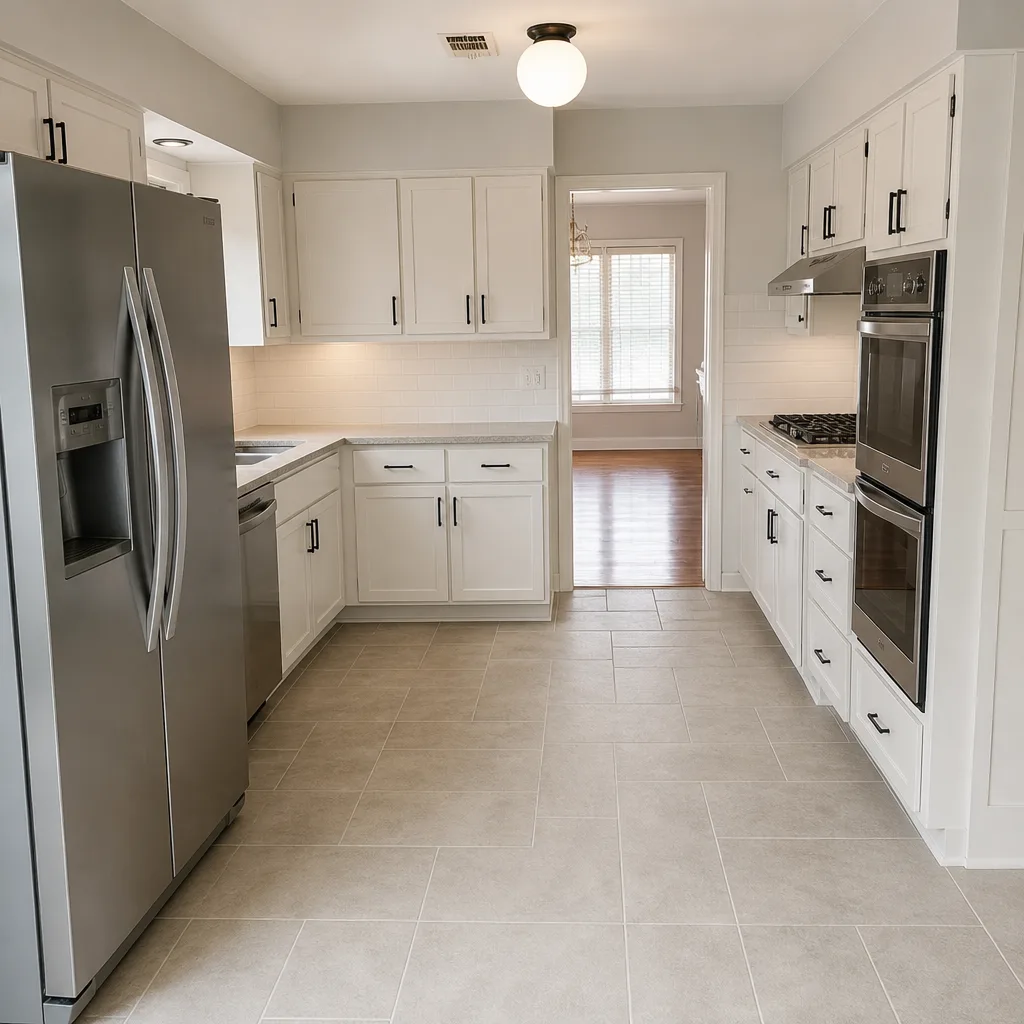
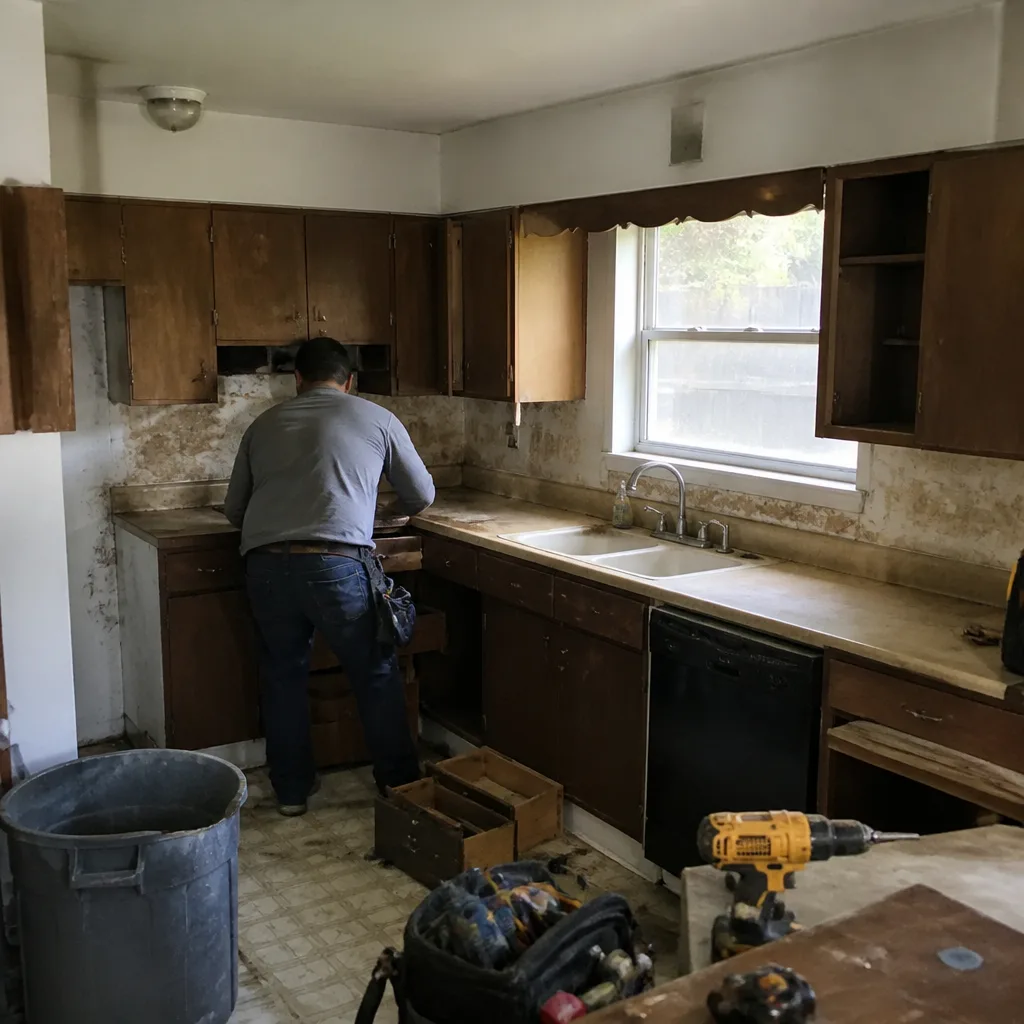
See the difference
 Before
 After
 Before
 After
 Before
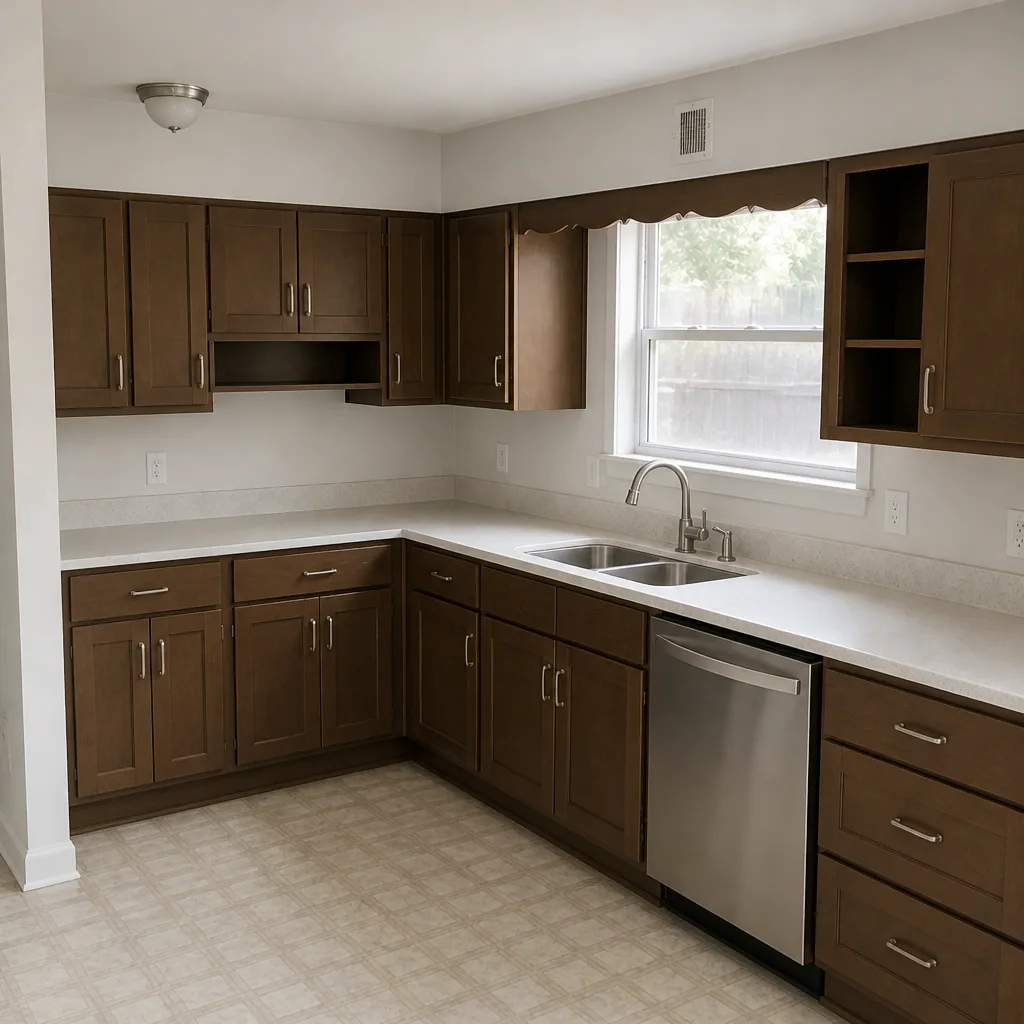 After
When to Call a Professional
Some of what a contractor does is genuinely dangerous, and no warning sign matters more than a contractor willing to cut corners on it. Structural changes, electrical panel or wiring work, gas line work, and anything involving a load-bearing wall should never be handled by a handyman or by a homeowner following a video. In Texas, electrical and plumbing work must be done by licensed trades, and pulling a permit is not optional for major structural changes. If a contractor offers to skip the permit to “save you time,” that’s your cue to walk. Permits get inspected, and inspections exist to keep you safe. When you’re planning real work on a Frisco home, a free estimate is the smart first step. Penhallow Remodeling Frisco offers free estimates in Frisco. Call (833) 954-5757 to schedule yours.
Frequently Asked Questions
The biggest red flag is a contractor who won’t give you a written contract with a fixed price, scope, and schedule before work starts. That single gap makes every other promise unenforceable. If someone hands you only a verbal estimate and pushes to start immediately, walk away and call (833) 954-5757 to speak with a company that gives you a written price first.
Ask for a certificate of insurance, then call the insurance carrier’s number on the certificate to confirm the policy is active and the coverage amount. Don’t rely on the contractor’s word or on a photocopy. If you’re in Frisco, TDLR license records cover the electrical and plumbing trades separately, so check those too.
A verbal estimate is generally not enforceable as a contract in Texas, and it gives you nothing to point to if the price changes. Get the scope, price, payment schedule, and guarantee in writing and signed by both parties. That is the document that protects you. Call (833) 954-5757 if you want to see what a written price looks like before you commit to anyone.
A written guarantee should name what it covers, how long the coverage lasts, and exactly what happens if the work fails. Look for clear language on the process, not a vague “satisfaction guaranteed” line. Our 365-Day Done Right Promise is in writing on every project, and if the work fails inside that period we come back and fix it at no charge.
It depends on the job: a full kitchen remodel in Frisco typically runs $18,000 to $55,000 depending on layout, cabinet line, and countertop material, while a bathroom remodel usually runs $9,000 to $30,000. What matters more than the number is getting it in writing up front. Call (833) 954-5757 for a written price before any work starts.
A written arrival window is a proxy for how well a contractor runs their schedule. If they can’t commit to a start date and a window in writing, they’re managing by phone call and guesswork, and delays cascade onto the trades behind them. Ask for it before you sign, and treat its absence as a serious warning sign.
The Bottom Line

The most dangerous contractor red flags aren’t the obvious ones. They’re the missing contract, the vague allowance, the unverified insurance certificate, the arrival window nobody committed to, and the price that “converts later.” Every one of these is a procedural gap you can spot before demo day, back when walking away costs you nothing but time. The good news: the same red flags are your checklist in reverse. A written price, a committed arrival window, verified insurance, and a written guarantee on every job are what a contractor with nothing to hide hands you without being asked. When you’re ready for that kind of estimate, Penhallow Remodeling Frisco is a general contractor in Frisco who puts the number and the promise on paper. Whether your next project is a bathroom remodeling in Frisco or something larger, we bring a written price before any work starts and back the work with our 365-Day Done Right Promise.
Call (833) 954-5757 to schedule your free estimate. A real person answers the phone around the clock, and the number on day one is the number on the invoice.
Written by the team at Penhallow Remodeling Frisco.