Last updated November 18, 2026







Free written scope consultation - allowances, timeline, and change-order rules on paper before a single trade is scheduled
Construction Permits, Codes & Inspections in TX: What You Need to Know
Here’s the fact that surprises almost every homeowner we talk to in Frisco: Texas has no statewide residential building code. None. Every city adopts and amends its own version of the International Residential Code, which means the window egress rule, the electrical panel clearance, and the energy requirements that passed inspection in Allen may hit a hold in Frisco for reasons that have nothing to do with how well the work was done. We’ve watched identical remodels clear the City of Frisco Development Services counter on one street and stall three miles away because the amendment schedule was different. This guide walks through what actually triggers a permit here, how the application and inspection sequence works, what Frisco’s local amendments mean for kitchens and baths, and what unpermitted work does to your insurance and your title when you go to sell.
Quick Answer
In Texas, construction permits are issued by the city, not the state, so the rules that govern your remodel in Frisco come from the City of Frisco’s adopted and amended International Residential Code, not from a statewide standard. Any work that touches structure, electrical, plumbing, mechanical systems, or changes the footprint or egress of a home generally requires a permit and inspections in Frisco, while purely cosmetic surface work usually does not. The homeowner is legally the permit holder of record; the contractor does the filing and coordination, but the responsibility for a legal, inspected job sits with you.
Styles & brands we work with
- Kitchen remodeling
- Bathroom remodeling
- Home additions & ADU
- Roofing
- Windows & doors
- Driveway & pavers
- Fence
Table of Contents
- Why Texas Has No Statewide Building Code
- Which Frisco Projects Legally Require a Permit
- The Frisco Permit Application Process, Step by Step
- Which Inspections Happen at Which Milestones
- How Frisco’s IRC Amendments Affect Common Remodels
- What Unpermitted Work Does to Insurance and Resale Title
- Contractor vs. Homeowner Responsibility Under Texas Law
- Common Mistakes to Avoid
Why Texas Has No Statewide Building Code
Texas is one of the few states that leaves residential code adoption entirely to local government. There is no state building code that applies to a single-family home, which is why a general contractor working across the Dallas-Fort Worth metro has to know a dozen different amendment schedules by heart. Frisco adopts the International Residential Code with local amendments, and those amendments are what actually govern your project. The base IRC is the foundation; the city’s amendments are the layer on top that changes the numbers.
A practical example: egress window requirements. The IRC sets minimum opening dimensions for emergency escape and rescue openings in sleeping rooms, but cities amend the specifics. Frisco’s requirements for egress windows in a basement conversion or a new bedroom don’t automatically match what a neighboring city requires. Same with electrical panel clearances and energy efficiency requirements for exterior additions. When a homeowner tells us “the contractor said it passed in Plano,” we explain that Plano’s schedule is not Frisco’s schedule, and the City of Frisco Development Services plan reviewer is not going to accept a Plano approval as evidence. This is the single biggest reason a project that looked straightforward on paper suddenly needs a revision and a re-submittal. Understanding it before you sign is worth more than any verbal promise about how fast a permit will clear.
Which Frisco Projects Legally Require a Permit
This is where the “it’s just cosmetic” assumption costs homeowners money. Under current City of Frisco Development Services rules, a permit is generally required for work that touches structural members, electrical circuits, gas lines, plumbing supply or drain lines, mechanical (HVAC) systems, or that alters the home’s footprint, roofline, or egress. Here’s the breakdown we walk clients through:
- Requires a permit: kitchen remodels that move or add electrical circuits, relocate a sink or gas range, or change a wall; bathroom remodels that move plumbing, add ventilation, or change a tub to a shower; any wall removal (even a “non-load-bearing” one, because the city wants to verify that claim); window and door replacements that change the size of the opening; exterior additions, decks over a certain height, and covered patios; electrical panel upgrades; and re-roofing in most cases.
- Usually does not require a permit: painting, flooring over an existing subfloor, replacing a cabinet door or a faucet like-for-like, swapping a light fixture on an existing circuit, and cosmetic countertop replacement that doesn’t move plumbing.
- The gray zone: a “simple” bathroom refresh that pulls the toilet to retile behind it. The moment the drain line is disturbed, you’re into permit territory in Frisco, and we’ve seen homeowners get caught on exactly this point during a resale inspection.
If you’re unsure whether your project crosses the line, the honest answer is to ask the city before demo day. A five-minute phone call to Development Services beats a stop-work order. We build the permit decision into every written scope we hand a homeowner, so there’s no ambiguity about what’s covered. When we quote a kitchen remodeling in Frisco, the permit line appears in the written price, not as a surprise add-on later.
The Frisco Permit Application Process, Step by Step
The sequence matters as much as the paperwork. Here’s how a residential remodel permit typically moves through the City of Frisco, in order:
- Scope and drawings. You need a written scope and drawings that show what’s changing: floor plan, elevations, electrical and plumbing locations. For structural changes, sealed engineering drawings are usually required.
- Contractor registration. The contractor filing on your behalf must be registered with the city and hold the appropriate state license for the trade work. This is where an unregistered “guy with a truck” quietly fails the process.
- Application submittal. The permit application goes to Development Services with the drawings, the scope, and the fee. Fees are calculated on project valuation, so a larger remodel pays more.
- Plan review. A plan reviewer checks the submittal against the adopted IRC and Frisco’s amendments. This is where egress, electrical clearance, and energy efficiency details get flagged. Review timelines vary with workload, so we build a realistic window into the schedule rather than promising a date.
- Permit issuance. Once approved, the permit is issued and posted on site. Work can begin.
- Inspections at milestones. The inspector signs off in sequence (detailed in the next section). You cannot skip ahead.
- Final inspection and certificate of occupancy or completion. The job closes out only when the final inspection passes.
We’ve handled enough of these in Frisco to know that the plan review stage is where timelines are won or lost, and it’s almost always a documentation problem, not a workmanship problem. A complete submittal clears; a thin one gets a revision request and the clock resets. That’s why the written price we give a homeowner includes the permit and inspection coordination as a defined line, not a vague “TBD.”
Which Inspections Happen at Which Milestones
Inspections are sequential, and each one has to pass before the next stage can proceed. For a typical Frisco kitchen or bath remodel, the order looks like this:
- Rough-in inspection: after framing, electrical, plumbing, and mechanical work is installed but before walls are closed up. The inspector needs to see the wiring, the pipe, and the ductwork in the open.
- Framing inspection: structural framing, headers, and any wall changes are checked before insulation and drywall.
- Insulation and energy inspection: confirms the energy efficiency requirements tied to Frisco’s amendments are met.
- Final inspection: after finishes, fixtures, and systems are complete. This is the inspection that closes the permit.
For a bathroom, there’s an added wrinkle: the ventilation fan and its duct routing get checked, and the waterproofing behind tile is inspected before the cement board substrate (the moisture-resistant layer behind your tile) is sealed up. Miss that sequence and you’re pulling fresh tile off the wall. For exterior additions, you’ll layer in foundation, framing, and sheathing inspections before the siding goes on. This is exactly why we sequence Jordan Hardie siding installs after the framing inspection clears, not before. When a homeowner asks us why the schedule has gaps in it, the answer is usually an inspection window we can’t compress.
How Frisco’s IRC Amendments Affect Common Remodels
The base IRC is fairly consistent, but Frisco’s local amendments are where three common remodel types get genuinely different treatment:
Kitchen circuits
The IRC requires dedicated small-appliance circuits and GFCI protection in kitchens, but cities can amend the specifics on circuit counts and protection requirements. In Frisco, a kitchen with an island cooktop and a relocated dishwasher often needs more dedicated circuits than the homeowner’s old panel can carry, which pushes an electrical panel upgrade into the scope. We see this constantly in Frisco’s 1990s and early-2000s subdivisions where the original panel was sized for a simpler kitchen.
Bathroom ventilation
Frisco’s amendments tighten exhaust fan requirements, and the fan has to vent to the exterior, not into the attic. A fan that dumps moist air into an attic in a North Texas climate is a mold problem waiting to happen. If your current bath fan vents into the attic, a remodel is the moment to fix it, because the inspector will check.
Exterior additions
Energy efficiency requirements for new conditioned space are part of the amendment schedule, and egress window dimensions for any new sleeping room are enforced strictly. An addition that adds a bedroom without a compliant egress window will not pass final. We plan the window into the drawing from day one rather than discovering it at inspection.
These are the details that make a bathroom remodeling in Frisco more than a cosmetic job. The code drives the scope, and the scope drives the written price.
What Unpermitted Work Does to Insurance and Resale Title
Unpermitted work is discovered more often than homeowners expect, and the discovery usually happens at the worst possible moment: during a buyer’s inspection or an insurance claim. Two things go wrong.
Insurance: most homeowner policies require that work be permitted and inspected where the code requires it. If a fire starts in an unpermitted electrical circuit, or a shower pan fails because an unpermitted plumbing change wasn’t inspected, the carrier can deny or reduce the claim. We’ve seen claims contested over a bathroom addition that was never permitted, and the fight was about the paperwork, not the work itself.
Resale title: during a resale, the buyer’s inspector flags unpermitted work, the title company notes it, and the deal either stalls or the seller has to retroactively permit and inspect the work or credit the buyer. In Frisco’s competitive resale market, a flagged unpermitted addition can cost a sale outright. The buyer’s lender may also refuse to fund until the work is legalized. The retroactive permit process is slower and more expensive than doing it right the first time, and it can require opening walls to expose work that should have been inspected before it was closed.
The lesson is simple: the permit is cheap compared to the retroactive permit. And a real general contractor builds it into the price from the start. If you’re planning a Penhallow Remodeling Frisco home project, the permit and inspection line is in the written scope you sign, not something you discover after the fact.
Contractor vs. Homeowner Responsibility Under Texas Law
This is the part that gets muddled in conversation. Under Texas law, the homeowner is the property owner and the permit holder of record for work on their own home. The contractor applies on the homeowner’s behalf and coordinates everything, but the legal responsibility for a compliant, inspected job ultimately rests with the owner. That means if a contractor skips a permit, the city’s enforcement lands on you, not on them.
- Homeowner: holds the permit of record, is responsible for the property being code-compliant, and bears the cost of retroactive permitting if work is discovered unpermitted.
- Contractor: responsible for filing a complete and accurate application, coordinating inspections, and performing the work to the adopted code. A licensed, registered contractor has skin in the game because a failed inspection is on their record with the city.
- The overlap: the homeowner signs, the contractor files and executes, and both are on the hook if something goes wrong. That’s why you want the permit and inspection sequence written into the contract.
We put the permit scope in writing before work starts, which is the whole point of the Kingswell standard: say the price before the work, show up in the window we gave, leave the place cleaner than we found it. A written price that includes the permit and the inspections is the homeowner’s best protection under Texas law.
Common Mistakes to Avoid
- Assuming cosmetic means permit-free. A bathroom refresh that pulls the toilet or moves the sink is a permit job in Frisco, full stop. Homeowners who skip it get caught at resale.
- Trusting a verbal “we’ll handle the permit.” Get the permit and inspection coordination in the written contract. A verbal promise is worth nothing when the city comes knocking.
- Using a contractor not registered with the city. A crew that can’t file on your behalf isn’t saving you money; it’s setting up a retroactive permit later.
- Closing up walls before inspection. Rough-in inspections have to happen before drywall. A crew that skips the rough-in is either unaware of the sequence or hoping to slide past it.
- Venting a bath fan into the attic. In Frisco’s climate this traps moisture and invites mold. It fails inspection and it fails the house.
- Forgetting egress on a new bedroom. Adding a bedroom without a compliant egress window will not pass final. Plan it into the drawing.
- Skipping the exact city’s amendment schedule. What passed in Allen doesn’t automatically pass in Frisco. Each city amends its own IRC, and the amendments are the rules that apply.
See the difference
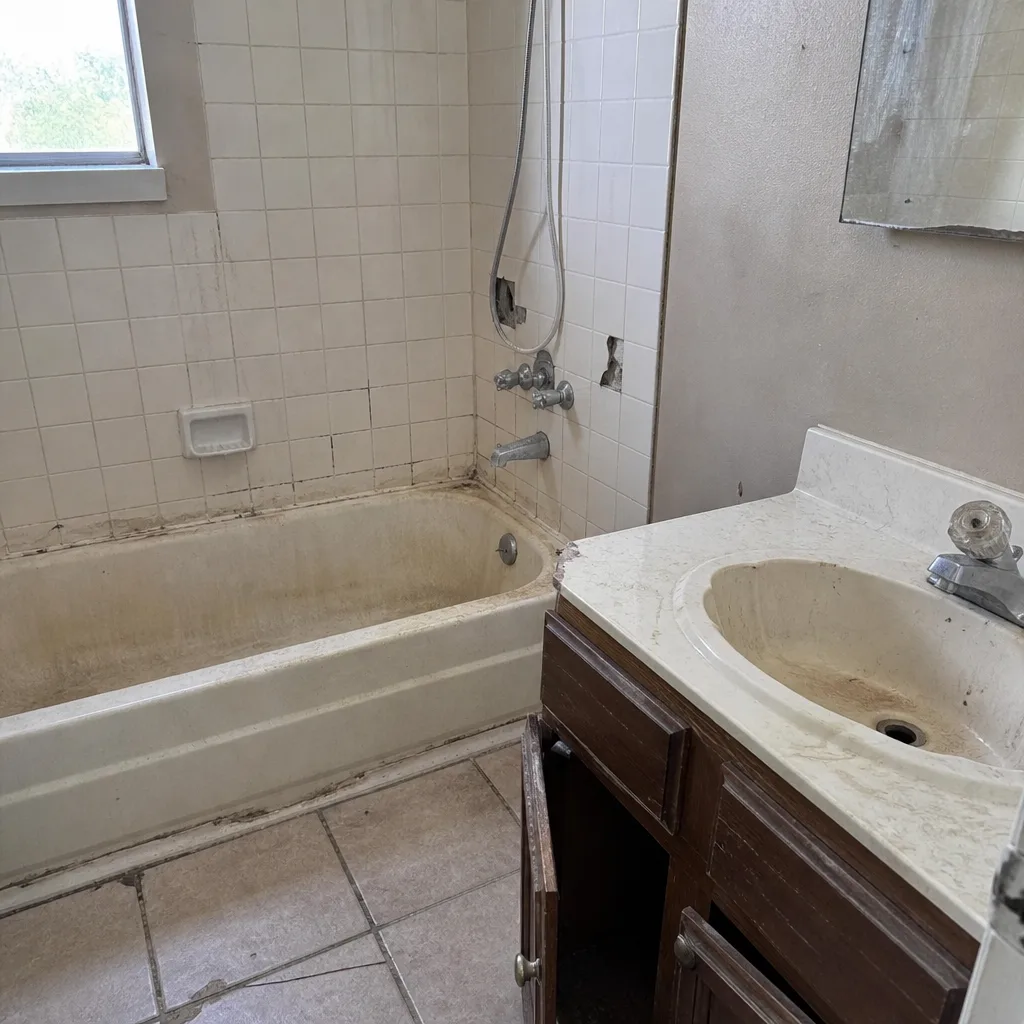 Before
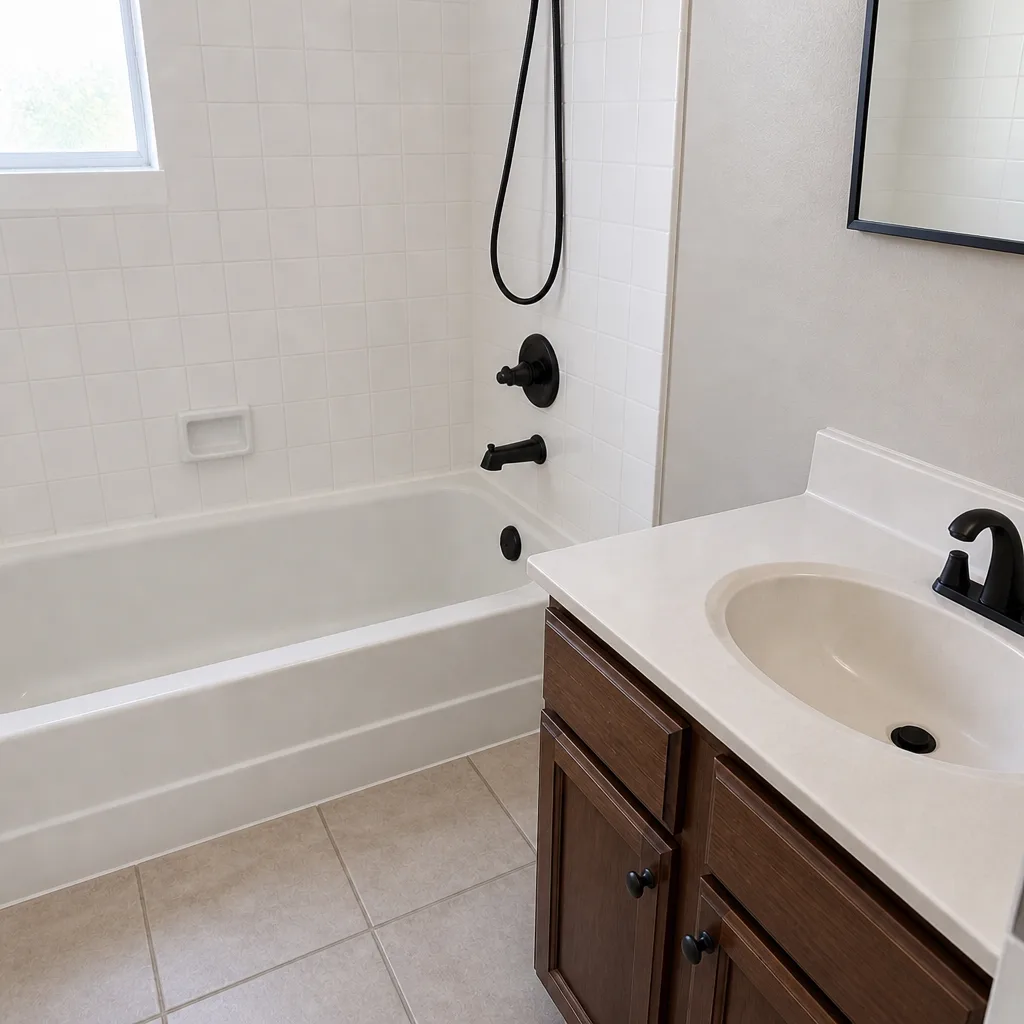 After
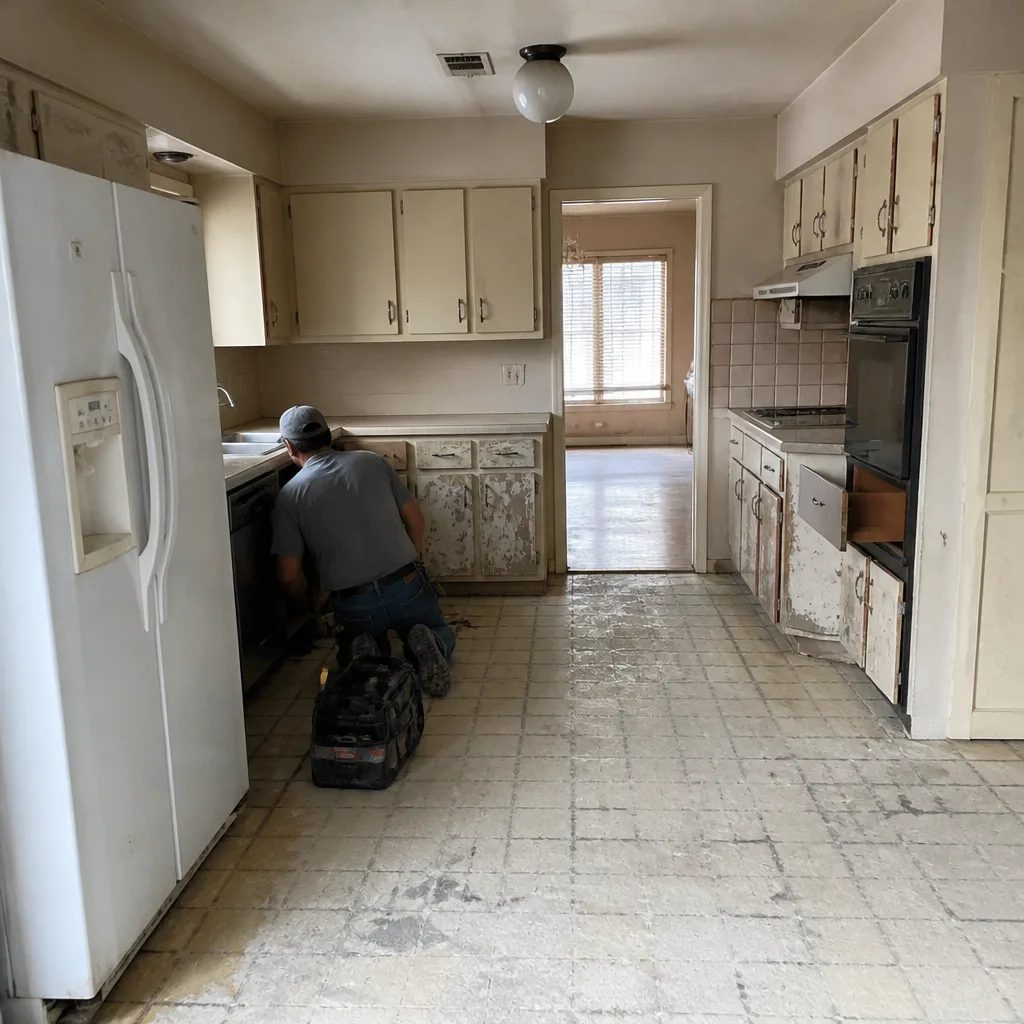 Before
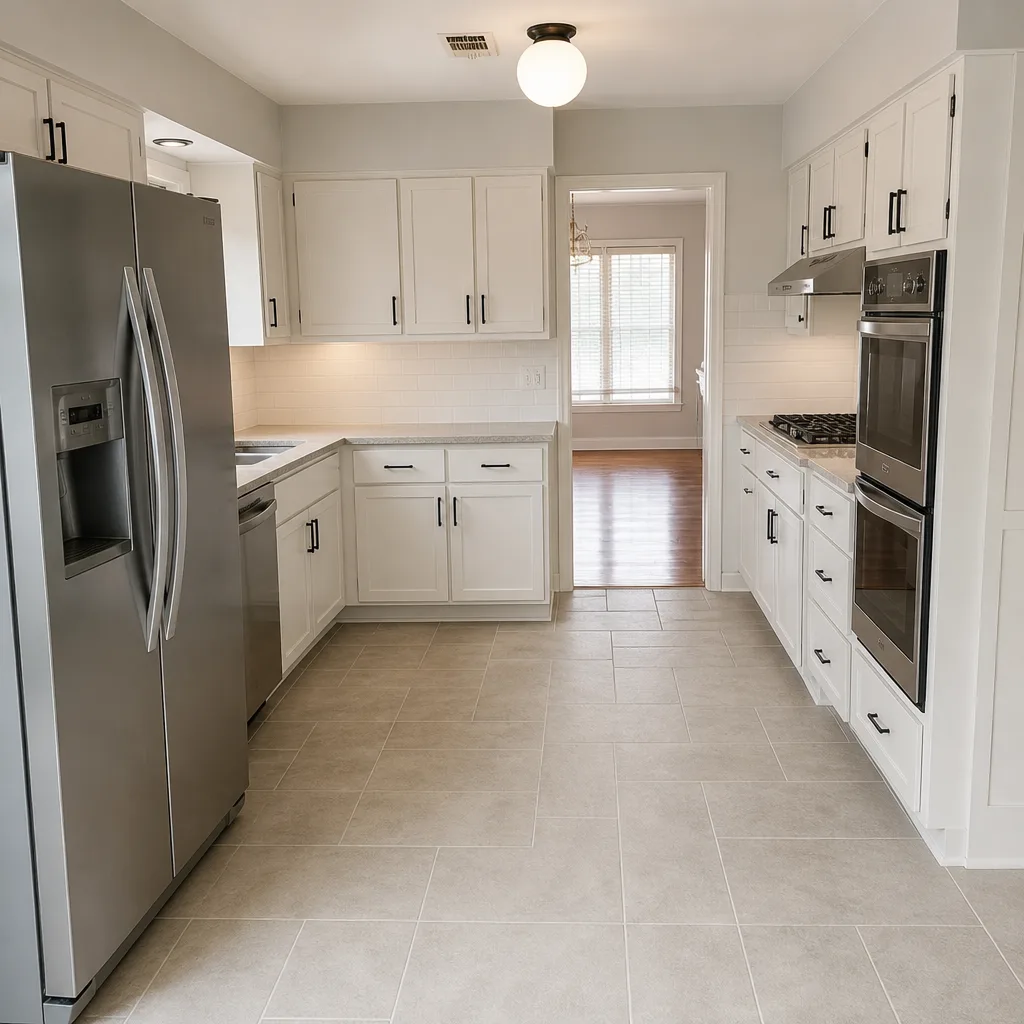 After
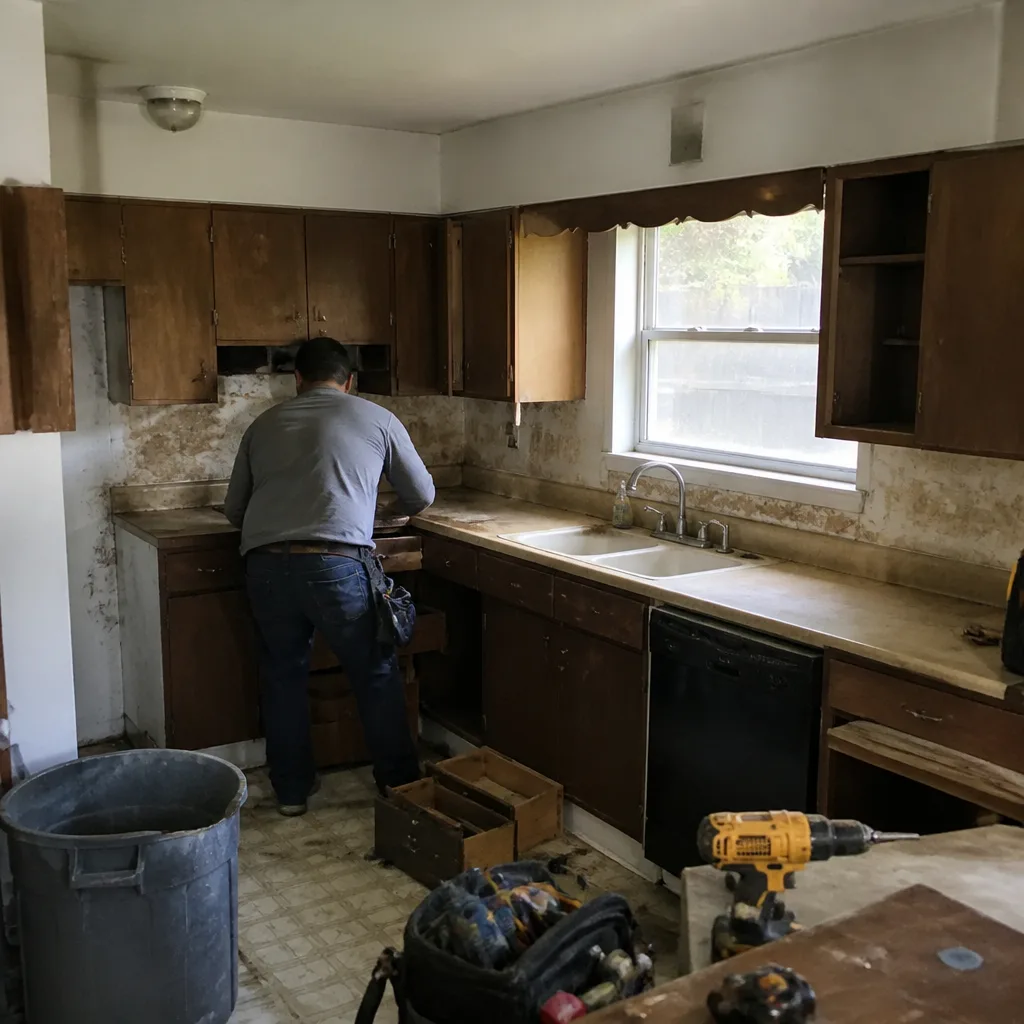 Before
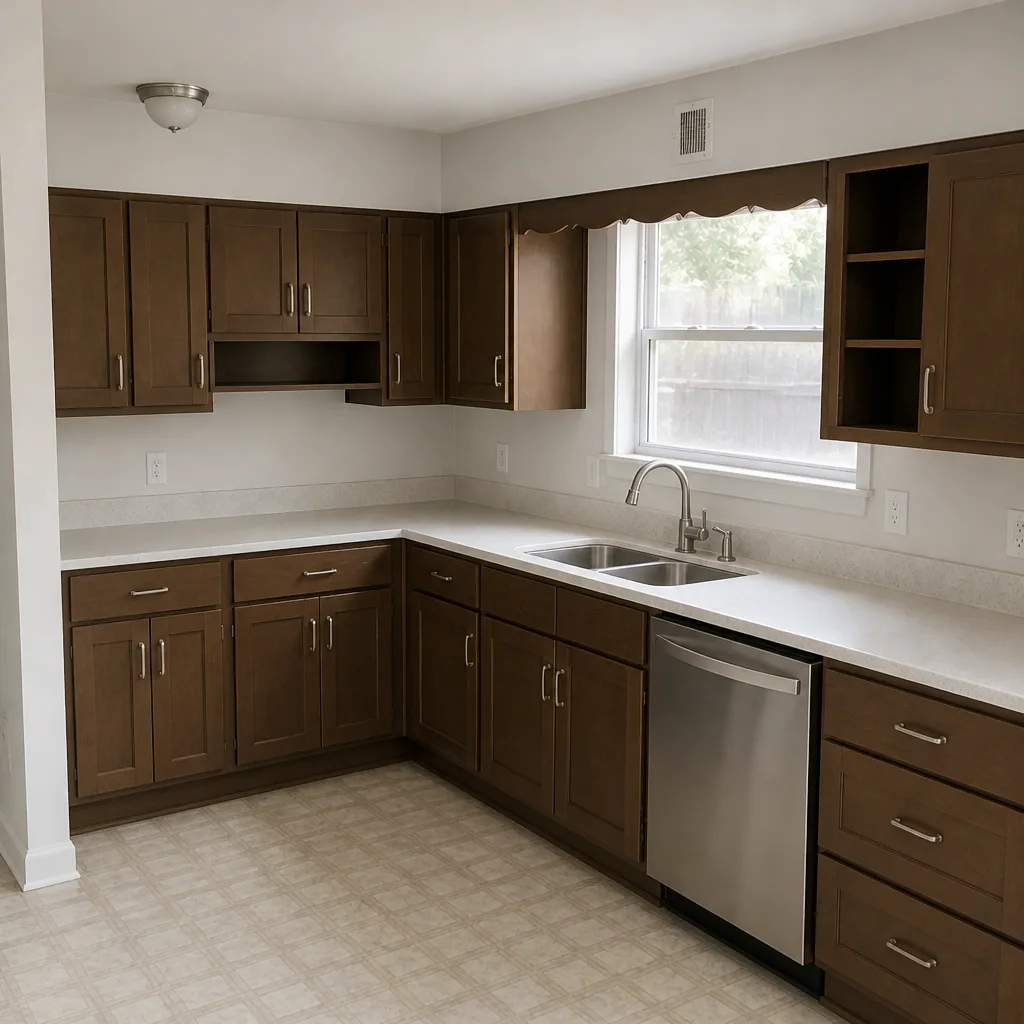 After
When to Call a Professional
If your project touches structure, electrical, plumbing, mechanical systems, or changes your home’s footprint or egress, you need a licensed contractor who knows Frisco’s amendment schedule and the current Development Services process. That includes any wall removal, kitchen or bath reconfiguration, panel upgrade, or exterior addition. It also includes restoration work where the scope is unclear, like a bathroom that’s been leaking behind the tile, because the permit question and the waterproofing question are the same conversation. Our technicians have up to 22 years of experience navigating these permit and inspection sequences in North Texas, and we handle the filing and coordination so the job closes clean. Penhallow Remodeling Frisco offers free estimates in Frisco. Call (833) 954-5757 for a written price that includes the permit and the inspection schedule up front.
Frequently Asked Questions
Yes, in most cases. Any kitchen remodel that moves or adds electrical circuits, relocates plumbing or a gas range, or changes a wall requires a permit and inspections from the City of Frisco. Purely cosmetic work like painting, refinishing cabinets, or replacing a like-for-like faucet usually does not. When in doubt, ask Development Services before demo day. Call (833) 954-5757 for an exact quote on a permitted kitchen remodel; estimates are free.
Permit fees in Frisco are calculated on project valuation, so a larger remodel pays more than a small one. Exact fees depend on the scope and the value declared on the application, which is why a written quote should show the permit fee as a line item rather than a vague allowance. Call (833) 954-5757 for an exact quote on your project; estimates are free.
It shouldn’t, if the permit and inspection scope is written into the contract before work begins. A written price that includes permits and inspections means the number on day one is the number on the invoice. Upfront pricing written into the scope is the whole point of the Kingswell standard. Call (833) 954-5757 to schedule a free estimate with a written price before any work starts.
Yes. We file the permit application with the City of Frisco, coordinate the plan review, and manage the inspections at each milestone. Under Texas law you remain the permit holder of record, but we handle the paperwork and sequence. Call (833) 954-5757 to talk through your project; estimates are free.
The buyer’s inspection typically flags unpermitted work, and the title company notes it, which can stall or kill the sale. In most cases the seller has to retroactively permit and inspect the work or credit the buyer. Retroactive permitting is slower and more expensive than doing it right the first time. Call us before you start, not after you sell. (833) 954-5757.
Timelines vary with the city’s plan review workload, and a complete submittal clears faster than a thin one. Plan review is where the schedule is usually won or lost, so the drawings and scope need to be complete before submittal. Call (833) 954-5757 for an exact quote and a realistic schedule for your Frisco project; estimates are free.
The Bottom Line

Texas leaves residential code to its cities, and Frisco enforces its own amended IRC on kitchen circuits, bathroom ventilation, egress windows, and exterior additions. Any work touching structure, electrical, plumbing, mechanical systems, or egress requires a permit and a sequence of inspections, and unpermitted work follows you to the resale table. The homeowner holds the permit of record, but a licensed contractor files, coordinates, and stands behind the job. The one thing that protects you through all of it is a written price that includes the permit and the inspection schedule before work starts. If you want that in writing, call (833) 954-5757 for a free estimate. Our technicians have up to 22 years of experience navigating Frisco’s permit and inspection process, and every job comes with the 365-Day Done Right Promise in writing.
Written by the team at Penhallow Remodeling Frisco.