
Last updated November 18, 2026








Free written scope consultation - allowances, timeline, and change-order rules on paper before a single trade is scheduled
Construction Warning Signs: A Frisco Homeowner’s Reference Guide
By the time demo is done and materials are ordered, most homeowners feel it’s too late to change course. Here’s what we’ve learned watching Frisco jobs from the inside: the warning signs that predict a project going sideways almost always show up in the first 72 hours on site, not weeks later. A permit that never gets posted. A crew that doesn’t match the company name on the contract. Materials that look close but aren’t what you signed off on. This guide walks you through what those signs mean, what to document, and how to escalate without torching the working relationship you still need.
Quick Answer
The earliest and most reliable construction warning signs in Frisco are a missing posted permit, undisclosed subcontractors on site, and materials that don’t match your written specification. A clean, organized job site correlates with careful workmanship; a chaotic one usually predicts cut corners. If something looks wrong in the first week, document it in writing the same day and request a written response within 48 hours.
Styles & brands we work with
- Kitchen remodeling
- Bathroom remodeling
- Home additions & ADU
- Roofing
- Windows & doors
- Driveway & pavers
- Fence
Table of Contents
- The First Week: What to Watch For On Site
- Job Site Cleanliness as a Leading Indicator
- “We Hit an Unexpected Problem”: Legitimate or Opening Move?
- Permits and Inspections in Frisco
- Undisclosed Subcontractors and Who’s Actually Working
- How to Document a Concern in Texas
- How to Escalate Without Blowing Up the Job
- What a Written Notice of Deficiency Should Contain
The First Week: What to Watch For On Site
The first week tells you more about how a job will end than any contract clause. This is when the contractor either sets up the systems that protect you or doesn’t. In Frisco, where remodel volume stays high and good crews get booked out fast, small omissions early tend to compound. Here’s what to look for.
A posted permit. In Texas, most cities require the permit placard visible from the street or posted inside a front window. If you don’t see it by day two, ask why. Sometimes it’s in the truck. Sometimes it hasn’t been pulled at all. That second scenario is the problem, and it’s your name on the property record, not the contractor’s.
Uniforms and name recognition. On a legitimate job, the people walking through your home should be identifiable. Background-checked, uniformed technicians are a standard we hold to on every Penhallow project, and it’s a reasonable thing to expect from any contractor you hire in Frisco. When unfamiliar faces arrive with no company marking and no introduction, that’s your cue to ask who they are and who they report to.
Material matching. If your contract specified KraftMaid cabinetry or Cambria quartz, the boxes and slabs should say so. Look at the packaging. Check the labels. This isn’t paranoia; it’s the same due diligence you’d do on a vehicle title. Substitutions happen, and when they do, you deserve to know before the material is installed.
Daily communication. A contractor who goes quiet after day one is telling you something. So is one who shows up at 7 a.m. with a plan and checks in at the end of the day. The pattern matters more than any single incident.
Job Site Cleanliness as a Leading Indicator
Most homeowners think of cleanliness as a courtesy. In our experience it’s closer to a diagnostic. A crew’s site discipline and its workmanship discipline come from the same place: whether someone on that crew cares about the details when nobody is checking. In Frisco, where homes sit close together and HOA rules often govern dumpster placement and parking, site management is also a practical matter.
What a well-run site looks like:
- Debris cleared at the end of each day, not stacked in a corner “for later”
- Tools stored in one place, not scattered across three rooms
- Dust barriers up before demo begins, not after you ask
- Dumpster or haul-away staged where HOA rules and neighbors allow
- Floors protected along the path crews walk most
- A written daily log, however brief, of what was done and what’s next
Sloppy sites create real risk. A pile of offcuts near a walkway becomes a trip hazard. Drywall dust tracked through a return vent lands in your HVAC. And worker morale, which drives quality, tends to follow the site. A crew that leaves a mess is a crew whose installation details (tile lippage, caulk lines, trim joints) will show the same neglect. The Kingswell Way phrase we work by is simple: leave the place cleaner than we found it. Treat that as a measurable promise, because it is.
“We Hit an Unexpected Problem”: Legitimate or Opening Move?
This is the sentence every homeowner dreads, and it’s legitimate maybe half the time. The difference has almost nothing to do with how bad the problem sounds and everything to do with how it’s presented. In Frisco’s older housing stock, moving to a 1990s or early 2000s home often means finding things the original inspection missed: undersized joists in an added room, non-permitted electrical work from a prior owner, or rot behind a shower wall. Those findings are real.
Here’s how to separate the two cases.
- Ask for photos and a written scope. A contractor with a real problem can show you a photo, name the location, and hand you a written scope of the fix with a price. A contractor with an invented problem will stay vague and press for a “ballpark” approval verbally.
- Check the timing. Genuine surprises cluster around demo (day 2 to day 5). A “problem” that appears after a signed contract but before demo, with a number attached, is rarely about the building.
- Ask what’s behind the wall. A trained contractor should be able to tell you what they expected to find and what they actually found. If they can’t articulate the difference, they may have never looked.
- Get a second opinion on the scope, not the price. A brief call or visit from an independent contractor costs nothing and tells you whether the scope is reasonable.
- Hold the escalation. A legitimate finding gets an added written line item and a change order you sign. Anything else is the opening move in a price escalation.
The no-hassle upfront pricing model exists for exactly this reason. A written price before the work starts, with a defined scope, means a “surprise” after demo is a documented change order, not a verbal check you’re pressured to write.
Permits and Inspections in Frisco
Frisco permits exist to protect you and the next buyer of your home. When a contractor skips them, the risk doesn’t go away. It just moves onto your property record. Most structural work, and a surprising amount of mechanical and electrical work, requires a permit through the City of Frisco. The permit placard should be posted on site during the work, and the inspection sign-offs should be documented when it’s done.
What to verify:
- The permit is pulled in the contractor’s name or yours, not “in progress” for weeks
- The scope on the permit matches the scope on your contract
- The inspection dates are listed on the permit card and signed
- You receive a copy of the final inspection sign-off, in writing, before final payment
If a contractor in Frisco pushes back on pulling a permit, ask what specifically they’re proposing to do without one. “It’s a small job” isn’t a code exemption, and the phrase comes up most often on work that quietly fails when it’s resold. A few extra days on the calendar is far cheaper than a failed inspection years later.
Undisclosed Subcontractors and Who’s Actually Working
Subcontracting is normal in construction and isn’t a warning sign by itself. What matters is whether the contractor tells you in advance and assumes responsibility for the sub’s work. The problems start when a crew arrives on day five, doesn’t match anyone you’ve met, and the contractor can’t explain who they are or whose insurance covers them.
Ask every contractor at the start:
- Which trades will be subcontracted, and to whom?
- Are those subcontractors insured and bonded, and can you see the certificate?
- Who is the point of contact if something goes wrong with their work?
- Does your written guarantee cover their work as well as your own?
Our answer to that last question is where we draw the line: the 365-Day Done Right Promise applies to every project, and it covers us even if a supplier or a trade partner made the mistake. If your contractor can’t tell you how their guarantee extends to subcontracted work, ask them to put their answer in writing. On a Frisco project involving drywall, tile, plumbing, and electrical, that’s four separate trades and four separate questions.
How to Document a Concern in Texas
Texas is a notice state for construction defect disputes. That means the steps you take in the first weeks, and whether they’re written, become evidence if the job ever ends up in mediation or a court. The good news is that documentation is straightforward, and it costs you a phone camera and a notebook.
- Take dated photos and short videos every time something looks wrong. Include the room, the item, and something that establishes the date (a newspaper, your phone’s date stamp, the permit card).
- Write down what you observed and when. “On Tuesday at 10 a.m., three workers arrived in an unmarked truck with no company identification. None were introduced. Asked supervisor; no answer.” That’s the format.
- Email your concern to the contractor, not just text. Text disappears. Email creates a written record you can forward. If the contractor only responds by text, follow up with an email summarizing their answer.
- Keep copies of the contract, change orders, permit docs, and payment receipts in one folder, digital or paper. Include the schedule you were promised in writing.
- Note every verbal conversation you can. Date, time, who you spoke with, what was said. A short handwritten log is admissible and credible.
- Don’t block the work unless it’s unsafe. Documentation protects you; work stoppage creates a counter-claim. If it’s not safety-critical, keep the record and keep the job moving.
This is also why written documents matter at the front end. A written scope, a written price, and a written guarantee are the three documents you’ll refer back to if a concern turns into a dispute.
How to Escalate Without Blowing Up the Job
Escalation has a bad reputation because most homeowners do it wrong: they call the office in anger, the contractor gets defensive, and the relationship poisons for the rest of the project. There’s a better path, and it protects both your position and the work in progress.
Step 1: Raise it with the supervisor on site, in person, calmly. Ask a specific question, not a rhetorical one. “The caulk line along the tub isn’t uniform, can we look at it together?” lands differently than “this is unacceptable.”
Step 2: Give a written summary of the conversation the same day. Email a short note: “Following up on our conversation this morning about the tile on the east wall of the master bath. My understanding was you would re-set the three tiles near the drain by Friday. Please confirm.”
Step 3: If the issue isn’t resolved, request a written response within 48 hours. A written notice of deficiency, sent by email and certified mail if it’s serious, gives the contractor a clear deadline and a clear path to fix it before the matter grows.
Step 4: Escalate to the owner or general manager in writing, not the field supervisor. Same format, same calm tone. Include the prior emails and the response (or lack of one).
Step 5: Know when to stop. If the contractor won’t put a commitment in writing after a documented escalation, that’s your signal. Some things can’t be saved, and the ones that can’t are the ones where the response to a reasonable written request is silence or evasion.
What a Written Notice of Deficiency Should Contain
Texas courts and mediation panels take a written notice of deficiency seriously when it’s clear and specific. The format is short. What matters is that every element is present.
- Property address and job reference. The address, the contract date, and the project description.
- Date and description of the deficiency. Specific, observable, and located. “The grout along the north edge of the shower pan is cracking (approx. 18 inches) as of Feb. 3.”
- Reference to the contract or written scope. Quote the clause or line item that was supposed to be met.
- Evidence included. Dated photos, video, or a copy of the earlier email thread.
- Requested remedy and deadline. “Please inspect and correct by [date]. Please confirm in writing within five business days.”
- Contact information and a stated delivery method. Email and certified mail are both standard.
Keep a copy for your records, and send it by a method that produces a delivery receipt. A notice sent is a notice the contractor can’t deny receiving.
Common Mistakes to Avoid
- Assuming you’re locked in after demo. You’re not. A written notice of deficiency and a pause on non-critical work is always an option, and most contractors respond better to a documented concern than to a silent homeowner.
- Relying on verbal approvals. If the scope changed or a material was substituted, get it in writing, even if that means waiting a day. In Frisco, where inspection timelines can shift, a verbal “we’ll handle it” can cost you weeks.
- Skipping the permit check because work is “minor.” Minor scope is exactly where permits get skipped and costs land on your property record years later.
- Letting the subcontractor question go unanswered. Ask at the start, not when the crew is already half-finished and you’re wondering who’s covered.
- Treating a messy site as a personality quirk. Site discipline and craftsmanship discipline come from the same place. Read the mess as a leading indicator.
- Approving a “surprise problem” change verbally. Every change gets a written scope, a written price, and a change order you sign. No exceptions.
See the difference
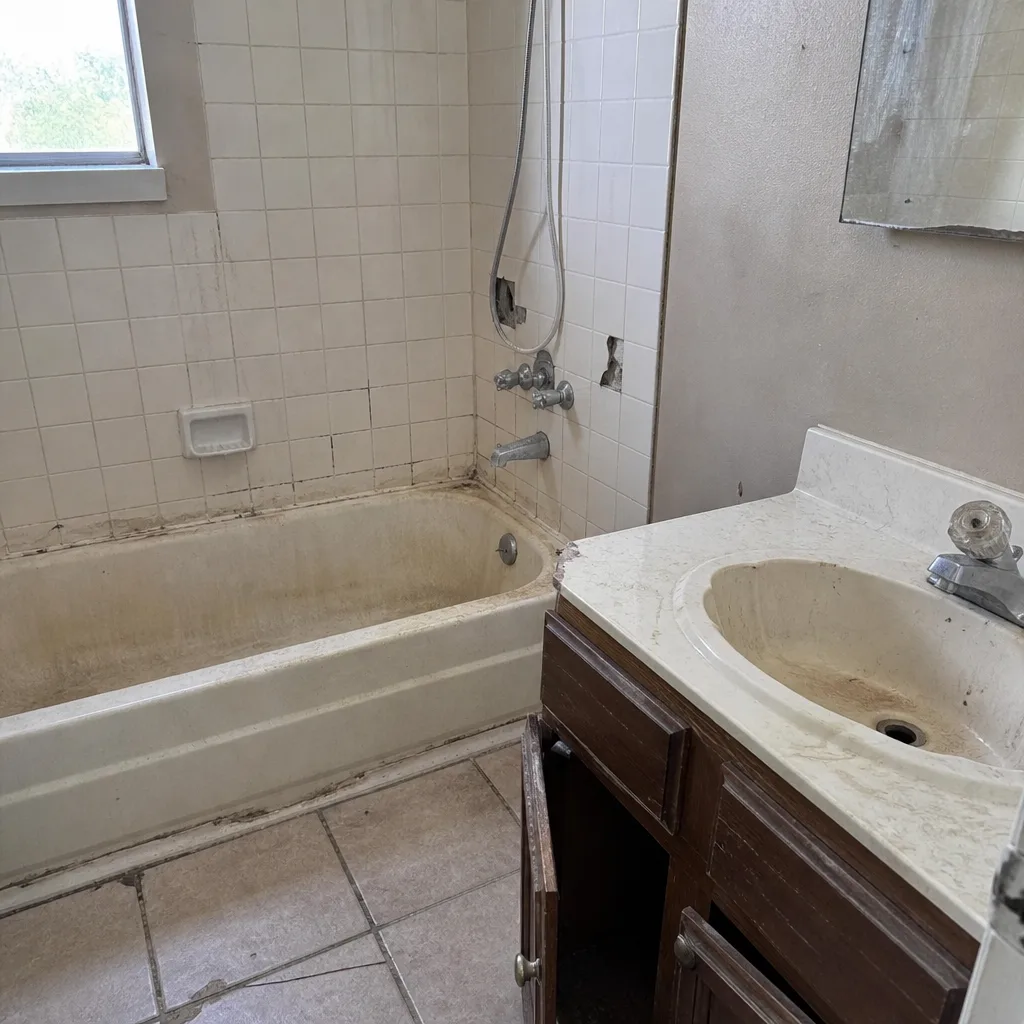 Before
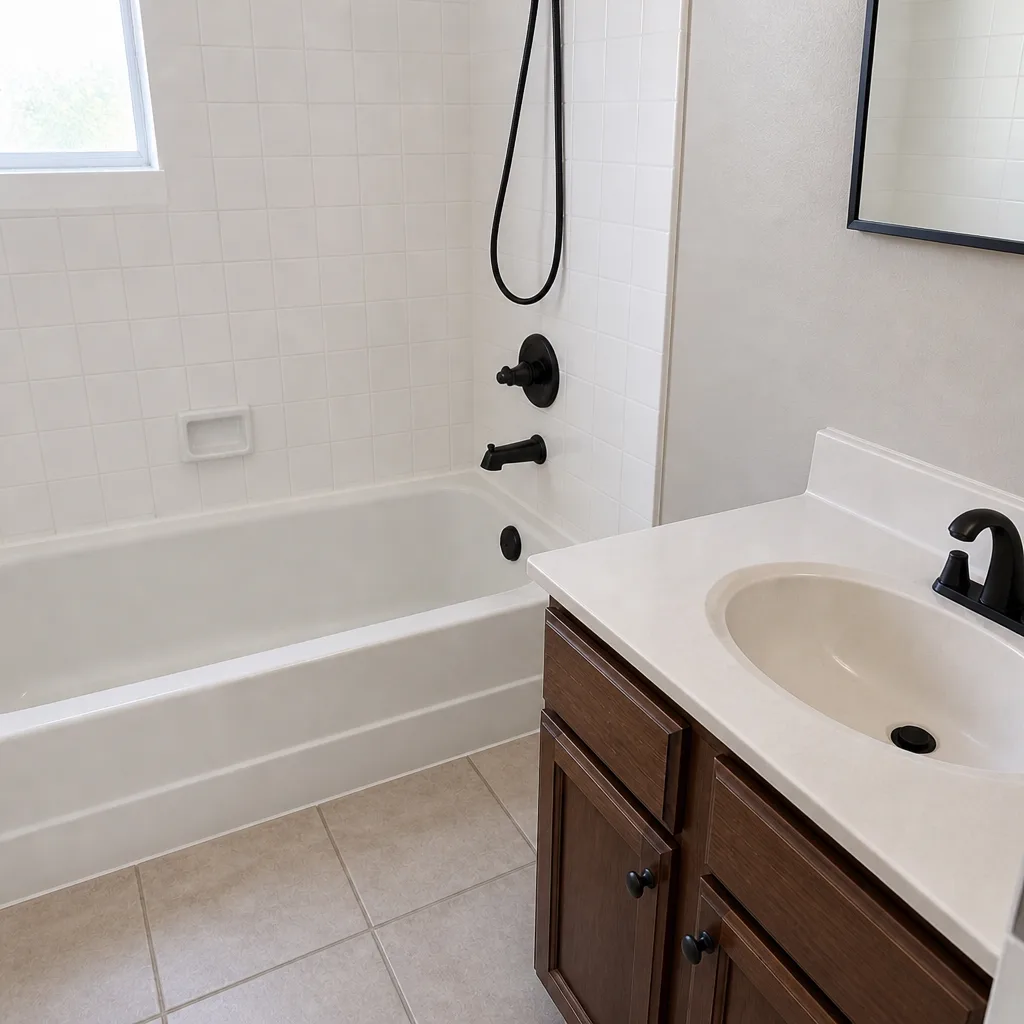 After
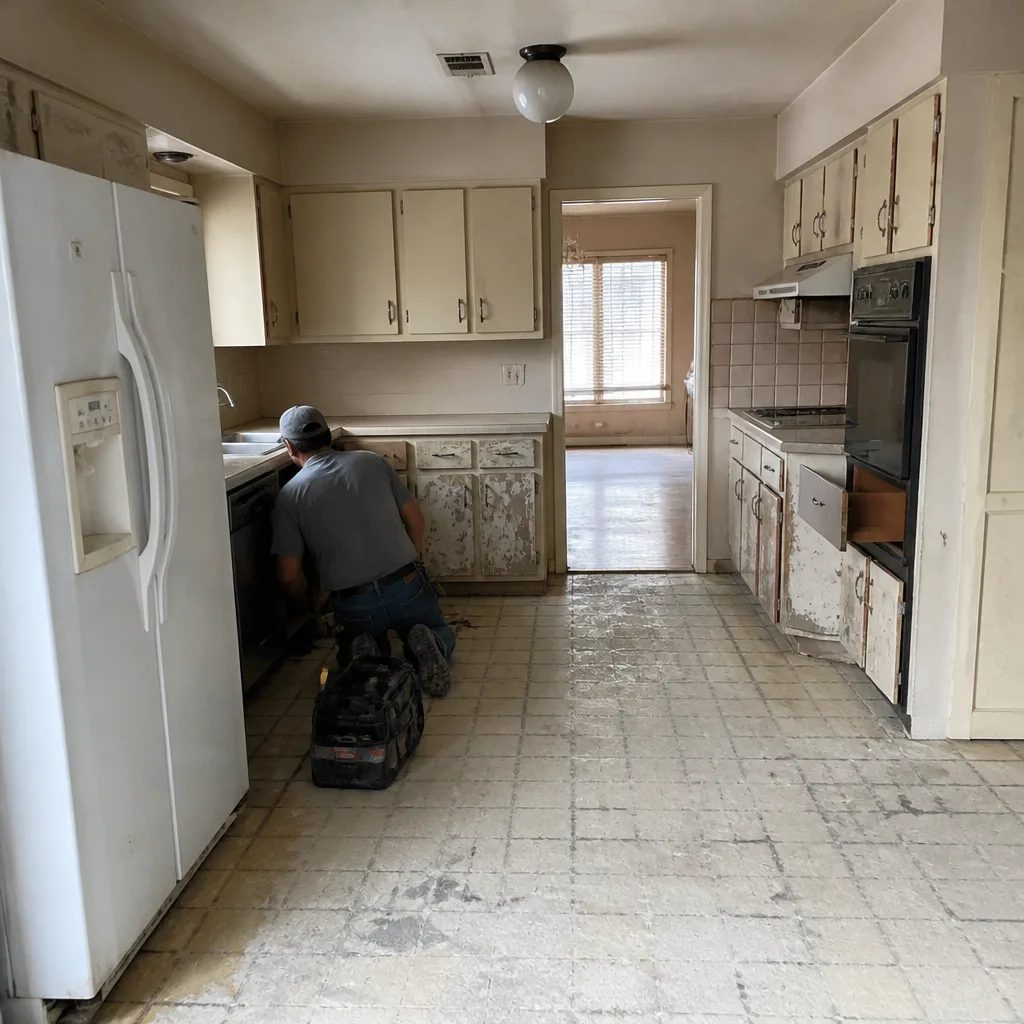 Before
 After
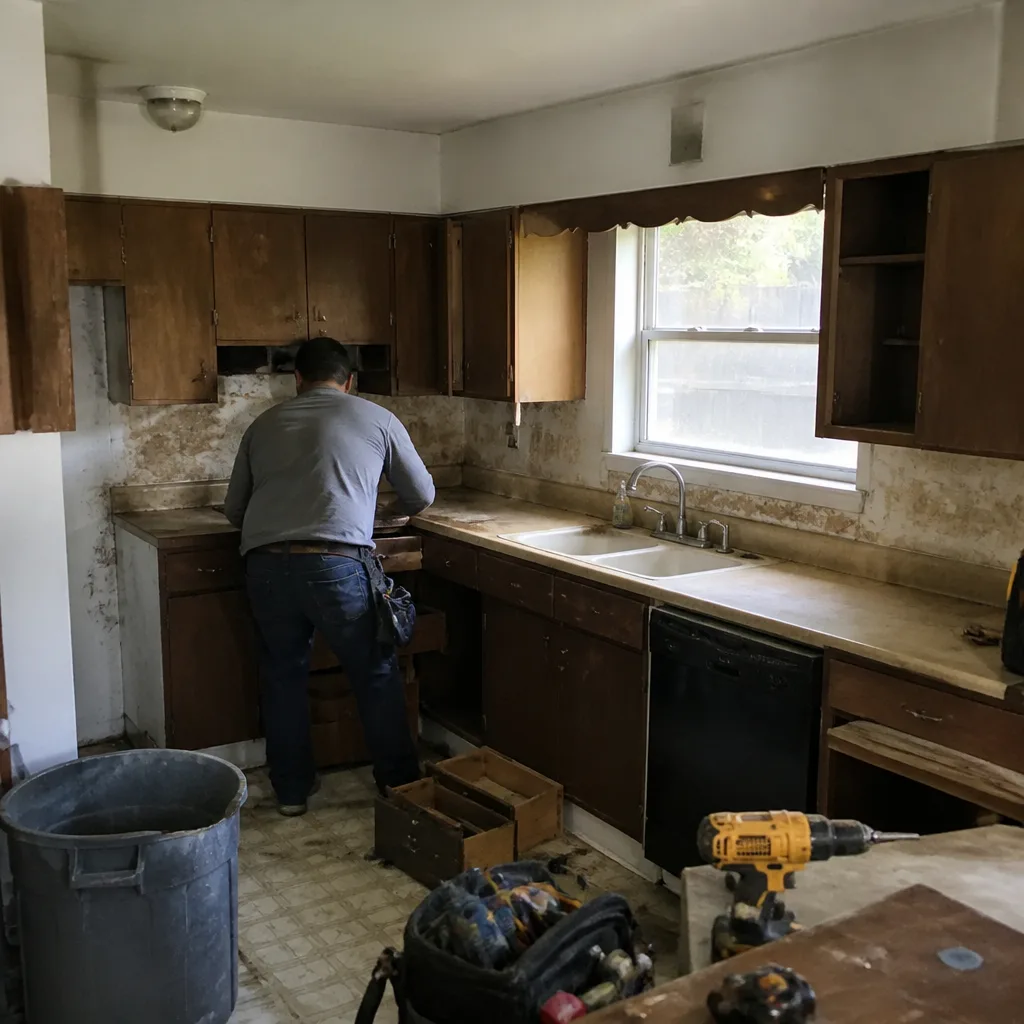 Before
 After
When to Call a Professional
Some concerns are worth a phone call to your current contractor. Others need an independent professional, and quickly. Call a professional when the issue involves structural work (a wall or floor that visibly moves, a beam that looks undersized for its span), electrical or plumbing that isn’t permitted, or water intrusion that’s already showing signs of mold. In Frisco’s climate, with spring storms and hot summers, a small leak left to a slow fix becomes a much larger problem inside two seasons.
If you’re considering a fresh start with a new contractor, or you want an independent read on a scope and price before you sign, Penhallow Remodeling Frisco offers free estimates in Frisco. Call (833) 954-5757 for a written price before any work starts. A live person answers 24/7.
Frequently Asked Questions

A missing posted permit is the single most informative early sign. If the permit placard isn’t visible by day two, ask directly whether the permit has been pulled and in whose name. In Frisco, the permit is on your property record, not the contractor’s, so the answer matters to you more than to them.
Legitimate problems come with photos, a written scope, a location, and a price. Vague language, verbal approvals, and pressure to “just sign here” are the tell. Ask to see photos and a written scope. If you can’t get both, it’s probably the opening move in a price escalation. Call (833) 954-5757 for an independent written opinion.
Kitchen remodels in Frisco typically run $18,000 to $55,000 depending on layout, cabinet line and countertop material. A galley kitchen with KraftMaid cabinetry and laminate counters sits at the low end; a full layout change with Cambria quartz and custom cabinets lands near the top. We’ll walk your kitchen and give you a written number before work starts. Call (833) 954-5757 for a free estimate.
Most bathroom remodels that touch plumbing, electrical, or structural elements require a permit through the City of Frisco. Tile and paint alone typically don’t. When in doubt, ask the contractor to show you the permit scope in writing. If they can’t, ask why not.
Yes, and the path is a written notice of deficiency sent by email and certified mail. In Texas, this triggers the contractor’s opportunity to inspect and correct before any legal action. Most reputable contractors respond within a week. If they don’t, the written record is your evidence in mediation.
Not on a Penhallow project, and not on a properly written contract from any contractor. The number on day one should be the number on the invoice. Added scope from a genuine surprise gets a written change order you sign, with a written price attached. Verbal “small” additions are how a $30,000 job becomes $45,000 by the end of week three.
The Bottom Line
The warning signs that matter most show up in the first week on site, not in the sales pitch. A missing permit, an unexplained crew, mismatched materials, a messy site, and a vague “unexpected problem” are all early tells. Document each one in writing, escalate calmly, and know when to walk. Frisco homeowners who do this protect themselves in Texas and get better work out of the contractor they keep. The last thing to look for is a written price and a written guarantee before anyone picks up a tool. That’s the standard we work by.
If you’re planning a kitchen remodel in Frisco or a bathroom remodel in Frisco, we’ll walk you through a written scope and price before any work starts. For larger projects, our general contractor services in Frisco cover whole-home remodels from permit through final inspection. You can learn more about how we work on our Penhallow Remodeling Frisco home page.
Contact

If a job site has you second-guessing what you’re looking at, call us. Penhallow Remodeling Frisco offers free estimates in Frisco with a written price before any work starts, a written guarantee on every project, and a live person answering the phone 24/7. Our technicians have up to 22 years of experience and arrive in uniform, background-checked, on every job. Call (833) 954-5757 to schedule your free estimate.
Written by the team at Penhallow Remodeling Frisco.