Last updated November 18, 2026








Free written scope consultation - allowances, timeline, and change-order rules on paper before a single trade is scheduled
Construction Emergency Preparedness Guide for Frisco Homes
When a hailstorm punches holes in a Frisco roof at 11pm on a Tuesday, most homeowners don’t know whether to call their contractor, their insurance adjuster, or no one. The order in which you make those calls has real consequences for what the claim covers and how much of the repair you end up paying out of pocket. Here’s the counterintuitive part: in our experience, emergencies in Frisco aren’t random. They cluster around three predictable events – spring severe weather, January freeze events, and foundation movement after a drought-breaking rain. This guide walks through each scenario, tells you exactly what to document and in what order, and separates what you can safely do yourself from what requires a licensed contractor.
Quick Answer
Construction emergencies in Frisco are predictable, not random. They cluster around three events: spring hail and windstorms, January freeze events that burst pipes behind finished walls, and foundation movement triggered when a drought-breaking rain swells clay soil. The homeowner’s first job in the first 24 hours is documentation and water diversion – photograph everything before touching it, call your insurance carrier, and only then bring in a contractor. The contractor’s job is structural stabilization, temporary weatherproofing of anything that requires a licensed trade, and a written scope before permanent repairs begin.
Styles & brands we work with
- Kitchen remodeling
- Bathroom remodeling
- Home additions & ADU
- Roofing
- Windows & doors
- Driveway & pavers
- Fence
Table of Contents
- Scenario One: Spring Storm Damage
- Scenario Two: January Freeze and Burst Pipes
- Scenario Three: Foundation Shift After Heavy Rain
- What to Photograph, In What Order
- How to Spot a Storm-Chaser in Real Time
- What You Can Do Yourself vs. What Needs a License
- What a Contractor’s Emergency Guarantee Should Contain
- Common Mistakes to Avoid
Scenario One: Spring Storm Damage
Frisco sits in a corridor that sees some of the most concentrated hail activity in North Texas, and the storms tend to arrive fast – often overnight, often with hail large enough to crack vinyl siding and drive water under roof shingles. The damage isn’t always obvious the morning after. We’ve walked homes in Starwood and Chapel Creek where the roof looked intact from the ground but the attic decking was soaked because hail had fractured the seal on pipe boots and ridge vents.
Here’s what to do in the first hours after a Frisco hailstorm:
- Wait until daylight and the storm has fully passed before going outside. Never climb onto a wet roof.
- Photograph the exterior from the ground first – all four elevations, the roof line, gutters, downspouts, and any visible dents to siding, fascia, or AC condenser fins.
- Check the attic for daylight coming through the roof deck and for wet insulation. That’s a reliable sign of shingle or flashing failure.
- Look at interior ceilings and around recessed lights for water stains. Water travels along framing, so a stain can appear far from the actual breach.
- Place buckets under active drips and move furniture clear, but don’t start pulling drywall or prying up shingles. That documentation is evidence for your claim.
- Call your insurance carrier to open a claim before you authorize any repair. Most carriers want the chance to inspect before permanent work starts.
Roofing and exterior work is technically demanding, and serious falls happen to homeowners every storm season. If you’re unsure about the roof, leave it to a professional. For the interior consequences – water-damaged drywall, soaked cabinets, a bathroom ceiling that’s sagging – a general contractor in Frisco can scope and repair the damage as a single coordinated job rather than a series of disconnected patches.
Scenario Two: January Freeze and Burst Pipes
North Texas freeze events are deceptive because the air stays dry even as temperatures plunge into the teens. Pipes in exterior walls, in attics, and in unheated garages freeze and then split. The split often doesn’t reveal itself until the thaw, when water suddenly pours from a wall that looked fine the day before. In our experience, the busiest week for emergency calls in Frisco isn’t storm season – it’s the thaw after a hard freeze, when dozens of homes discover the same problem at once.
The severe risk here isn’t the water damage, though that can run into the tens of thousands. It’s the danger of standing water near outlets and appliances, and the reality that a homeowner who opens a wall to find the leak can get into real trouble with an energized circuit. If water is pooling, shut off the breaker to that zone from the panel – not from inside a wet wall – and if you’re not sure how, call an electrician.
What you can safely do during a freeze warning:
- Drip faucets on exterior walls and open cabinet doors under sinks so warm air reaches the pipes.
- Disconnect garden hoses and cover exterior spigots.
- Leave the heat set no lower than 55°F, even when traveling.
- If you’re leaving for more than a few days, shut off the main water supply and drain the lines.
What you should not do: open a finished wall yourself to chase a leak. Once drywall comes down, the documentation picture changes and the repair scope gets harder to define for a claim. Call a licensed plumber and a contractor who can restore the wall and cabinetry to match afterward.
Scenario Three: Foundation Shift After Heavy Rain
Frisco’s soil is heavy clay, and clay does two things well: it shrinks during drought and it swells after rain. A long dry summer followed by a soaking fall storm can move a foundation more in a week than it moved in the previous year. The telltale signs are stick doors that suddenly jam, hairline cracks that open along drywall corners, and tile that pops loose over a slab. Some of these are cosmetic and some are structural, and telling them apart is exactly the kind of thing you should not guess at.
Foundation repair is not a DIY category, and it’s also not a repair you want to authorize from a panic call in the rain at 9pm. Take these steps instead:
- Photograph every new crack with a coin or ruler in frame for scale, and note the date.
- Check that your gutters are actually moving water away from the slab. Water dumped at the foundation is the single most common preventable cause of movement in Frisco.
- Look at the grade – soil should slope away from the house. If it’s pooling against the slab, that’s a drainage problem worth fixing before foundation work.
- Get a written evaluation from an engineer or a contractor who will put their findings in writing. Do not authorize piers or underpinning on a verbal recommendation.
If the movement is triggering interior damage – cracked tile in a bathroom, a kitchen floor that’s no longer level – the cosmetic repair should wait until the structural question is settled. A bathroom remodeling in Frisco project started on a moving slab is money thrown at a problem that will come back.
What to Photograph, In What Order
The order of your photos matters because it establishes a timeline, and a timeline is what an adjuster uses to sort storm damage from pre-existing wear. Photograph in this sequence, before any emergency contractor touches the site:
- Wide shots first. Stand back and photograph the whole elevation, the whole room, the whole attic span. Context photos tell the adjuster where everything sits.
- Medium shots. Move closer to show the damaged zone in relation to nearby fixtures, trim, or appliances.
- Close-ups with scale. A coin, a tape measure, or a ruler next to the damage. A photo of a crack with nothing to scale it is nearly useless.
- Date stamps on. Enable the date and time stamp in your camera settings, or note the date in a written log that you keep with the photos.
- Video walkthrough last. A short narrated video that moves through the damage in one continuous take ties the stills together and documents what was wet and what wasn’t.
Do this before the contractor arrives, before the water is extracted, and before anything is thrown away. Once a crew has moved a soaked cabinet or pulled up wet flooring, the photo no longer shows the original loss. If you’re unsure what to document, most public adjusters will walk you through it for free – and any reputable contractor will tell you to get your photos first.
How to Spot a Storm-Chaser in Real Time
After a major Frisco weather event, out-of-state crews with magnetic signs appear within 48 hours. Some are legitimate. Many are not, and the difference shows up in your driveway about six months later when the work fails and the phone number is dead. Here’s the real-time checklist.
Verify the license before you sign anything
Texas doesn’t license general contractors statewide, but it does license the trades that matter most in a storm response: roofers, electricians, plumbers, and HVAC technicians. Roofing contractors must be licensed under the Texas Insurance Code, and the Texas Department of Insurance maintains a searchable database. Look up the company name and the individual name on the contract while the estimator is standing in front of you. If the name doesn’t come back, hand the contract back.
Check for physical proof and ask direct questions
- Ask for a certificate of insurance and confirm the policy is current by calling the number on the certificate – not the number on the business card.
- Ask how long they’ve been working in Frisco and what their physical business address is. A PO box alone is a red flag.
- Never sign a contract with a large deductible or a “we’ll handle your insurance” clause that names them as payee.
- A legitimate contractor will inspect the damage and write a scope, not promise a price before they’ve seen what’s under the shingles.
- Never pay more than a modest deposit up front. Full payment before the work is complete is a hard stop.
The contractors who do the best work in Frisco aren’t the ones with the fastest trucks. They’re the ones who show up in uniform, put the price in writing, and answer the phone in six months when you have a question.
What You Can Do Yourself vs. What Needs a License
In the first 24 hours, there are real things a homeowner can do to limit damage – and real things that will complicate your insurance claim or put you in the hospital if you attempt them. Here’s the line.
Safe for a homeowner to do
- Tarping a damaged roof pitch from the ground. If you can reach a low slope from a ladder set on solid footing, a temporary tarp keeps water out. Do not climb onto a wet roof or an icy roof.
- Water diversion. Sandbags, rolled towels, and wet-vac extraction of standing water keep damage from spreading to adjacent rooms.
- Shutting off the water main and the breaker to a wet zone. Both are simple, and both are essential.
- Moving furniture, rugs, and electronics clear of the damage zone. Photograph first, then move.
- Mucking out soaked carpet and pad after photos, since saturated pad can’t be saved and holding it slows drying.
Requires a licensed contractor
- Any permanent roof repair, shingle replacement, or flashing work.
- Opening a wall to access a burst pipe, or any plumbing repair beyond shutting off the main.
- Any electrical repair, panel work, or breaker replacement.
- Structural work on a foundation, load-bearing wall, or roof framing.
- Drywall repair after water damage, since the repair has to include moisture readings and proper drying to avoid mold.
This is where a lot of fix-it-yourself homeowners get caught. Fixing a burst pipe and then patching the wall yourself can save money, but if the wall is not dried to a proper moisture level before it’s closed up, mold appears six weeks later and the insurance claim for the original water loss gets complicated. The documentation of the repair matters as much as the repair itself.
What a Contractor’s Emergency Guarantee Should Contain
An emergency response guarantee is different from a normal workmanship warranty. It’s the document that tells you what happens between the moment you call and the moment the permanent repair is done, and it should be in writing before anyone arrives. Here’s what ours looks like, and what you should expect from any contractor you call during a Frisco emergency.
- A real arrival window. A promise that a uniformed technician will arrive inside a stated window, not “sometime today.” When the window changes, you get a call with the new one.
- A written price before work starts. Not a verbal ballpark and not an estimate range – a written number you can hold them to. The price on day one is the price on the invoice.
- Temporary stabilization included. Tarping, water extraction, and shoring are part of the emergency visit, not billed as extras.
- The 365-Day Done Right Promise. If the permanent repair fails inside a year, they come back and fix it at no charge. On an emergency repair, this matters more than on a planned remodel.
- How it connects to your original project warranty. If the emergency damage touches a room they already remodeled, the guarantee that was in place on the original work should still apply – a written warranty doesn’t vanish because a storm moved in.
For context, this is the same standard we apply to a planned project: say the price before the work, show up in the window we gave, leave the place cleaner than we found it, and back it in writing for 365 days. The team at Penhallow Remodeling Frisco answers the phone at any hour because that’s a real commitment, not a marketing line, and a live person answers – not a voicemail prompt.
Common Mistakes to Avoid
- Calling the contractor before the insurance carrier. In most policies the carrier retains the right to inspect the loss before permanent repairs begin. If you authorize a repair first, you may only recover the depreciated value.
- Signing a contract that names the contractor as payee on the insurance check. That’s a common storm-chaser approach and it takes control of your claim out of your hands.
- Paying in full up front. A deposit is normal. Paying the whole contract amount before work is complete – especially after a storm – is how homeowners end up with a half-finished roof and no recourse.
- Skipping photos because the damage “is obvious.” It isn’t obvious to an adjuster who wasn’t there. Document before the crew arrives, every time.
- Doing your own drywall patch after a burst pipe. The wall has to be dried to a proper moisture level before it’s closed. Patching wet substrate is how mold problems start in Frisco homes.
- Ignoring a hairline crack along a drywall corner after heavy rain. Small cracks after a wet season are often the first sign of foundation movement. Photograph them and keep a dated log rather than waiting to see if they grow.
- Hiring a contractor who won’t put the price in writing before work starts. If you can’t hold the number in your hand, you can’t hold anyone to it.
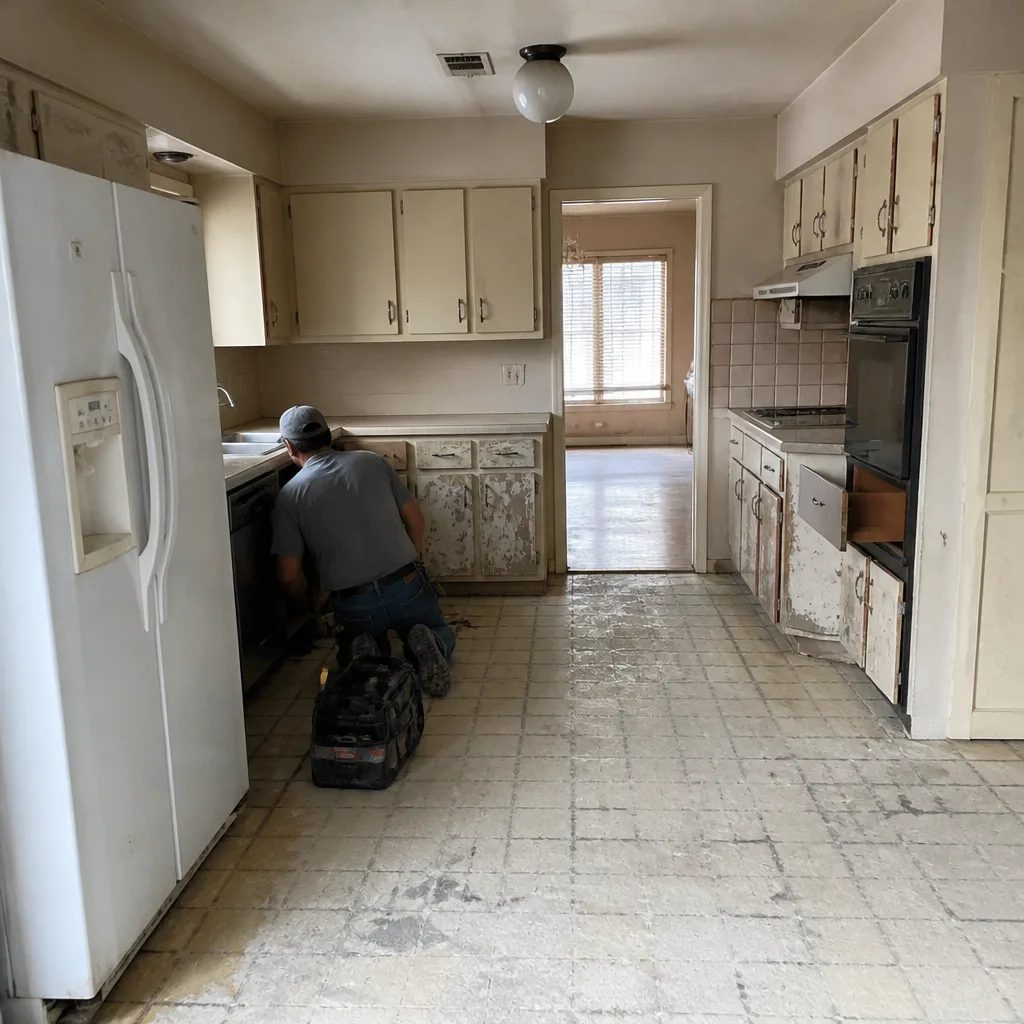
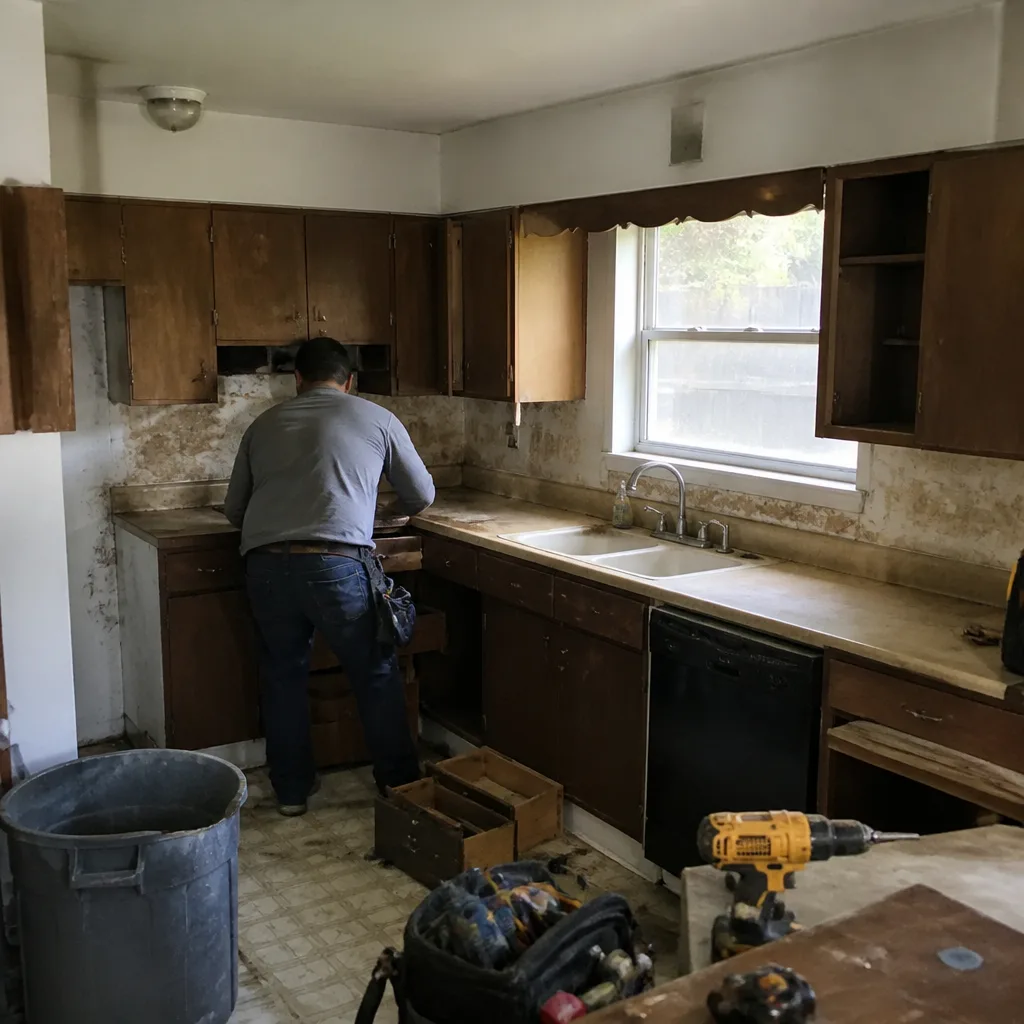
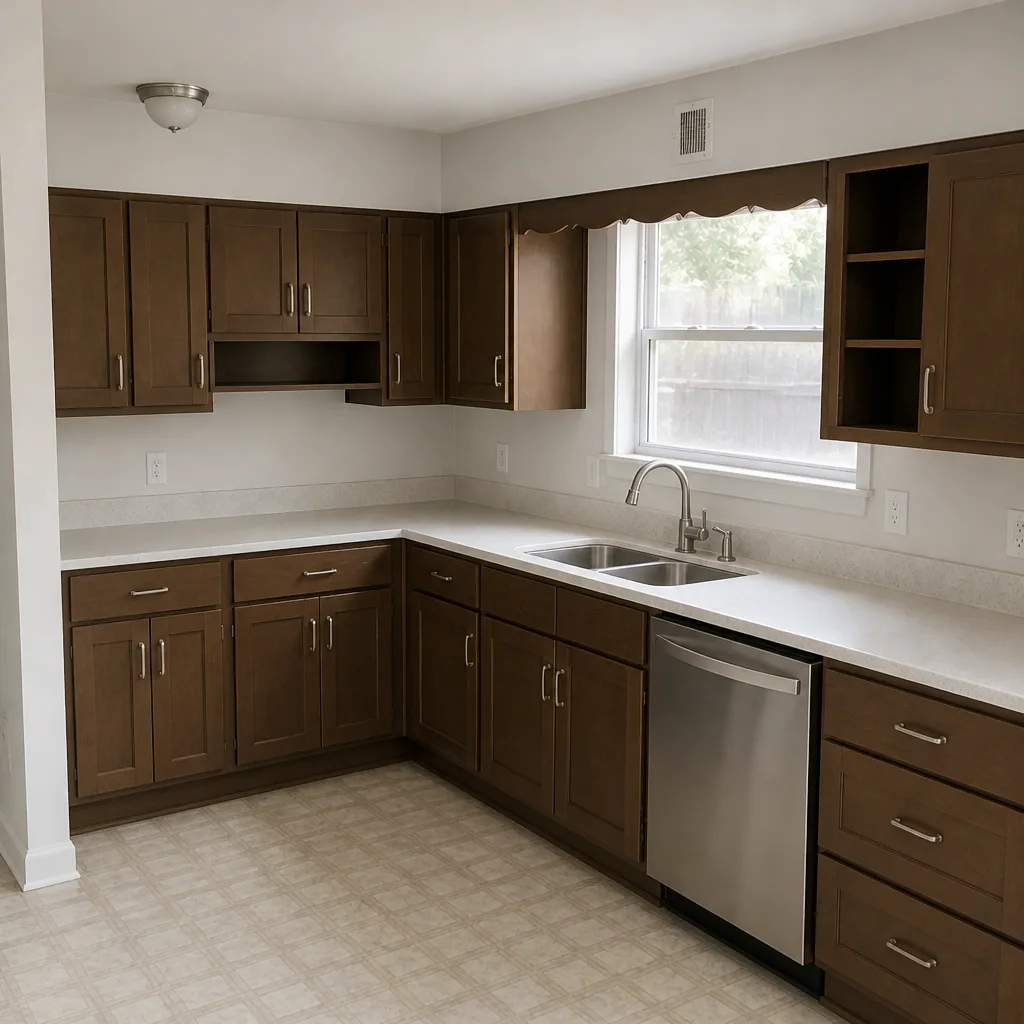
See the difference
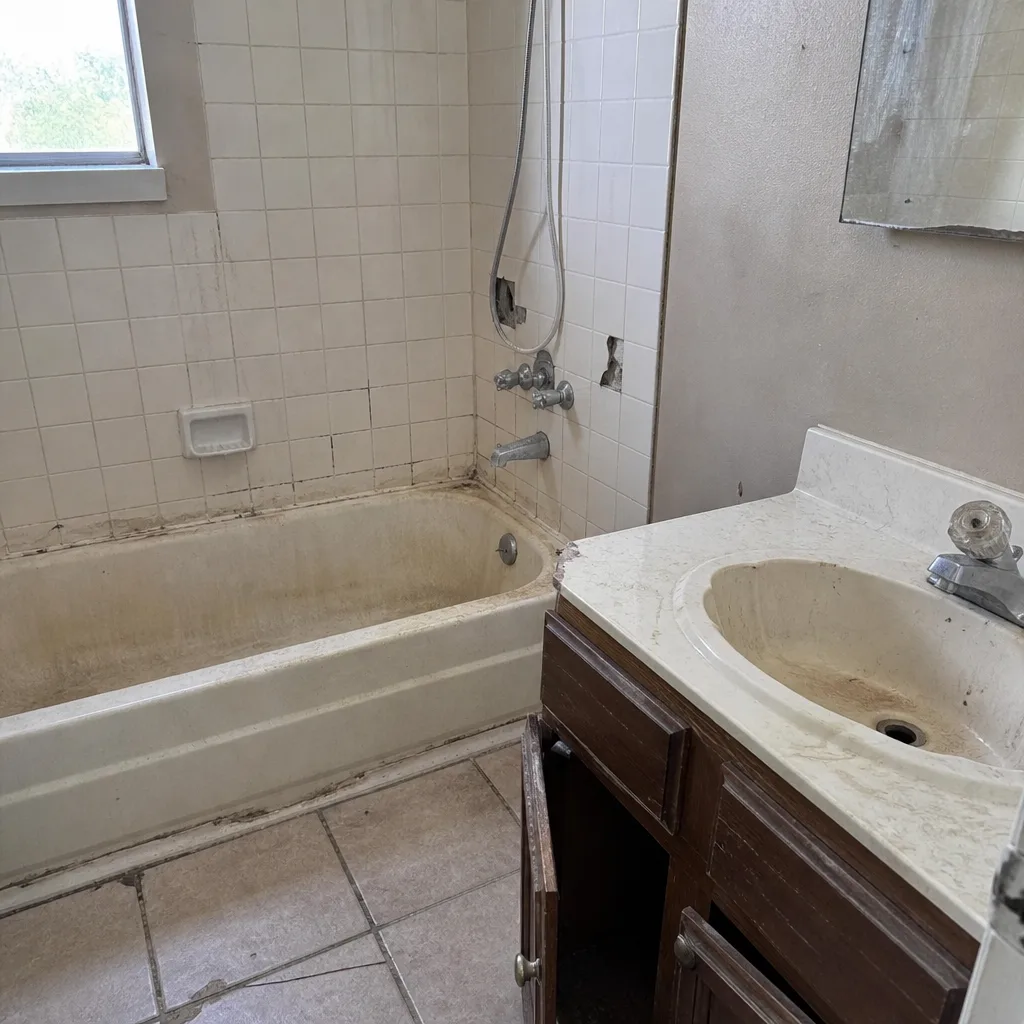 Before
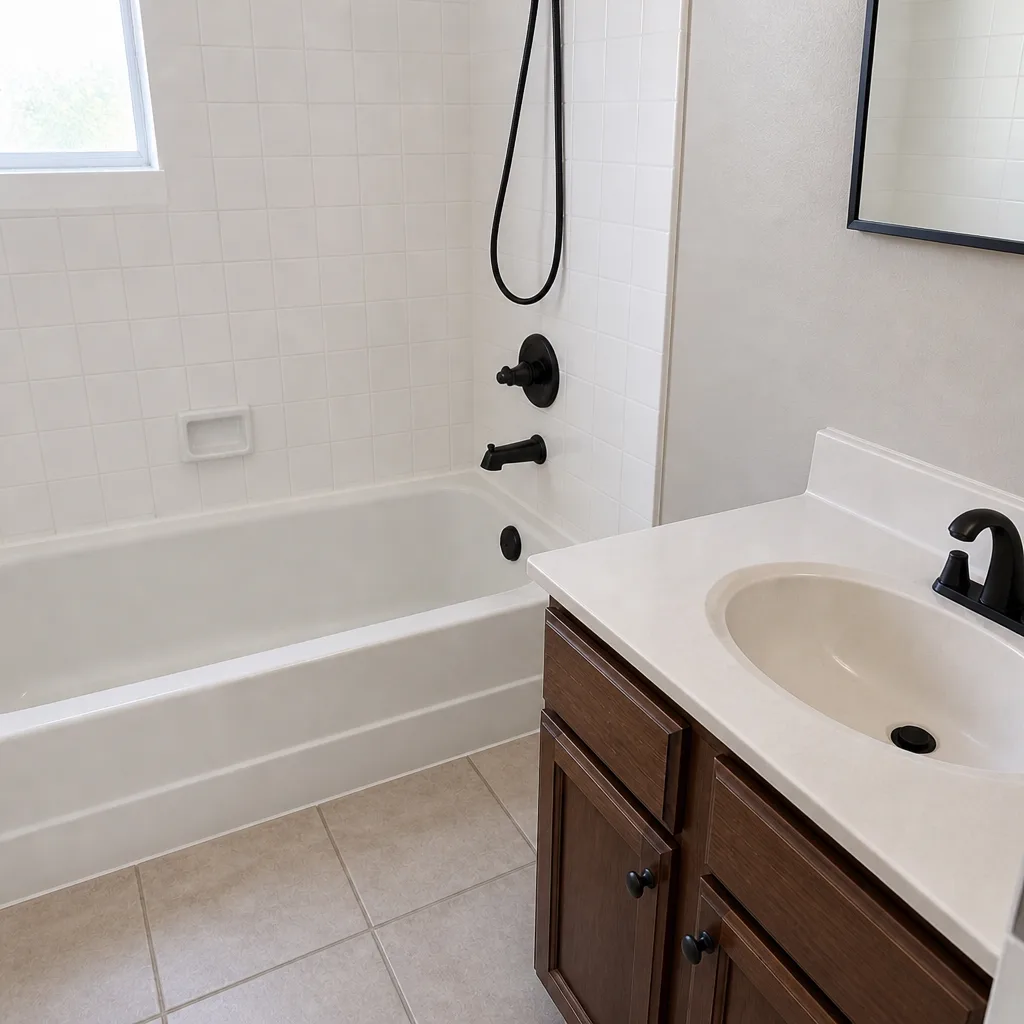 After
 Before
 After
 Before
 After
When to Call a Professional

Call a professional the moment the damage goes beyond the surface: water actively entering a finished space, a roof that’s visibly missing shingles, a wall that has been opened to a pipe, or a foundation crack that’s grown in a short span. Call before the emergency, too, if you’re considering a remodel – a kitchen remodeling in Frisco project scoped correctly today is far less likely to become a water-damage emergency in a freeze next January. Any professional you hire in a Frisco emergency should put the temporary stabilization and the permanent scope in the same written document, with a clear line between the two.
Penhallow Remodeling Frisco offers free estimates in Frisco and a written guarantee on every job. Whether the call comes at 2am after a hailstorm or at noon on a Tuesday for a planned remodel, a live person answers and a uniformed technician arrives inside the window we promise. Call (833) 954-5757 to schedule your free estimate.
Frequently Asked Questions
Photograph the exterior from the ground, check the attic for wet insulation and daylight through the roof deck, and call your insurance carrier before authorizing any repair. Don’t climb onto the roof – wet shingles and hail residue make it dangerous. A written scope from a contractor after the carrier’s inspection is the next step. Call (833) 954-5757 for a free estimate after the storm.
Most homeowner policies in Texas cover sudden and accidental water damage from a burst pipe, including the cost of opening the wall and drying the space, but typically exclude the pipe repair itself and any damage that resulted from long-term neglect or slow leaks. Read the section of your policy that defines “sudden and accidental” and call your adjuster before you open the wall. Then call us for a written repair scope – the estimate is free.
Cracks wider than a credit card, cracks that run diagonally from the corner of a door or window, and doors that suddenly stick are the signs worth investigating. Hairline cracks that follow the drywall corners can be cosmetic, especially after a dry summer. Photograph everything with a scale in frame and get a written evaluation – don’t authorize piers on a verbal recommendation. Call (833) 954-5757 for a free estimate that includes an assessment of the interior damage.
You can safely tarp a low-slope roof you can reach from a ladder set on solid, dry footing – that’s a reasonable first step to keep water out overnight. Anything higher, and anything after dark or in rain, is a fall risk and should wait for a licensed professional. Permanent roof repair always requires a licensed roofing contractor. Call us for the interior side of the repair – free estimate, written price before work starts.
If the work fails inside a year of completion, we come back and fix it at no charge. On an emergency repair that means a tarp that didn’t hold, a drywall patch that cracked, or any workmanship defect from the original scope. The promise is in writing on every project. You also get a free return visit if a repair fails, with no service call fee. Call (833) 954-5757 and ask for a written scope before any work starts.
Yes, once the carrier has inspected the loss and you have an approved scope in hand. Start with the temporary stabilization – tarping, water extraction, drying – which is generally covered and can begin right away. The permanent repair should wait for the written scope and the carrier’s approval. We’ll put the temporary and permanent work in separate written line items so there’s no confusion. Call for a free estimate to get the process started.
The Bottom Line

Construction emergencies in Frisco follow a pattern – spring storms, January freezes, foundation movement after rain – and a homeowner who knows the pattern is already ahead. Document before you touch anything, call your insurance carrier before you authorize a repair, and know the line between what you can safely tarp and what requires a licensed contractor. The contractor you hire should give you a written arrival window, a written price before work starts, and a written guarantee that stretches 365 days past the crew’s last visit. That’s the standard, and it’s worth holding anyone you hire to it.
If you’re facing a Frisco emergency or planning a project, call (833) 954-5757 for a free estimate. A live person answers, and the price is in writing before we pick up a tool.
Written by the team at Penhallow Remodeling Frisco.