
Last updated November 18, 2026








Free written scope consultation - allowances, timeline, and change-order rules on paper before a single trade is scheduled
Bathroom Remodeling Maintenance Schedule: What to Do and When
The number one cause of a bathroom remodel looking dated and failing structurally within five years isn’t the original work. It’s the caulk joint at the tub-to-tile line that was never refreshed at the 12-month mark, when seasonal movement first opens it. Water gets behind the tile, the substrate (the moisture-resistant backer board behind your tile) stays wet, and the whole assembly starts to fail from the inside out. Not from bad tiles. Not from cheap grout. A neglected quarter-inch bead of sealant.
We’ve walked into Frisco bathrooms where the tile was set beautifully and the shower was already rotting at year four. And we’ve seen fifteen-year-old tiled showers still tight as a drum because the homeowner kept a simple calendar. This guide gives you that calendar: a year-one, year-three, and year-five schedule specific to tiled showers, vanity tops, and plumbing fixtures, tuned for North Texas humidity swings. By the end you’ll know what to check, what to seal, what to leave alone, and when to call someone.
Quick Answer
A remodeled bathroom needs caulk joint inspection at 12 months and re-caulking wherever seasonal movement opens a seam, grout sealing every 12-18 months in hard-water markets like Frisco (not the generic “once a year, everywhere” advice), and a full fixture and drain check at years three and five. The materials in your bathroom set the schedule, not how new it feels. A tiled shower with cement board substrate and an epoxy grout holds far longer than the same shower with a standard sanded grout and tired caulk – but only if you inspect the joints on time.
Styles & brands we work with
- Kitchen remodeling
- Bathroom remodeling
- Home additions & ADU
- Roofing
- Windows & doors
- Driveway & pavers
- Fence
Table of Contents
- Why a Remodeled Bathroom Has a Maintenance Calendar
- Year One: The Critical 12-Month Check
- North Texas Humidity Swings and Seasonal Joint Movement
- Year Three: Grout, Fixtures, and the Substrate Warning Signs
- Year Five: The Full Re-Assessment
- Which Products Are Safe for Modern Frisco Bathroom Surfaces
- The Grout Sealing Schedule That Actually Works in a Hard-Water Market
- How to Log Maintenance Without Scaring a Future Buyer
Why a Remodeled Bathroom Has a Maintenance Calendar
Every material in a bathroom expands and contracts. Tile, grout, caulk, the tub, the vanity top, the shower pan – all of it moves a little with temperature and moisture, and none of it moves at the same rate. The caulk is the flexible material that absorbs that difference. When the caulk is fresh, it does its job quietly. When it ages and hardens, it stops flexing, splits, and lets water past.
That’s the whole logic of a maintenance schedule. You’re not maintaining “the bathroom.” You’re maintaining the joints and barriers that protect the expensive parts: the substrate, the framing, the tile itself.
Here’s how the materials in a typical bathroom remodel in Frisco break down by tolerance:
- Tiled shower with cement board substrate: 12-15 years of service if caulk and grout are maintained; as little as 6-8 if joints are neglected.
- Porcelain or ceramic tile: the tile outlasts everything. It’s rarely the failure point.
- Epoxy grout: effectively waterproof and stain-resistant; minimal sealing needed but still needs joint inspection.
- Sanded cement grout: porous, needs sealing every 12-18 months with hard water present.
- Silicone caulk at seams: 12-18 months of reliable flex before it needs replacing in a wet zone.
- Quartz vanity tops (Cambria, Silestone, Caesarstone): non-porous, no sealing, but the caulk line where the top meets the wall or backsplash still needs checking.
If you’re planning a remodel rather than maintaining one, our bathroom remodeling in Frisco team walks through material choices and written pricing before any demo starts. But once it’s in, the calendar above is the one that matters.
Year One: The Critical 12-Month Check
The first year is when most of the movement happens. New construction – even beautiful new construction – settles in. The house and the bathroom reach an equilibrium with their environment, and the caulk joints take the strain. This is why the 12-month mark is the single most important date on the schedule. Miss it and you’re playing catch-up for the life of the bathroom.
At month 12, do these checks in order:
- Inspect every caulk joint for cracks, gaps, or shrinkage. Focus on the tub-to-tile line, the shower floor-to-wall line, the vanity top to backsplash, and around the shower valve trim plate.
- Press a fingertip into the caulk. If it’s still soft and springy, it’s fine. If it’s hard or crumbly, it needs replacing.
- Check the grout for hairline cracks, especially at inside corners and where the shower walls meet the floor.
- Run every fixture and check for drips at the faucet, shower head, and under the sink supply lines. A slow drip that runs for a year will stain a quartz top.
- Test the exhaust fan by holding a tissue to the grille – if it doesn’t suck the tissue up, it isn’t moving enough air.
- Note the date and what you found in a simple maintenance log (more on logging below).
This is also when we like to remind Frisco homeowners that a free return visit is built into the guarantee we offer on our work. If a repair or installation fails inside the guarantee period, we come back and fix it at no charge. That’s not a favor; it’s included in writing on every job.
North Texas Humidity Swings and Seasonal Joint Movement
Frisco sits in a climate that swings hard, and that swing is harder on bathroom joints than most of the country realizes. Spring brings humidity that can run above 70% for weeks, then a dry north wind in October drops it into the 30s. Inside a bathroom, that means the wood framing and the drywall and the caulk joints are all expanding and contracting in a slow seasonal breath.
The caulk is the material that has to absorb it. When humidity climbs, the framing swells slightly and pushes against the tile edges. When it drops, everything shrinks and pulls. Every cycle stretches the caulk a little. New caulk handles this for about 12 to 18 months in a wet zone before it loses its elasticity.
What to watch for in Frisco specifically:
- Spring (March-May): the highest humidity window. Watch for caulk softening, small mold spots at the shower seams, and condensation on the mirror or walls after showers.
- Summer (June-September): peak air conditioning means very dry interior air. This is when shrinkage cracks appear at tub-to-tile seams.
- Fall (October-November): second big swing as the north wind arrives. Check any caulk not touched since spring.
- Winter (December-February): the driest stretch, then a thaw at holiday cooking and showering. Watch for cracks widening.
The practical takeaway: inspect joints in both spring and fall, and re-caulk whenever you find a crack. That’s an inspection every six months, plus a full replacement of worn caulk roughly annually in the wet zones.
Year Three: Grout, Fixtures, and the Substrate Warning Signs
By year three, the caulk has likely been refreshed once, and the grout has seen enough water to start showing what your sealing schedule has or hasn’t done. This is the year you do a deeper inspection – especially in a hard-water market like Frisco, where the calcium in the water leaves a white film and eats away at standard grout sealers faster than most homeowners expect.
What to check at year three:
- Grout: look for dark or stained lines, especially around the shower floor and the shallow part of the tub surround. Discolored grout usually means the sealer has worn off.
- Test the grout with a drop of water. If it beads on the surface, the seal is holding. If it absorbs after a minute or two, it’s time to reseal.
- Check the shower pan and grout lines for soft spots or hollow sounds. A hollow sound when you tap was once soft tile adhesive – and now it might mean water has reached the substrate.
- Inspect the toilet base for a soft floor or a wobble. Both are early signs of a failing wax ring and water under the floor. Address them fast.
- Service the exhaust fan – vacuum the grille to clear dust and lint buildup. A blocked fan is the number one silent cause of long-term moisture problems.
- Check under every sink for corrosion on the shutoff valves and slow weep at the supply lines. A copper line that weeps for two years turns into a cabinet with a rotting floor.
If you’re seeing soft tile or a floor that gives, that’s a job that moves from “maintenance” to “professional assessment.” Water under a tile floor is a substrate problem behind the tile, and no sealer fixes it from the surface. A free evaluation is worth the phone call before a small leak becomes a full rebuild.
Year Five: The Full Re-Assessment
Year five is the pivot point. Everything that’s been maintained is still serving; everything that hasn’t starts telling you. This is the year to step back, look at the whole bathroom, and decide whether you’re maintaining or planning a refresh – and in Frisco, this is also when many homeowners start thinking about resale disclosure and what they’ll need to be able to say about the bathroom’s condition.
The year-five walkthrough:
- Re-inspect all caulk. At year five, caulk that’s been refreshed annually is still working. Caulk that hasn’t will be visibly shot.
- Look at the shower floor drain and pan. Any flex, softness, or rust at the drain collar is a sign water has gotten behind the tile.
- Check the vanity top and backsplash. Quartz surfaces carry their own warranty (Cambria, Silestone and Caesarstone all do), but the caulk joint where the top meets the wall is still ours to maintain.
- Inspect the shower valve and trim plate for mineral buildup. A cartridge swap at this stage is inexpensive; a valve replacement later is not.
- Confirm the exhaust fan still moves air and hasn’t gotten louder or slower – both signal a bearing or motor going.
- Decide: this bathroom has another 8-10 years of maintenance, or it’s time for a refresh. If you’re leaning toward the refresh, a contractor can give you a written estimate, and you’ll know exactly where you stand.
By year five, the cost of maintaining what’s there is small – a few tubes of caulk, a sealer kit, and a couple of hours. The cost of the alternative – a leaking shower pan that soaks the framing and the ceiling below – is a five-figure repair. That math is the whole argument for the calendar.
Which Products Are Safe for Modern Frisco Bathroom Surfaces
This is where well-meaning homeowners do real damage. The wrong cleaner voids a manufacturer’s warranty on tile, grout, and stone faster than any amount of neglect. Most standard bathroom cleaners are acidic, and acids attack cement-based grout, natural stone, and some sealers. On a quartz vanity top, acidic cleaners can dull the surface and void the warranty.
Safe for the surfaces in a modern remodeled bathroom:
- pH-neutral tile and stone cleaner for regular tiled-shower cleaning – safe on ceramic, porcelain, and sealed cement grout.
- Oxygen-bleach cleaner (not chlorine) for grout
- Soft cloth or non-abrasive sponge on quartz tops – never a scouring pad or steel wool
- Mild dish soap and warm water for daily vanity and fixture cleanup
Not safe, and likely to void a warranty:
- Vinegar, lemon juice, or any acid-based cleaner: eats into cement grout and degrades quartz and natural stone over time.
- Bleach: can discolor grout sealers and break down silicone caulk faster than plain soap.
- Abrasive powder cleansers: scratch quartz, glass, and glazed tile.
- Steam cleaners: marketed for tile but can force moisture into grout and caulk joints and are not recommended on silicone seams.
The warranty being protected is worth taking seriously. A quartz vanity top carries its own manufacturer warranty, and using an acid cleaner can be a valid reason for a warranty denial. When we install Cambria quartz in a Frisco bathroom, the homeowner gets two layers of protection: the manufacturer’s warranty on the stone, and our own 365-Day Done Right Promise on the installation. Acid cleaner in the wrong place puts the first layer at risk.
The Grout Sealing Schedule That Actually Works in a Hard-Water Market
The generic advice – “seal your grout once a year” – comes from areas with soft water and moderate climates. It doesn’t fit Frisco. Our water is hard enough that calcium deposits build up in shower grout faster than a standard sealer can truly defend against, and the seasonal humidity means the sealer itself changes with the seasons.
The schedule that works here:
- Test before you seal. Drop a little water onto cleaned grout. If it beads, the sealer is intact. If it absorbs, reseal. Test every 6 months in wet zones like the shower floor and tub surround.
- Reseal every 12-18 months in wet zones, and every 2-3 years on dry zones (e.g., the wall grout above the tile line).
- Before any resealing, clean the grout thoroughly with an oxygen-bleach cleaner and a soft brush. Sealer over grime is wasted sealer.
- Let the grout dry completely (24-48 hours in a Frisco winter, up to 72 hours in wetter spring weather) before applying sealer.
- Apply a penetrating sealer, not a topical film – penetrating sealers line the pores rather than coating the surface, and hold up better in the hard-water environment.
- Wipe standing water after every shower during the wet spring and fall windows. A squeegee is still the cheapest sealer money can’t buy.
In a shower with epoxy grout (some modern remodels use it), you can skip most of this – epoxy grout is effectively non-porous. But even epoxy grout needs the caulk joints at the seams looked at annually.
How to Log Maintenance Without Scaring a Future Buyer
A maintenance log is one of the most underrated assets in a home. When you sell a bathroom, the log shows the buyer that the tile, the caulk, and the fixtures were cared for on a schedule – that’s a good disclosure, not a red flag. The trick is to log what you did in plain language, not what could have gone wrong.
What to write down:
- Date and what you did (“12/2024: re-caulked tub-to-tile seam, resealed shower floor grout”).
- Who did it – “the team we hired” or “ourselves” (keep it factual).
- Any parts or products used – the brand of sealant or caulk, since that helps future repairs match.
- Any repair done by a contractor – keep the written receipt or invoice with the guarantee language intact.
What not to write down:
- Speculation or worry (“cracked grout, maybe there’s water behind it?”). If a problem is real, have it assessed and log the professional finding instead.
- Unfinished to-do list items. A buyer seeing “need to check shower pan” reads it as “shower pan might be failing.”
- Assumptions about substrate or materials you haven’t confirmed. Log what you observe and what you did.
A clean, factual log is a genuine asset. A log full of worries is a liability. The difference is writing down the work you did, not the worst case you imagined.
Common Mistakes to Avoid
- Waiting for the grout to crack before you check the caulk. The caulk fails first; the grout tells you later. By then, water has often already reached the substrate.
- Using acid-based cleaner “just once” on quartz. One cleaning with a vinegar or lemon-based product can dull a Cambria or Silestone top and put the warranty on the line. Use pH-neutral cleaner from day one.
- Re-caulking over old caulk. Fresh caulk won’t bond to old caulk, and the seam will fail within months. Remove the old bead completely first.
- Sealing grout that’s still wet. Sealing damp grout traps the moisture inside, and the sealer never bonds properly. Wait the full dry time, longer in spring.
- Skipping the exhaust-fan service. In Frisco’s humid spring, a fan that moves half the air it used to is a moisture problem that shows up in the tile long before you notice the fan is slow.
- Ignoring a soft spot at the shower drain collar. That’s a sign water has gotten past the tile. Waiting months to assess it turns a small fix into a substrate repair.
- Assuming the 12-month check is optional because the bathroom “still looks new.” The caulk joint that’s done its job looks perfect right up until the day it doesn’t. Check it by hand, not by eye.
See the difference
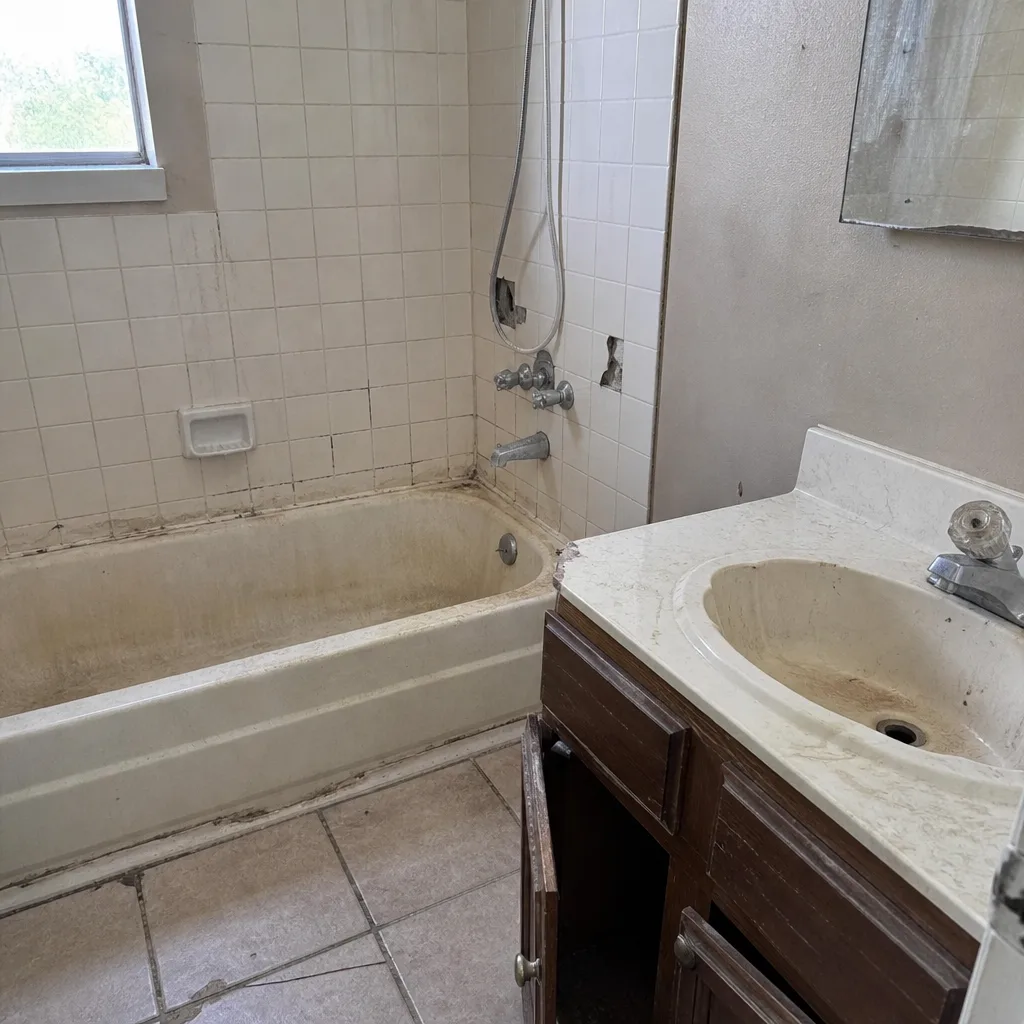 Before
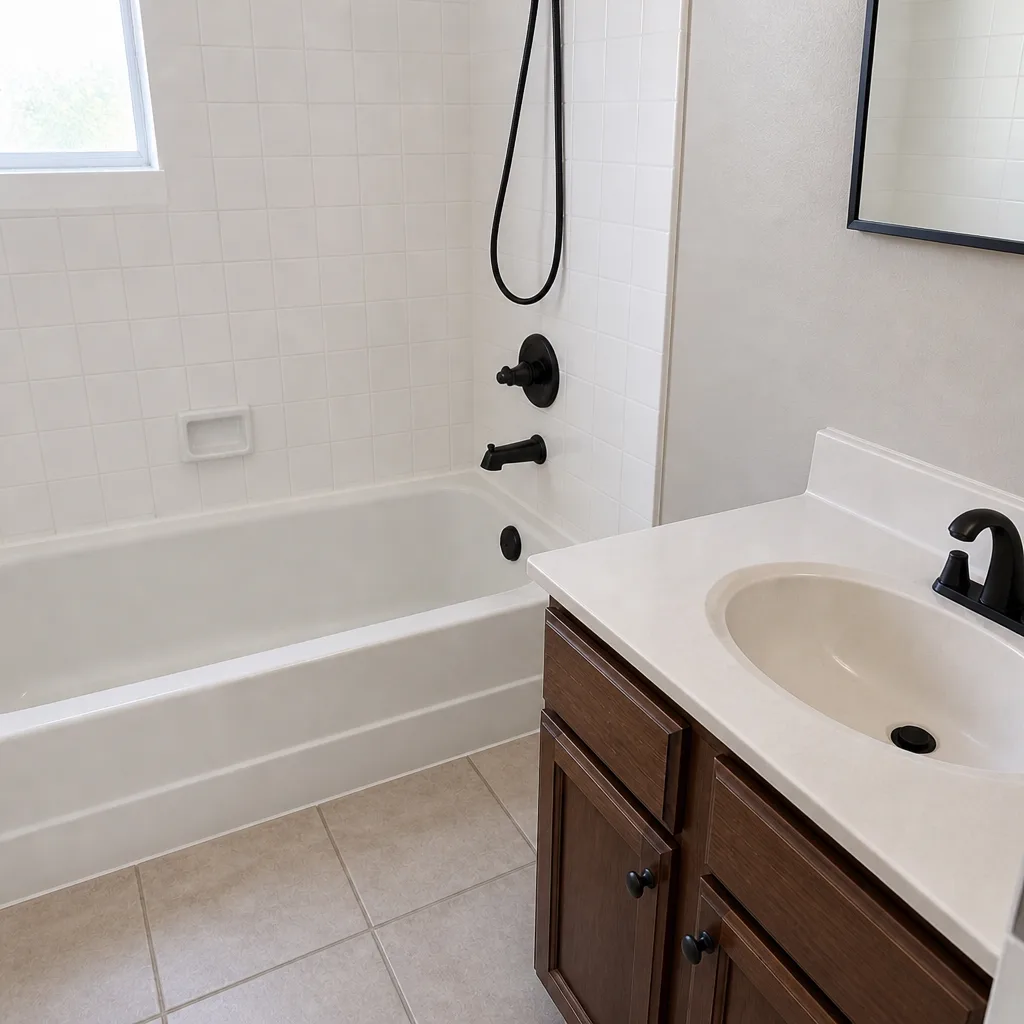 After
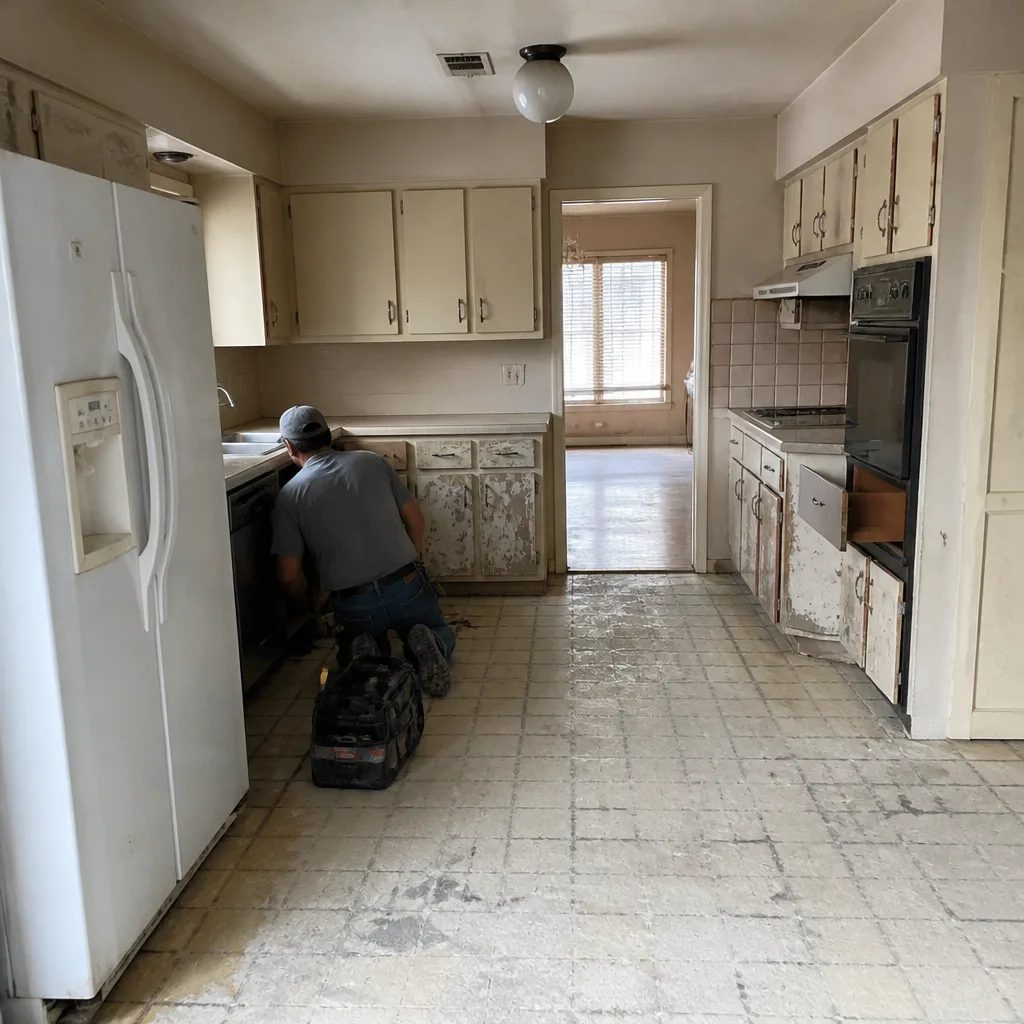 Before
 After
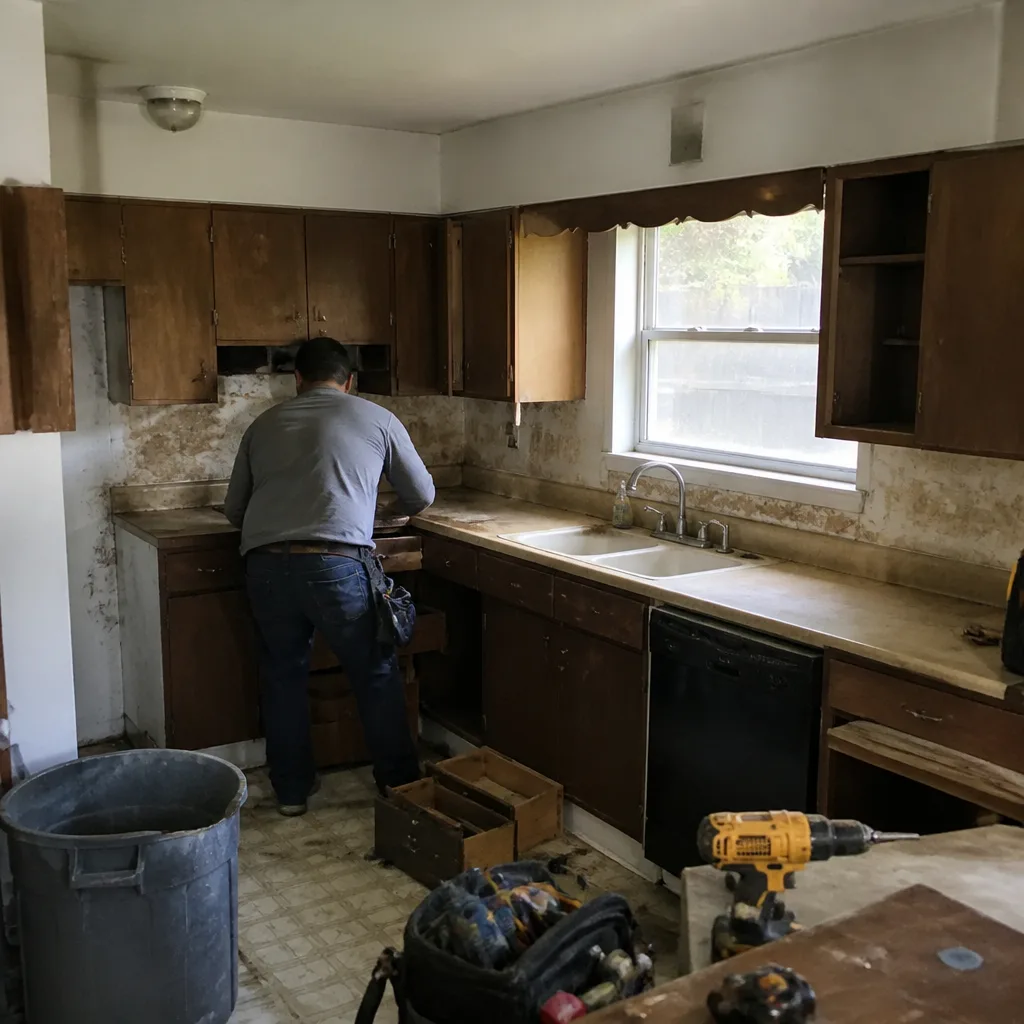 Before
 After
When to Call a Professional
Most bathroom maintenance is a homeowner job: caulk you can reach, a fan grille you can vacuum, a sealer you can apply after a good cleaning. But there are situations where the problem is behind the surface and no sealant fixes it. Call a professional if you see soft or hollow-sounding tile, a floor around the toilet that gives or wobbles, a shower pan that flexes underfoot, water stains on the ceiling below the bathroom, or a shower drain collar with rust or movement. Those are water-behind-the-tile or framing-level problems, and they need a real assessment. A licensed and insured contractor can also handle a failed repair under guarantee, or in our case, come back and re-do failed work inside the 365-Day Done Right Promise window. Penhallow Remodeling Frisco offers free estimates in Frisco – call (833) 954-5757 and a live person will answer, day or night.
Frequently Asked Questions
At 12 months and then every 12-18 months in a wet zone. North Texas humidity swings open caulk seams faster than dry climates, so a 12-month check is the safe schedule. Press a fingertip into the caulk – if it’s still soft, it can wait; if it’s hard or cracked, replace it. Call (833) 954-5757 for a free estimate on a shower re-caulk or any repair.
Yes, you need both, and they’re different jobs. Grout sealer penetrates the porous grout surface and slows water absorption; it goes on every 12-18 months in wet zones. Caulk is the flexible bead at seams where two materials meet (tub-to-tile, wall-to-floor); it flexes with movement and gets replaced when it hardens. Skipping one doesn’t cover the other.
No. Vinegar and other acids attack cement grout, dull quartz, and can void a tile or stone manufacturer’s warranty. Use a pH-neutral cleaner for daily tile and a soft cloth on quartz tops. If a sealer or surface fails due to the wrong cleaner, our guarantees and the manufacturer’s may not cover it. Call (833) 954-5757 before you reach for a harsh cleaner – a free estimate on tile cleaning and a clean reseal is cheaper than one ruined shower.
Frisco’s water is hard enough to leave calcium deposits on grout and fixtures within months, so the sealing schedule needs to run on the shorter end: reseal every 12-18 months in wet zones, and test the grout every 6 months. Hard water also builds up on shower valve cartridges and faucet aerators – clean those every 6 months and the fixtures will last years longer.
Soft or hollow-sounding tile, a shower pan that flexes, rust or movement at the drain collar, and water stains on the ceiling below are the real warning signs. Those mean water is behind the tile or in the framing, and no surface sealer will fix it. Call (833) 954-5757 for a free estimate – a licensed and insured contractor can assess the substrate without guessing.
Yes, if the log is factual and unemotional. A simple dated record of caulking, sealing, and fixture service tells a buyer the bathroom was cared for, which supports your disclosure instead of triggering questions. Write down the work you did, not the worst case you worried about. Call (833) 954-5757 if you ever want a professional to put a repair in writing.
The Bottom Line
A remodeled bathroom doesn’t stay healthy because it’s new. It stays healthy because someone caulked at 12 months, sealed grout at 18, and looked behind the vanity before water found the floor. The calendar is short and cheap: an inspection at 12 months, a reseal at 12-18, a fixture check at year three, a full walkthrough at year five. In Frisco’s humidity and hard water, that schedule needs to run on the shorter end, not the generic annual one. Follow it and a tiled shower can easily reach 15 years. Skip it and the same shower can be failing at year four. Call (833) 954-5757 for a free estimate on any repair or remodel – we’ll give you a written price and a written guarantee before we pick up a tool.
Written by the team at Penhallow Remodeling Frisco.